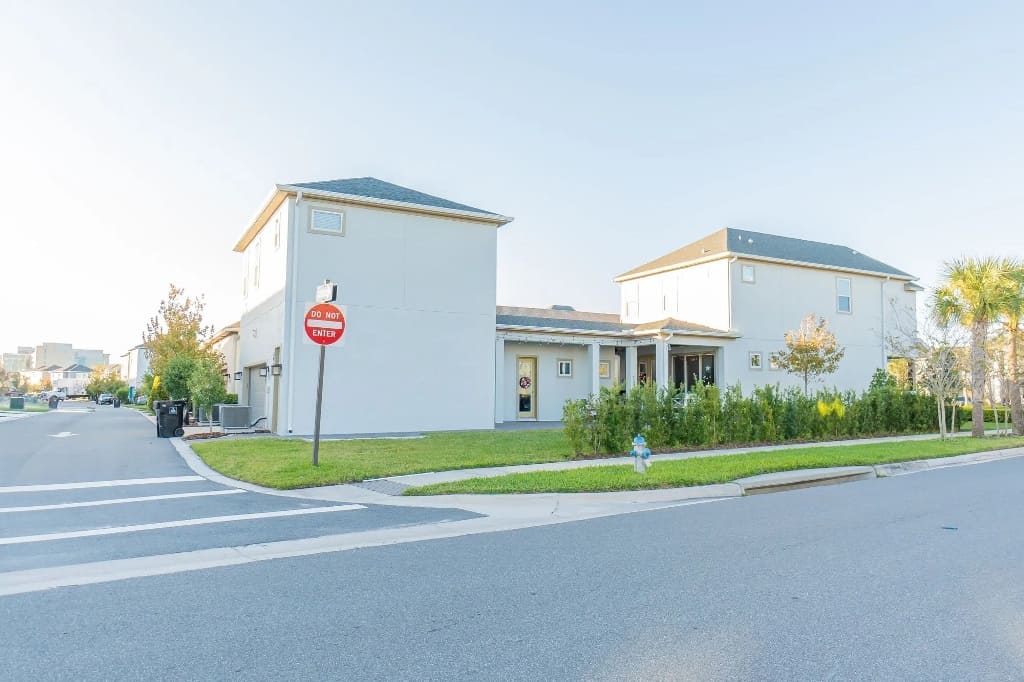
Two neighbors build nearly identical 600-square-foot backyard units. One pays for a sprinkler system, a design stamp, and a water meter upgrade. The other pays for none of it. Both followed the rules. The difference had nothing to do with the ADU itself, and everything to do with the house sitting in front of it.
So, do ADUs need fire sprinklers in California? Sometimes. The honest answer is that it depends on the main house, the way your project is set up, and the fire conditions where you live. This guide explains California ADU sprinkler rules in plain language, the situations that flip the answer, and the other fire-review items that can change your design and budget whether or not sprinklers are involved.
The Quick Answer
Under California ADU sprinkler law, an ADU generally can’t be required to have fire sprinklers if the primary residence isn’t required to have them. If the main house is required to have sprinklers, the ADU can be required to have them too. Your fire authority can still review access, water supply, defensible space, and wildfire exposure. Treat the statewide rule as your starting point, then confirm with your building department before you pay for plans.
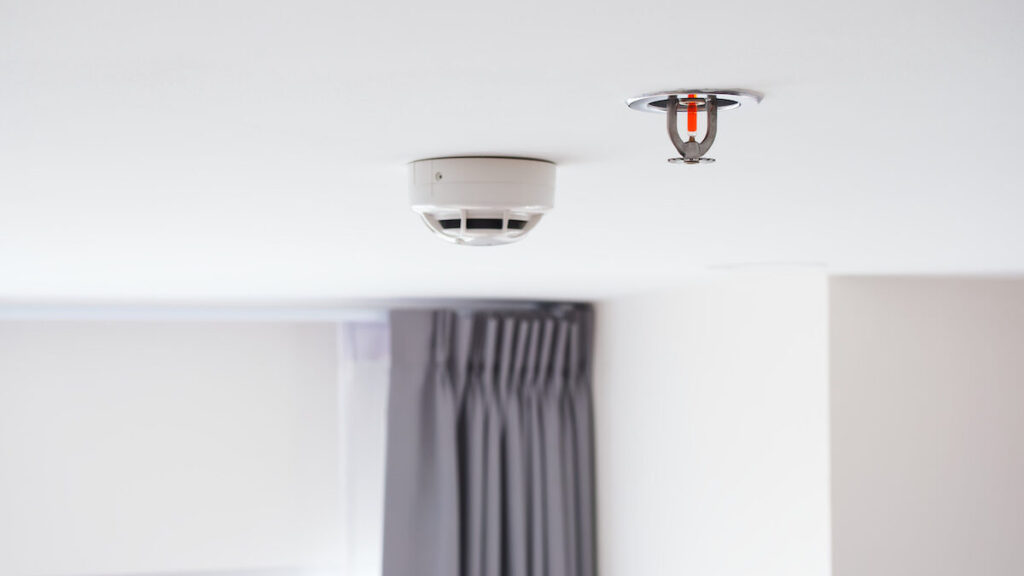
ADU Fire Sprinkler Requirements: The Statewide Rule in Plain Language
The state’s ADU statute says ADUs shall not be required to provide fire sprinklers if they are not required for the primary residence, and that building an ADU can’t trigger a sprinkler requirement in the existing main house. HCD, the state housing agency, has repeated this to cities whose ordinances tried to add conditions, as in its review letter to the City of Norco. Many older articles cite section 65852.2, but the state moved its ADU laws in 2024 to Government Code section 66310 and following, with the sprinkler language in section 66314.
The practical question becomes whether the main house is required to have sprinklers. Since 2011, the California Residential Code (section R313) has required sprinklers in newly built one- and two-family homes. A house built decades ago wasn’t required to have them, so an ADU added to that lot generally can’t be forced to install them either. HCD’s ADU handbook uses exactly this example, and it adds the flip side: if that same house later goes through a remodel big enough to make sprinklers mandatory, an ADU created after the remodel must have them too.
Situations That Change the Answer
Statewide guidance is clean on paper. Real projects are messier, and these are the setups that most often change the result.
Older main house without sprinklers
This is the classic case for exemption. If the home was built before sprinklers were required and hasn’t been altered enough to trigger them, a detached ADU generally doesn’t need them. Detached ADU sprinkler requirements follow the main house, not the size of the backyard unit.
New or heavily remodeled main house
If the primary residence is new construction or was remodeled enough to be newly subject to sprinklers, the ADU can be required to have them. Timing matters here, since HCD‘s wording refers to an ADU created after the remodel, so ask your building department how it treats the sequence on your property.
Main house and ADU built together
A new home and a new ADU on the same permit generally land on the sprinkler side, because the new main house is required to have them.
Attached ADUs
Attached ADU fire sprinklers are a frequent point of confusion. State law says the ADU can’t trigger a sprinkler requirement in the existing home, and HCD has told cities that they can’t add conditions around that. If a plan-check comment says otherwise, politely ask for the code basis in writing before you spend money.
Multifamily properties
If an existing multifamily building has sprinklers, an ADU on that lot can be required to have them. The multifamily structure counts as the primary residence.
SB 9 projects
Homes built under SB 9 are new residential construction, not ADUs. The ADU exemption is written around ADUs, so expect new-home sprinkler rules to apply and confirm with your building department.
Local fire authority conditions
Cities, counties, and fire districts all add their own review layers. Some require a form or letter to document an exemption. Others review access and water supply in detail. The statewide rule limits local ADU fire sprinkler requirements when the main house is exempt, but it doesn’t remove other fire code items.
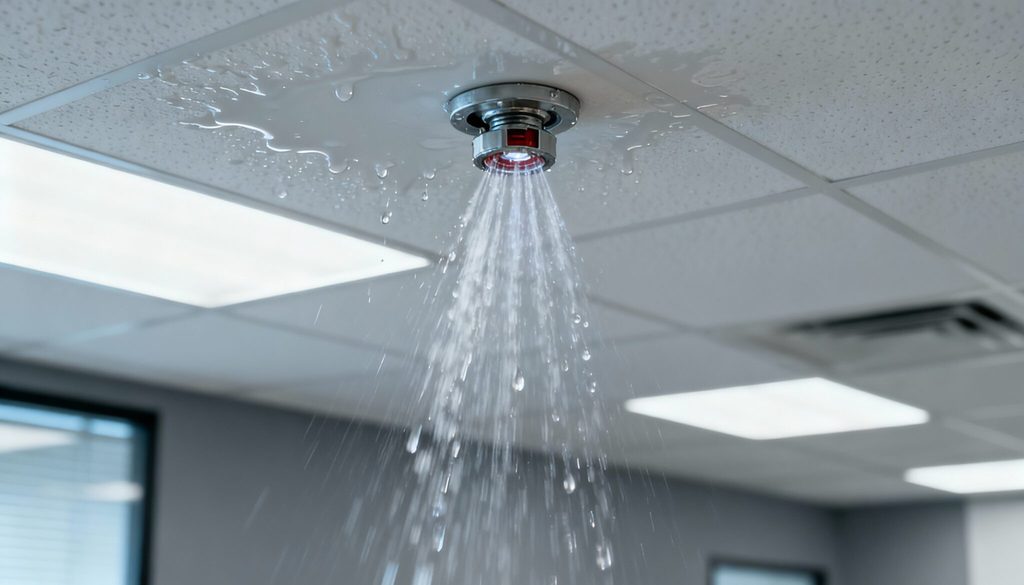
Fire Review Beyond Sprinklers
Many homeowners win the sprinkler argument and then get surprised by the rest of the fire review. These are the ADU fire access requirements and related items that tend to come up.
Access routes: fire crews need a way to reach the property and, ideally, the unit. Long driveways, narrow gates, and steep grades get attention, especially in rural and hillside areas.
Address visibility: an ADU in the back needs an address or directional signage that someone can read from the street at night.
Hydrants and water flow: reviewers may ask how far the nearest hydrant is and whether the water supply is adequate for firefighting.
Defensible space: in wildfire areas, vegetation clearance rules apply around structures. California’s Public Resources Code section 4291 is the baseline many counties cite.
Wildfire zones: properties in high or very high fire hazard severity zones typically face ignition-resistant construction standards for roofing, vents, siding, and eaves.
Separation and setbacks: state law allows reduced side and rear setbacks for ADUs, but walls built close to a property line generally need fire-rated construction under the Residential Code.
Firefighter access to the rear yard: on a tight lot, a clear side path can matter as much as the sprinkler question.
A Local Example: Sonoma County
Sonoma County shows how this plays out when a fire authority gets specific. Its Fire Prevention division publishes a form for requesting the state-law ADU sprinkler exemption, and its ADU guidance describes a review that looks at fire access, vegetation management, water supply, addressing, and setbacks to property lines. Not every county works this way, but the exemption is often a document you request, not something that happens automatically.
ADU Sprinkler Cost and Design Implications to Raise Early
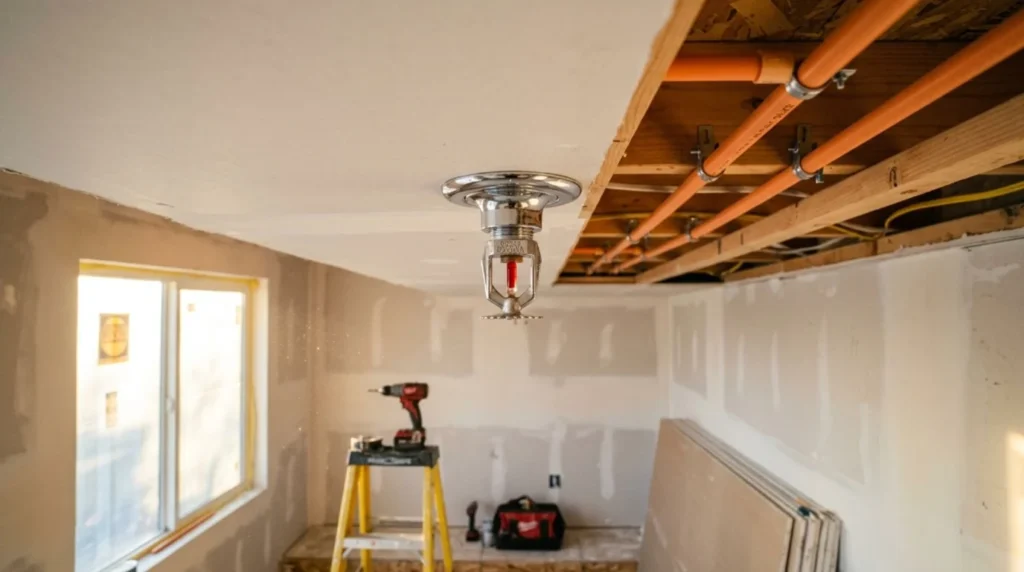
If sprinklers are required, plan for them at the schematic stage. They affect your water service, your utility room, your ceiling and soffit layout, and your schedule.
Published ADU sprinkler cost figures vary widely, and many come from companies that sell systems or alternatives, so use them as rough orientation only. Industry sources often cite roughly $1 to $2 per square foot for sprinklers in new homes. One Bay Area ADU builder cites $6.14 to $12.02 per square foot for ADUs, or about $4,600 to $9,000 on a 750-square-foot unit. Small footprints carry fixed costs like design, hydraulic calculations (often cited at $500 to $1,500), permits, and a licensed installer, which is why the per-square-foot number jumps.
The bigger swing is often water service. A system can require a larger water meter, a backflow device, or even a new service line. Vendor sources cite meter upgrade fees from a few thousand dollars to $15,000 or more, and service line work can add far more, depending on your water district. Ask your water provider for a written estimate early. Some fire authorities accept alternative listed systems, but only if they approve them in writing, so ask before assuming.
For a baseline across the whole project, run your numbers through our ADU cost calculator, then add a separate line for fire protection and water service once you have quotes.
Ten Questions to Ask Your Planning Department and Fire Authority
Bring this list to your first pre-application conversation.
- Is my main house required to have sprinklers under the code that applied when it was built?
- Has any past remodel made the main house newly subject to sprinklers?
- Which agency reviews fire items for my address: the city, the county, or a fire district?
- Is my property in a fire hazard severity zone or a wildland-urban interface area?
- Is there a form or letter I need to file to document a sprinkler exemption?
- What are the access requirements for the road, driveway, and path to the ADU?
- How far is the nearest hydrant, and what flow does the unit need?
- If sprinklers are required, which standard applies, who designs them, and are alternatives accepted?
- What defensible space and ignition-resistant construction rules apply?
- At what stage does fire sign off, and what inspections should I schedule?
Fire-Related Permit Submittal Checklist
ADU fire permit requirements differ by jurisdiction, but this list covers what most reviewers want to see.
- Site plan showing the fire access route, address location, and nearest hydrant
- A statement of the main house’s year built and any past sprinkler-related permits
- Sprinkler plans and hydraulic calculations, if required
- Water service details, including meter size
- Sprinkler exemption form or written confirmation, if applicable
- Defensible space or vegetation plan, where required
- Wall construction details for any wall close to a property line
- A saved record of written communication with the fire authority
Frequently Asked Questions
Do ADUs need fire sprinklers if my house is old? Generally not, if the main house wasn’t required to have them and hasn’t been remodeled enough to trigger the requirement. Confirm with your building department.
Are fire sprinklers required for a garage conversion ADU? The same rule applies. A conversion follows the main house’s sprinkler status, though local fire access and other fire code items can still apply.
Can my city require sprinklers anyway? State law limits what a city can require regarding ADU sprinklers when the main house doesn’t need them. If a comment conflicts with the statute, ask for the code citation in writing, and consider local legal advice for disputes.
Getting Fire Questions Settled Before You Design
Fire review is one of the few parts of ADU permitting where a short early conversation can save real money. Confirm your main house’s status, find out which fire authority has jurisdiction, and get every requirement in writing before you commit to a layout. If you’re still shaping the plan, our AI ADU design advisor can help you test layouts with access paths and mechanical space in mind, and our zoning information lookup is a good first step for confirming your base zoning. When you’re ready to bring in a builder, use our contractor license lookup tool to check licenses first, then ask each one how they’ve handled fire review in your area. Do ADUs need fire sprinklers on your lot? Your fire authority has the final word, and your first few phone calls will tell you which way it’s going.