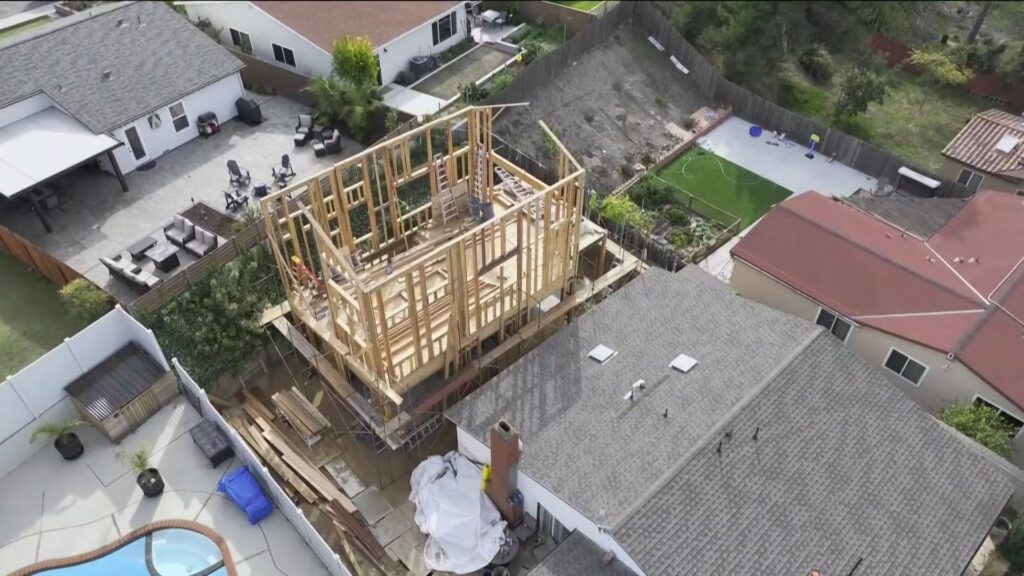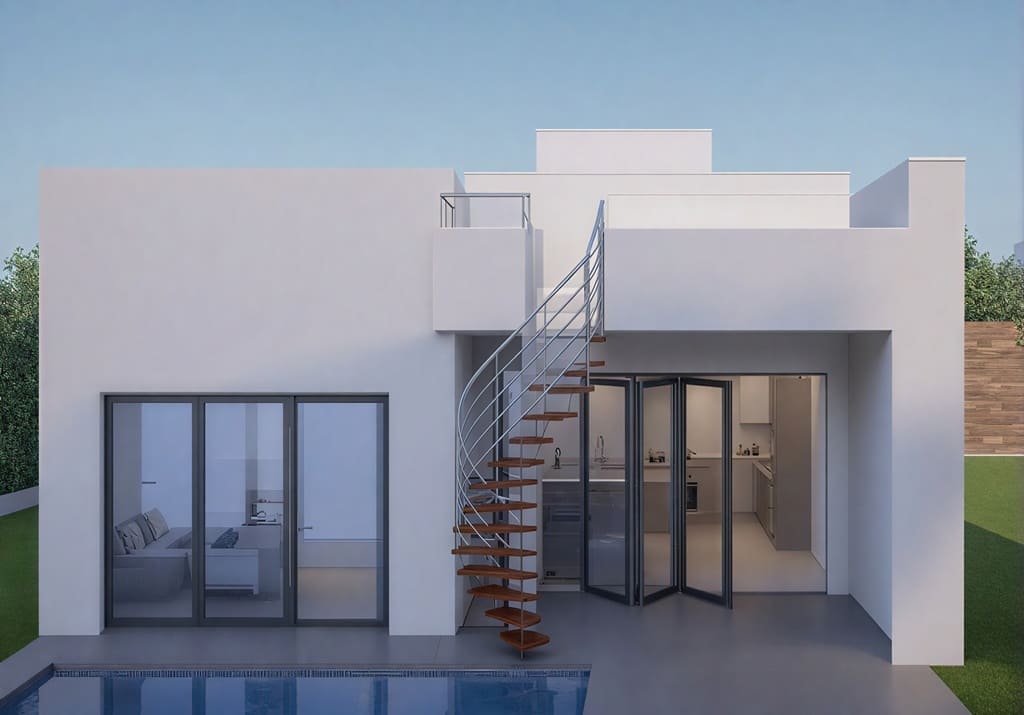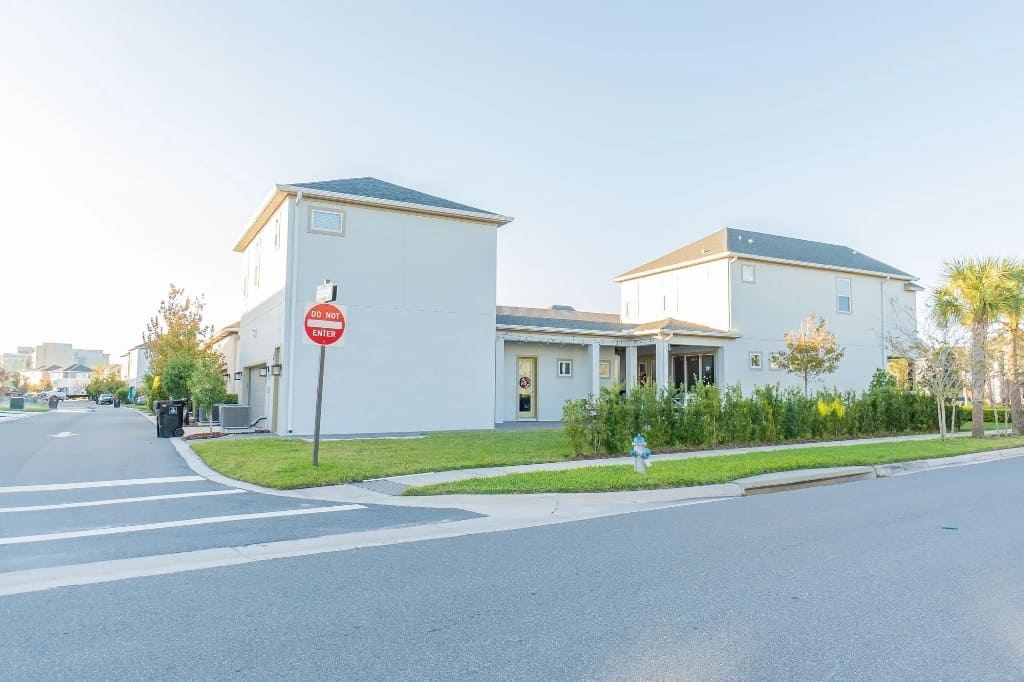
Many ADU projects get delayed for one simple reason: a misunderstanding of ADU setback requirements. Even a small mistake in distance from property lines can trigger permit rejection or force costly redesigns. That’s why knowing ADU setback rules by state is essential before you start building.
The challenge? There’s no universal standard. The minimum setback for an ADU varies by state, city, zoning type, and whether your unit is one story or two. Planning insights from the American Planning Association confirm that setbacks are a primary driver of zoning compliance failures — and one of the most avoidable ones when you know what to look for.
Use the FindADUPros Zoning Information Lookup to confirm your local rules before drawing a single line.
Understanding ADU Setback Requirements: Why Property Boundaries Matter
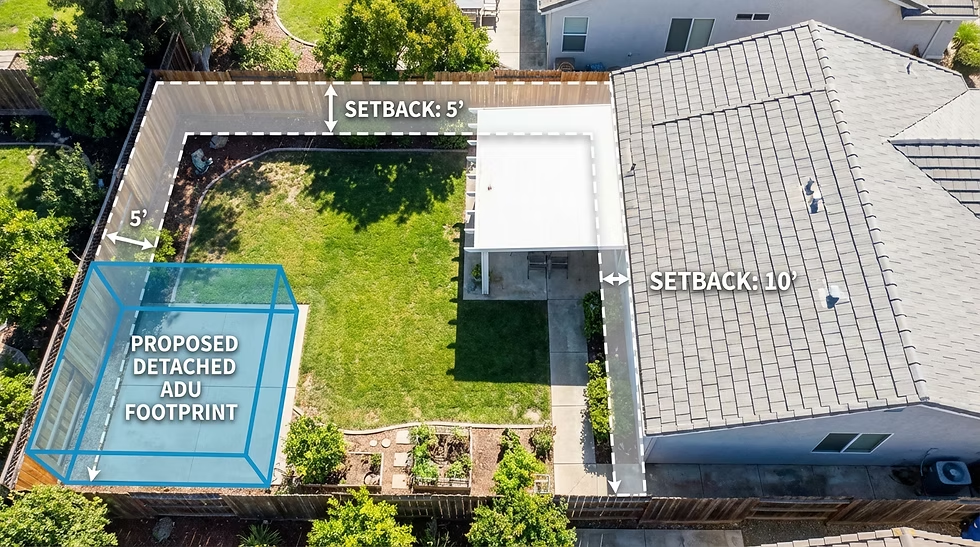
ADU setbacks define the minimum distance your unit must be built from property lines, fences, neighboring structures, and in some cases, the primary home itself. They aren’t standalone rules — they’re embedded in a broader zoning code that also governs height limits, lot coverage, and density.
Three types of setbacks apply to most ADU projects:
- Front setback: Distance from the street or front property line — typically the largest requirement, governed by local ordinance
- Side setback: Distance from the left or right property lines — commonly 4–10 feet depending on state and city
- Rear setback: Distance from the back property line — often the most critical constraint for detached backyard ADUs
What determines your specific numbers: population density and urban planning priorities, lot size and neighborhood layout, fire safety codes, and local ADU adoption policy. Dense cities allow smaller setbacks to encourage housing. Suburban neighborhoods may require larger buffers for privacy and spacing. The critical point: states like California set a maximum ceiling on how restrictive a setback can be (4 feet), while states like Texas leave absolute power to each city — meaning a homeowner in Dallas must follow an entirely different rulebook than one in Austin.
New Detached Builds vs. Garage Conversions: The 0-Foot Setback Exception
This is the single most important setback distinction that most ADU guides skip entirely — and getting it wrong is expensive.
New detached ADU construction on a standard residential lot is subject to your state and local setback minimums from the start. California mandates no less than 4 feet from side and rear property lines. Texas ranges from 5–15 feet by city. Washington caps at 5 feet. These floors cannot be negotiated at the design stage — they’re embedded in the permit application requirements.
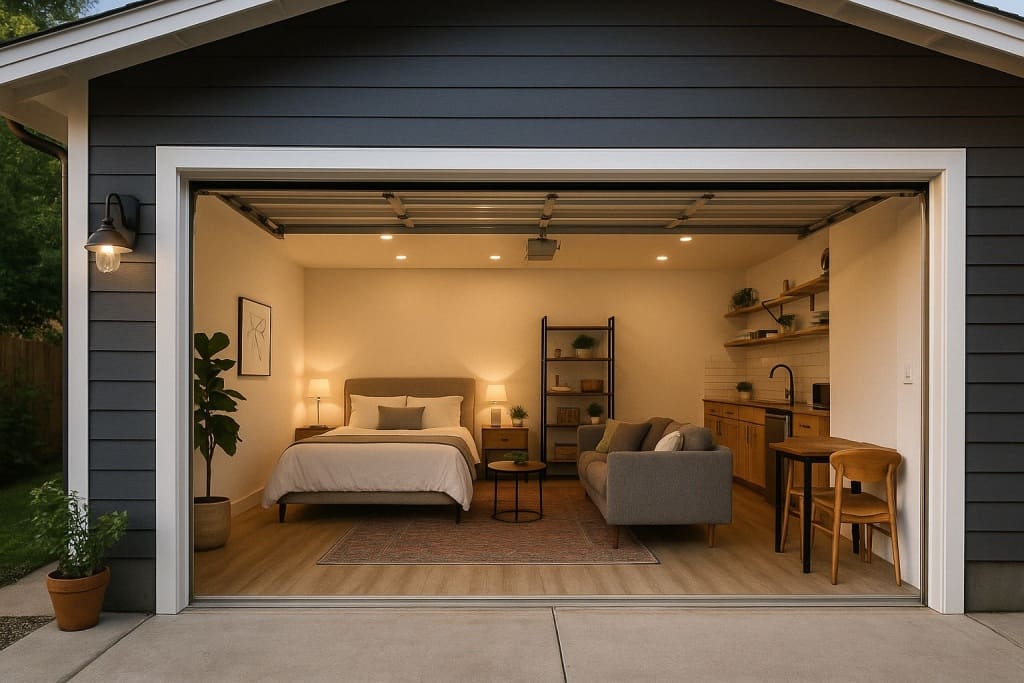
Existing structure conversions operate under an entirely different legal framework. Under California law — and increasingly under Oregon and Washington frameworks — if you convert a legally permitted existing structure (such as a detached garage) into an ADU, the city cannot force you to move or rebuild the walls to comply with current setbacks. The existing footprint is completely grandfathered at its current position, including a 0-foot setback if that’s where the structure sits.
How Local Municipalities Grandfather Existing Structural Footprints
To qualify for the 0-foot setback exemption under California Government Code and similar state frameworks, four structural conditions must be met simultaneously:
1. The structure must be legally permitted. The existing garage must have been built with a valid permit — not constructed without a permit. An unpermitted garage cannot claim grandfathered status. Before assuming your garage qualifies, pull its permit history through your county’s building department records. An unpermitted structure must be legalized first — potentially through AB 2533’s amnesty pathway — before the conversion exemption applies.
2. The existing footprint must be retained. You can renovate the interior completely and add insulation, drywall, plumbing, and electrical — but you cannot expand the structure’s footprint outward toward the property line. Any new wall added beyond the original foundation line is treated as new construction and must meet current setbacks.
3. The wall facing the near property line must be upgraded to 1-hour fire-resistance rating. This is mandatory under IRC Section R302 and California Building Code Section 705 when any wall sits within 5 feet of a property line. The upgrade requires double-layer 5/8-inch Type X drywall on the interior face, fire-treated or non-combustible framing, and approved exterior cladding materials (typically stucco or fiber cement, not wood siding). This is a non-negotiable construction requirement — the exemption doesn’t waive fire-resistance, it just preserves the footprint position.
4. Window and door openings on the fire-rated wall must be eliminated or protected. Standard windows cannot face a property line within 5 feet. Any opening — door or window — on that wall face must either be closed off or replaced with approved fire-rated glazing assemblies rated at a minimum 3/4-hour fire protection. In practice, most conversions simply close off openings on the near-property-line wall and source natural light from other elevations.
Demolishing the garage forfeits the exemption permanently. Once the original structure comes down, the lot is treated as a blank slate for new construction. The new structure must comply with current setback minimums — which on a tight lot may significantly reduce buildable area compared to the original garage footprint. This is the single strongest argument for converting rather than demolishing.
The Fire-Safety Surcharge: Navigating 1-Hour Fire-Rating Requirements
IRC Section R302: Building Code Rules Within the 5-Foot Boundary Line
Many homeowners assume that if a city allows a 4-foot setback, the construction cost at that distance is the same as it would be at 10 feet. It isn’t — and the difference can add $8,000–$20,000 to a project.
Under IRC Section R302, any exterior residential wall built within 5 feet of a property line must meet a 1-hour fire-resistance rating. This requires:
- 5/8-inch Type X drywall (two layers on the interior face in most configurations)
- Fire-treated lumber framing or non-combustible structural members
- Restricted or eliminated window and door openings — standard glazing cannot face a near-property-line wall; fire-rated glazing assemblies are expensive and require separate engineering
- Approved exterior cladding — standard wood siding is prohibited; stucco, fiber cement, or other non-combustible materials required
The cost premium for fire-rated wall construction versus standard framing runs $15–$30 per square foot of affected wall area. For a garage conversion with a 20-foot wall face sitting within 5 feet of the property line, that’s $6,000–$12,000 in additional material and labor costs that most early-stage budgets don’t account for. Use the FindADUPros ADU Cost Calculator to model these fire-rating costs before finalizing your footprint position.
State-by-State Breakdown: Comparing Minimum Setback Allowances for ADUs
| State | Standard New Detached Setbacks | Existing Conversion Rules | Fire-Separation / Structural Triggers |
|---|---|---|---|
| California | Max 4 ft rear and side protected statewide for units ≤800 sq ft | 0-foot allowed if converting legally permitted existing footprint (see conditions above) | Walls within 5 ft require 1-hour fire-rating; no windows on affected wall face |
| Texas | Completely decentralized: 5 ft (Austin) to 15 ft (Dallas) | Varies strictly by municipal ordinance and deed restrictions | Must honor vertical clearance envelopes for ONCOR/CenterPoint overhead utilities |
| Florida | Generally 5–10 ft; governed by county codes | Rarely grandfathered; rigorous local variances required | Strict wind-load engineering and coastal setback zones |
| New York | 10–20 ft; deeply local by town board | Standard variances required; rarely protected automatically | Stringent local zoning boards; architectural review committees |
| Washington | ~5 ft rear/side baseline under HB 1110/1337 | Highly permissive for backyard cottages under state de-regulation | Critical environmental area (ECA) steep-slope and wetland setbacks |
| Oregon | Often 4–5 ft in progressive cities; matches primary home elsewhere | High flexibility for garage conversions across urban growth boundaries | Structural walls facing adjacent structures must meet fire-safety envelopes |
California’s 4-Foot State Mandate and the 800 Sq Ft Variance Override
California’s state-level override extends beyond setbacks to lot coverage and FAR restrictions. Local cities cannot enforce any zoning rule — including lot coverage limits or floor area ratio caps — if it completely prevents the construction of a state-protected detached ADU of up to 800 square feet with standard 4-foot rear and side clearance. This means a small urban lot where standard lot coverage rules would mathematically prohibit an ADU is still entitled to that 800 sq ft by-right unit under state law.
The Texas Decentralization Challenge: Municipal Ordinances vs. Private Deeds
Texas is the clearest example of the state-versus-city versus-neighborhood conflict. State law imposes no setback floor — each city sets its own. Austin under the HOME Initiative may apply setbacks as low as 5 feet. Dallas may require 10–15 feet through Board of Adjustment review. And in Houston, where no formal zoning exists, private deed restrictions recorded by neighborhood civic clubs can impose setbacks that override anything city hall would otherwise allow. Before committing to any Texas ADU footprint, pull your unredacted title policy report. Use the FindADUPros Contractor License Lookup to find Texas contractors who navigate deed restriction compliance regularly.
Measuring the Clearance Envelope: Walls, Eaves, and Gutters Explained
Permissible Architectural Encroachments and Overhang Regulations
This is the measurement error that most consistently sends permit applications back for redesign.
Does your local code measure setbacks from the structural wall face or from the outer roof drip line?
A 24-inch roof overhang on a structure sitting 4 feet from the property line means the drip line sits only 2 feet from the boundary. In jurisdictions that measure to the eave, this creates an automatic violation even though the wall itself is compliant.
However, there’s a nuance most guides miss: many municipal codes allow roof eaves, architectural cornices, and gutters to encroach up to 2 feet into a mandatory setback zone — provided they do not cross the actual property boundary line or violate local fire-separation distances. This is called a permissible architectural encroachment. Under this rule, a structure with a 24-inch overhang sitting 4 feet from the property line may actually be compliant — because the eave encroaches 2 feet into the setback zone, stopping exactly at the 2-foot boundary of the permissible encroachment allowance.
The distinction matters enormously for design: an architect who knows your jurisdiction’s encroachment rules can design a deeper, more sheltered roofline without triggering a violation. One who doesn’t will pull the entire structure back unnecessarily, reducing interior square footage. Always confirm the measurement methodology and the permissible encroachment allowance with your local planning department before the roofline is finalized.
Common Setback Violations That Trigger Instant Building Permit Rejections
- Measuring from the fence, not the true property line: Neighborhood fences are frequently misplaced by inches or feet. Relying on a fence line without a certified survey is a reliable path to a violation
- Ignoring eave and overhang geometry: A 4-foot wall setback with a 24-inch overhang may leave only 2 feet of actual clearance — confirm whether your jurisdiction measures to the wall or the drip line
- Overlooking utility easements: A recorded sewer, power, or drainage easement prohibits construction inside its boundaries regardless of setback allowances — pull your title report before designing anything
- Assuming state rules apply without local verification: California’s 4-foot cap is a ceiling on local restrictions, not a guarantee that all cities honor it without pushback — file with documentation of state law preemption ready
- Skipping the fire-rating cost in budget estimates: Walls within 5 feet of a property line require Type X drywall, fire-treated framing, and no standard window openings — budget accordingly before signing a contract
4 Smart Strategies to Maximize Your Backyard Footprint Legally
1. Convert instead of demolish. If an existing garage or outbuilding sits close to or on the property line, conversion preserves the grandfathered footprint. Demolishing and rebuilding resets the clock and forces current setback compliance.
2. Use pre-approved city plans. Many cities offer pre-reviewed ADU designs that have been confirmed to meet local setback, height, and fire-separation requirements. Using one eliminates setback-related plan check corrections. Check with your city’s development services department — Austin, San Antonio, Sacramento, and San Jose all maintain active plan libraries.
3. Design for the encroachment allowance. If your jurisdiction permits 2-foot eave encroachments into the setback zone, your architect can design a deeper roofline without pulling the structure back. This recovers covered exterior space without consuming interior square footage.
4. Order a certified boundary survey before design begins. A licensed surveyor’s stakes-and-boundary report gives your architect exact property line coordinates. Designing to approximate lines and discovering errors at foundation inspection is one of the most expensive corrections in residential construction.
Use the FindADUPros AI ADU Design Advisor to explore layout options within your setback envelope before engaging an architect.
The Critical Site Planning Clearance Protocol
Before finalizing your architectural footprint, cross-reference your site map with these property markers:
- Measure from the true property line, not the fence: Fences are frequently misplaced by inches or feet. Always order a certified stakes-and-boundary survey before finalizing placement
- Calculate roof eave overhangs: A 4-foot wall setback with a 12-inch overhang may leave only 3 feet of actual clearance — confirm whether your jurisdiction measures to the wall or the drip line, and whether an encroachment allowance applies
- Locate underground and overhead utility easements: A sewer lateral or power line easement running across your backyard prohibits construction inside that zone — even if the general ADU setback rule is 4 feet
- Verify fire-separation distances between buildings: Most local codes require a mandatory 6–10-foot clear buffer between the primary house and the new ADU for fire-truck access, independent of property line setbacks
- Confirm garage permit history before claiming the exemption: The 0-foot setback conversion exemption only applies to legally permitted existing structures — pull permit records from your county building department before assuming your garage qualifies
The Bottom Line
ADU setback requirements vary by state, city, structure type, and height. The gap between a new detached build and a garage conversion is the most consequential distinction — conversions can retain 0-foot positions that new construction can never achieve. Fire-rating requirements within 5 feet of property lines add real cost that must be budgeted before design begins. And easements, deed restrictions, and eave measurement methodology are the invisible variables that catch the most projects off guard.
Most setback compliance failures are avoidable — they happen because homeowners skip the survey, miss an easement, or don’t ask the right questions about eave measurement before the roofline is finalized.
For vetted ADU contractors who know your local setback environment, visit FindADUPros. Use the ADU Cost Calculator to model how setback constraints and fire-rating requirements affect your total project cost.