Choosing between a detached ADU and an attached ADU can make a significant difference in cost, privacy, and long-term returns. Many homeowners assume the choice is simple — but the wrong decision can lead to higher expenses, lower rental income, or a missed opportunity to build real estate wealth through California’s latest legislative tools.
In 2026, the difference between these two ADU types isn’t just about square footage and construction timelines. New state laws have fundamentally shifted the strategic value of detached units — from SB 9 lot splitting to AB 1033 condo sales. Understanding these legislative shifts before you commit to a design is the highest-leverage decision you can make.
Use the FindADUPros AI ADU Design Advisor to explore layout options for both types before engaging any architect or contractor.
Detached ADU vs Attached ADU: The Core 2026 Real Estate Debate
What Is a Detached ADU? Independent Backyard Footprints
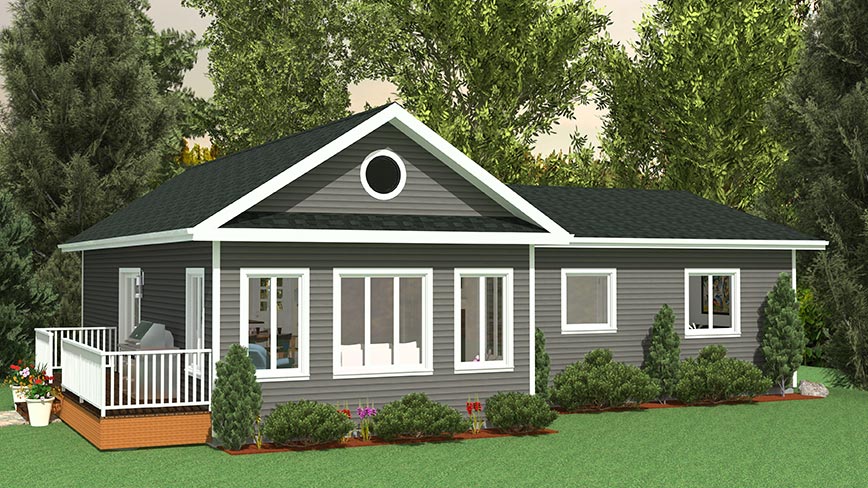
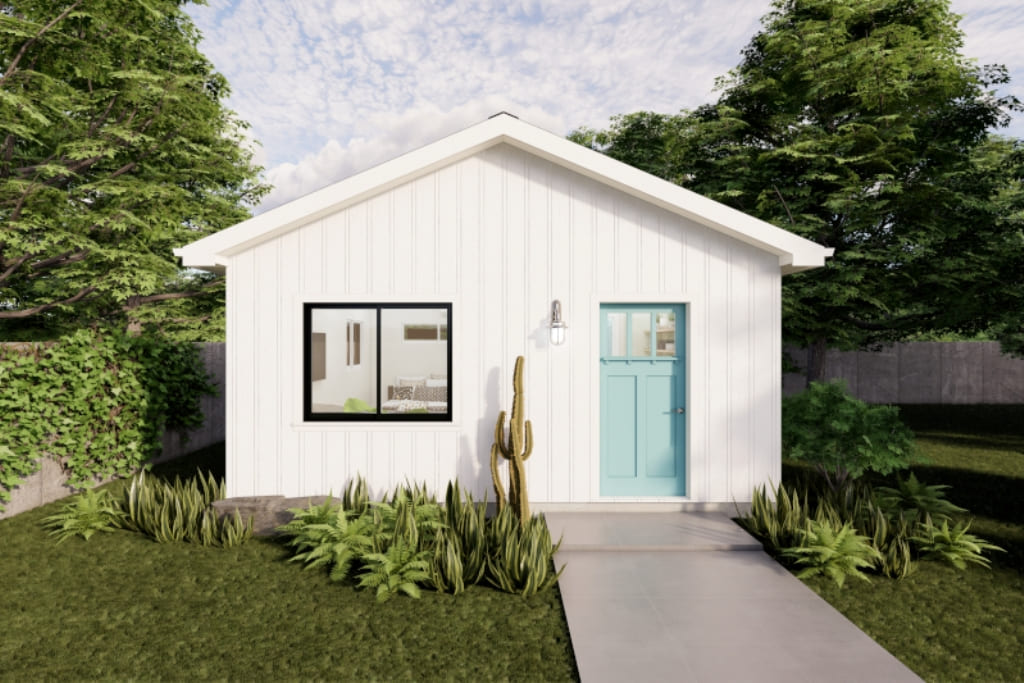
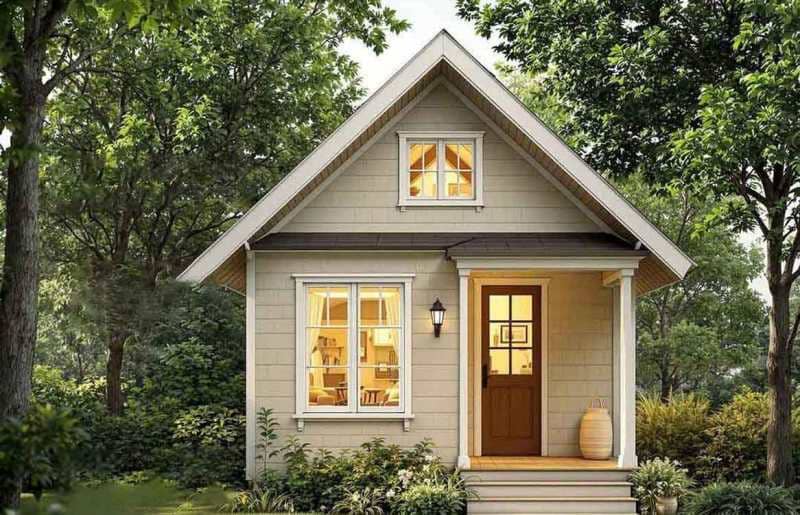
A detached ADU is a fully separate structure built independently from the main house — its own foundation, its own roof, its own utility connections, and its own entrance. It functions like a small standalone home. Detached ADUs are preferred for rental use because they offer complete privacy and feel like an independent living space. They also represent a scalable investment pathway that attached units legally cannot match, as explained below.
What Is an Attached ADU? Structural Additions and Shared Fire Walls
An attached ADU is built as an extension of the primary home, sharing at least one structural wall. It connects to the main home’s existing foundation and can often tap existing utility infrastructure directly. The shared wall requires a 1-hour fire-rated wall assembly — double-layer Type X drywall, fire-treated framing, and no unprotected openings on the partition — under Title 24 and International Building Code standards. Attached ADUs are generally more affordable and faster to build, but their structural connection to the primary home limits both design flexibility and long-term exit options.
Quick Comparison: The Core Differences at a Glance
| Feature | Detached ADU | Attached ADU |
|---|---|---|
| Cost | Higher overall ($200K–$400K+) | Lower overall ($150K–$250K) |
| Privacy | Complete (fully separate) | Moderate (shared wall) |
| Construction timeline | 8–12 months | 6–9 months |
| Rental potential | Strong (premium pricing, better tenant appeal) | Moderate |
| Title 24 solar mandate | Required for new construction | Generally exempt |
| AB 1033 condo sale eligibility | Highly favorable | Structurally difficult |
| SB 9 lot split compatibility | Compatible | Not compatible |
| Design flexibility | High — clean independent footprint | Limited by existing structure |
Section 2: Real Construction Costs and Budget Variances
Upfront Investment Breakdown: Foundation, Trenching, and Framing Differences
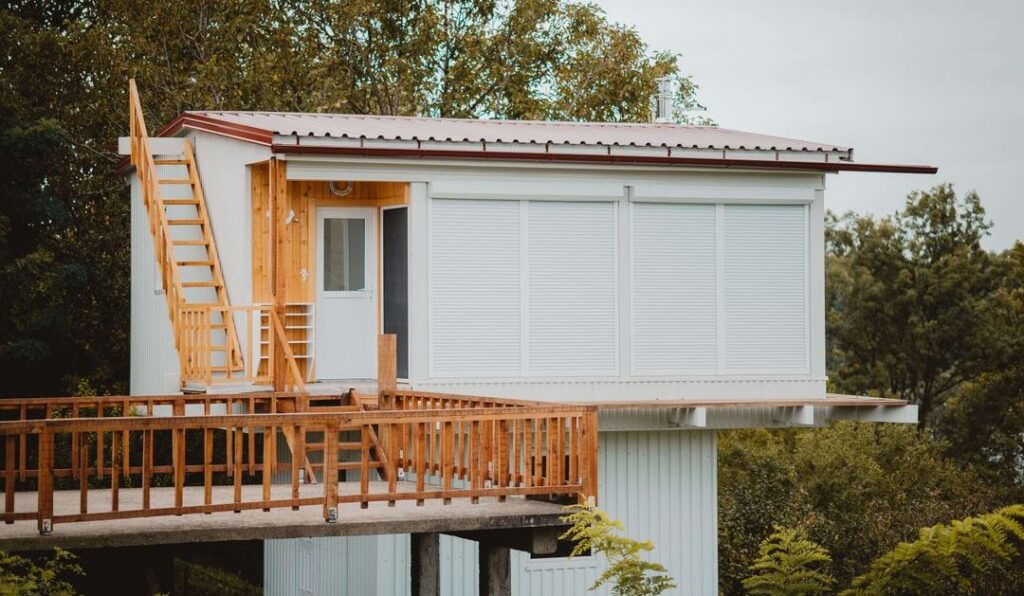
The cost gap between detached and attached ADUs is significant — and most of it comes from four structural line items that attached units avoid entirely:
| Engineering & Regulatory Variable | Attached ADU | Detached ADU | 2026 Hidden Cost |
|---|---|---|---|
| Foundation & Groundwork | Ties into existing concrete footing | Brand-new grading, excavation, full slab pour | Sloped terrain requires geotechnical soil report: $2,000–$5,000 extra |
| Utility Infrastructure | Sub-metering or tapping main home’s lines | Separate trenching to street mains | Trenching costs $100–$250 per linear foot; SB 477 limits excessive utility fees but not physical excavation |
| Fire Separation Rules | 1-hour fire-rated shared partition wall required | 4-foot minimum setback from property lines | Within 5 feet of primary home: fire-rated drywall and restricted window openings mandatory |
| HVAC Configuration | Can extend from main home’s zoned heat pump | Dedicated independent system required (multi-zone mini-split) | Title 24 mandates heat-pump technology over gas line tie-ins |
| Title 24 Solar Mandate | Generally exempt | Solar panels required — adds $8,000–$15,000 | Non-negotiable permit requirement for all new detached builds |
Typical cost ranges in 2026:
- Attached ADU: $150,000–$250,000
- Detached ADU: $200,000–$400,000+
Cost per square foot:
- Attached: $250–$400/sq ft
- Detached: $300–$500+/sq ft
For a detailed breakdown of hidden costs that apply to both types, read our companion piece on Hidden Costs of Building an ADU in 2026.
Cost Per Square Foot Reality Check: Why Appraisals Vary Long-Term
Smaller units cost more per square foot because fixed expenses — permits, utility connections, architectural drawings, structural engineering — are the same regardless of size. A 400 sq ft attached ADU and an 800 sq ft one carry nearly identical soft costs; the per-square-foot figure looks dramatically different even though the design fee is almost identical.
Use the FindADUPros ADU Cost Calculator to model both options against your specific lot and market before committing to either type.
Section 3: Navigating Zoning Laws, Permitting Speed, and SB 1211
Setback Exemptions: Maximizing Smaller Lots and Fire Safety Codes
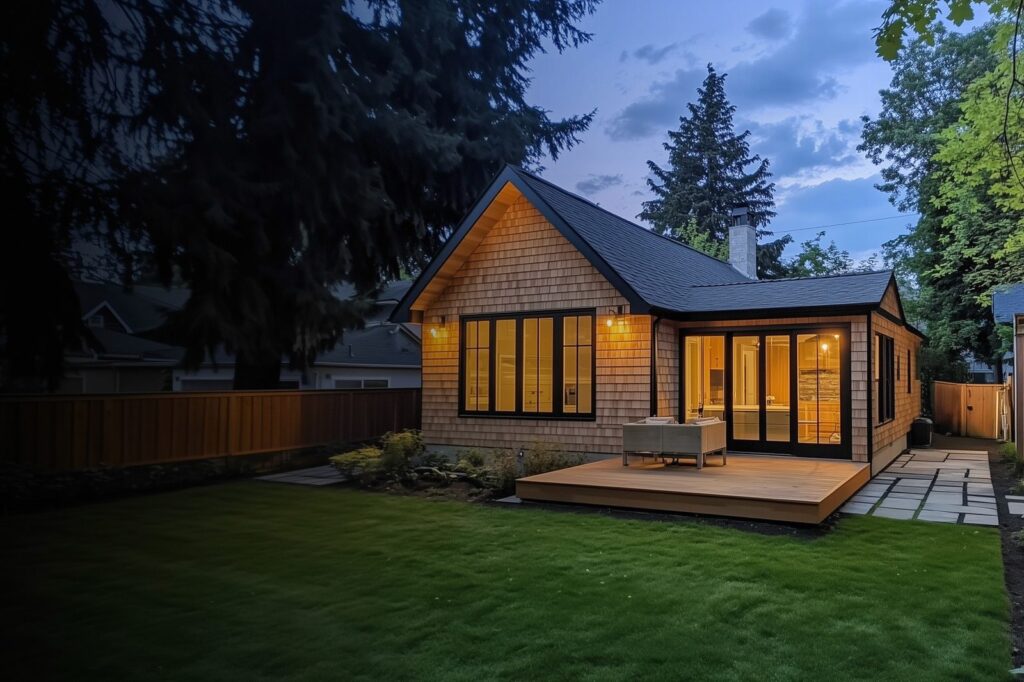
Attached ADUs have a fundamental setback advantage: because they extend the primary home’s footprint, they don’t require additional rear or side clearance beyond what the primary structure already holds. They can work on lots where a detached ADU’s 4-foot clearance requirement would leave insufficient buildable area.
Detached ADUs must maintain a minimum 4-foot rear and side setback under California state law — and if placed within 5 feet of the primary home, mandatory 1-hour fire-rated wall assemblies with restricted window openings apply. This can significantly affect both design and construction cost on tighter lots.
The SB 9 and SB 1211 Stacking Advantage for Detached Units:
This is where detached ADUs gain a major strategic edge that attached units simply cannot match. Under California’s SB 9, homeowners can split their single-family lot into two parcels — enabling up to four residential units total on what was previously a single-family property. A detached ADU on a subdivided parcel becomes a separately titleable asset.
SB 1211 (effective January 1, 2025) went further: on properties with existing multifamily structures, homeowners can now build up to eight detached ADUs by right, bypassing local density caps entirely. This “stacking” effect transforms a detached ADU from a single backyard rental into a scalable property development strategy. An attached ADU sharing a structural wall with the primary home cannot be stacked under either framework.
Tapping Utilities: Sub-Metering vs. Main Street Trenching Fees
Attached ADUs tap the main home’s existing utility infrastructure through sub-metering or direct connection — a significant cost advantage. The electrical panel, plumbing stack, and gas line are already present; the attached unit draws from them with relatively modest connection work.
Detached ADUs require separate trenching across the yard to reach the main service lines. At $100–$250 per linear foot, a 60-foot backyard trench adds $6,000–$15,000 in utility connection costs alone — before any panel upgrades or service capacity fees. If your backyard slopes away from the street, a macerating ejector pump for the sewer connection adds another $3,000–$7,000.
Use the FindADUPros Zoning Information Lookup to check whether your jurisdiction has any utility fee waiver programs for ADU connections that could offset these costs.
Section 4: Return on Investment and Long-Term Value Capture
AB 1033 Unleashed: Selling Your Detached ADU Separately as a Condo
This is the single most significant legislative development in California ADU law for homeowners building for long-term wealth — and it exclusively favors detached units.
AB 1033 permits California municipalities to pass ordinances allowing ADUs to be sold separately as condominiums. Cities including Los Angeles, Berkeley, and San Jose have adopted the program. A detached ADU on its own independent footprint is far easier to separate into a distinct condominium structure than an attached unit sharing a structural wall, mechanical systems, and foundation with the primary home.
The financial implications for detached ADU owners in participating cities:
- Additional condo subdivision costs: $15,000–$30,000 (HOA formation documents, title work, survey, legal)
- Potential sale price: $400,000–$800,000 in high-demand California markets depending on size, location, and finish
- ROI profile: Dramatically higher than annual rental income — a $250,000 detached build that sells for $500,000 as a condo produces a 100% return at sale, independent of any rental income earned during ownership
An attached ADU sharing a structural wall with the primary home faces significant legal and structural hurdles in creating a separate condominium — shared MEP systems, common walls, and property boundary complexity all complicate the AB 1033 pathway. For homeowners building to eventually sell a unit, the detached ADU is the clear strategic choice. To safeguard your budget from predatory contractor pricing during this process, read our consumer protection warning on Biggest ADU Contractor Scams Homeowners Need to Avoid in 2026.
Rental Premium Yields: Why Tenants Pay More for Standalone Spaces
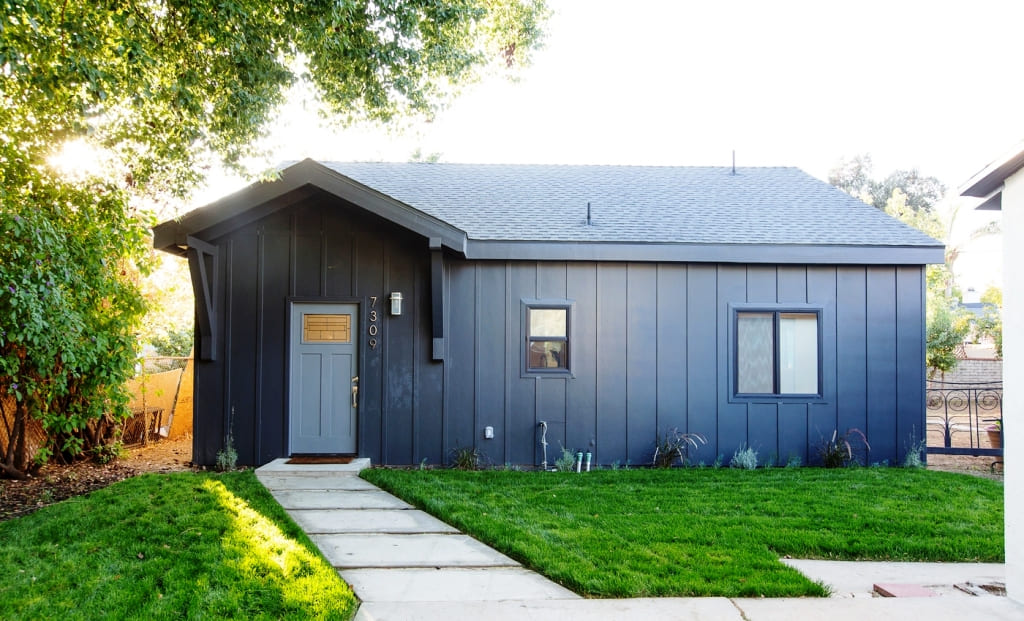
Detached ADUs consistently command higher rents than attached units of comparable size because they deliver the one thing tenants pay a premium for: genuine independence.
- Bay Area: Detached ADUs rent for $2,500–$4,000/month; attached units $1,800–$2,800/month
- Los Angeles: Detached $2,000–$3,500/month; attached $1,500–$2,500/month
- San Diego: Detached $1,800–$3,000/month; attached $1,400–$2,200/month
Research from the UC Berkeley Terner Center for Housing Innovation confirms that homeowners often choose ADU types based on intended use — rental versus family housing — and that detached units attract stronger long-term tenant demand, especially in high-density urban markets where private outdoor space and no shared walls are premium features.
Section 5: How Lenders Appraise Detached vs. Attached ADUs
This is the section most ADU guides skip entirely — and it directly affects your ability to pull equity from your property after construction.
The Income Approach vs. The Sales Comparison Approach
Lenders and appraisers use different valuation methodologies depending on ADU type, and the method applied dramatically affects your appraised value:
Detached ADUs are most accurately valued using the income approach — where the appraiser capitalizes the unit’s market rent to determine its contribution to property value. The formula: Monthly rent × 12 ÷ local capitalization rate. A detached ADU renting at $2,500/month in a market with a 5% cap rate contributes $600,000 in income-approach value to the property.
The challenge: appraisers must find “income-producing accessory unit” comparables within a defined radius. In markets where detached ADUs are newer, those comps may not exist — producing conservative initial appraisals that understate the unit’s true value. Keep exhaustive construction cost documentation and a clean rental ledger from day one — these become critical inputs for the appraiser when comparable sales data is thin.
Attached ADUs are most commonly valued using the sales comparison approach — the appraiser identifies comparable sales of similar homes with similar additions. This methodology is more straightforward and generally produces more predictable appraisals, because adding square footage to a home has clear comparable data in most markets.
What This Means for HELOCs and Cash-Out Refinancing
For homeowners using a HELOC or cash-out refinance after ADU construction, the appraisal methodology directly determines how much equity you can access:
- An attached ADU that cleanly adds 500 sq ft to a 2,000 sq ft home in a neighborhood where similar 2,500 sq ft homes sell well gets appraised quickly and conservatively via comps
- A detached ADU that generates $2,800/month in rent in a market with few comparable sales may initially appraise below construction cost — but once rental history is established (typically 12–24 months), income-approach valuations can significantly exceed what the sales comparison method would produce
Practical guidance: if you plan to pull equity from your property within 12 months of ADU completion, an attached ADU provides more predictable appraised value. If your horizon is 24+ months and you have rental documentation, a detached ADU’s income-approach valuation will typically outperform. Use the FindADUPros ADU Loan Calculator to model the equity impact under both scenarios before choosing your ADU type.
Common Mistakes to Avoid
- Choosing based only on upfront cost: A lower-cost attached ADU may limit rental income and future flexibility. Always factor in long-term returns, not just initial savings
- Ignoring AB 1033 eligibility: If your city has adopted AB 1033 and you’re building a detached ADU, not planning for the condo sale pathway leaves significant wealth on the table
- Underestimating utility trenching costs: $100–$250 per linear foot adds up fast on a deep lot — get a trench distance quote before finalizing your detached ADU placement
- Missing the Title 24 solar mandate: New detached construction requires solar panels — budget $8,000–$15,000 before permit submission, not after
- Hiring the wrong contractor: Inexperienced builders cause delays, compliance failures, and cost overruns. Use the FindADUPros Contractor License Lookup to verify license status, bond, and ADU-specific experience before signing anything
Final Verdict: Which Is Better in 2026?
Choose a detached ADU if:
- Maximizing rental income and long-term ROI is your primary goal
- You want the AB 1033 condo sale pathway as an eventual exit strategy
- You’re on a multifamily lot where SB 1211 stacking creates additional development potential
- You have sufficient lot area to meet 4-foot setback requirements and absorb utility trenching costs
Choose an attached ADU if:
- Lower upfront investment and faster construction are your priorities
- Your lot doesn’t support the space and setbacks required for a detached unit
- You’re building primarily for multigenerational family use rather than market-rate rental
- You want predictable, comparable-sales-based appraisals for near-term equity access
In 2026, both options offer strong potential. The detached ADU has gained significant strategic advantages through AB 1033 and SB 9/SB 1211 stacking that attached units simply cannot access. For homeowners building for investment, the detached unit is increasingly the dominant choice — not just because of rental premiums, but because of the wealth-building exit strategies California law now enables.
For vetted ADU contractors experienced in both types in your market, visit FindADUPros.
Frequently Asked Questions
Is a detached ADU always more expensive than an attached ADU?
Yes — typically by $50,000–$150,000 depending on market and site conditions. Detached units require new foundations, utility trenching, independent HVAC systems, and in California, mandatory solar panels for new construction. These fixed costs exist regardless of unit size.
Can I sell a detached ADU separately from my home in California?
Yes — in municipalities that have adopted AB 1033. Cities including Los Angeles, Berkeley, and San Jose allow eligible detached ADUs to be sold separately as condominiums. Attached ADUs face significant structural and legal hurdles in the same process due to shared walls and utility systems.
How do lenders value detached ADUs differently from attached ADUs?
Detached ADUs are often valued via the income approach (capitalizing rental income), while attached ADUs are more commonly valued via sales comparison (comparable home sales). Income-approach valuations for detached ADUs can significantly exceed construction cost in strong rental markets — but require rental history and comparable data to achieve full value recognition.
What is the SB 1211 stacking advantage for detached ADUs?
SB 1211 (effective January 1, 2025) allows up to eight detached ADUs by right on multifamily lots, bypassing local density caps. Combined with SB 9 lot splits on single-family lots, detached ADUs can be part of a scalable property development strategy. Attached ADUs sharing the primary home’s structure are not compatible with either framework.
Which ADU type is better for multigenerational living?
Attached ADUs typically suit multigenerational arrangements better when family members want proximity and shared access to the primary home. Detached ADUs are better when genuine independence, separate routines, and acoustic privacy are the priority — and when the arrangement may eventually transition to market-rate rental use.