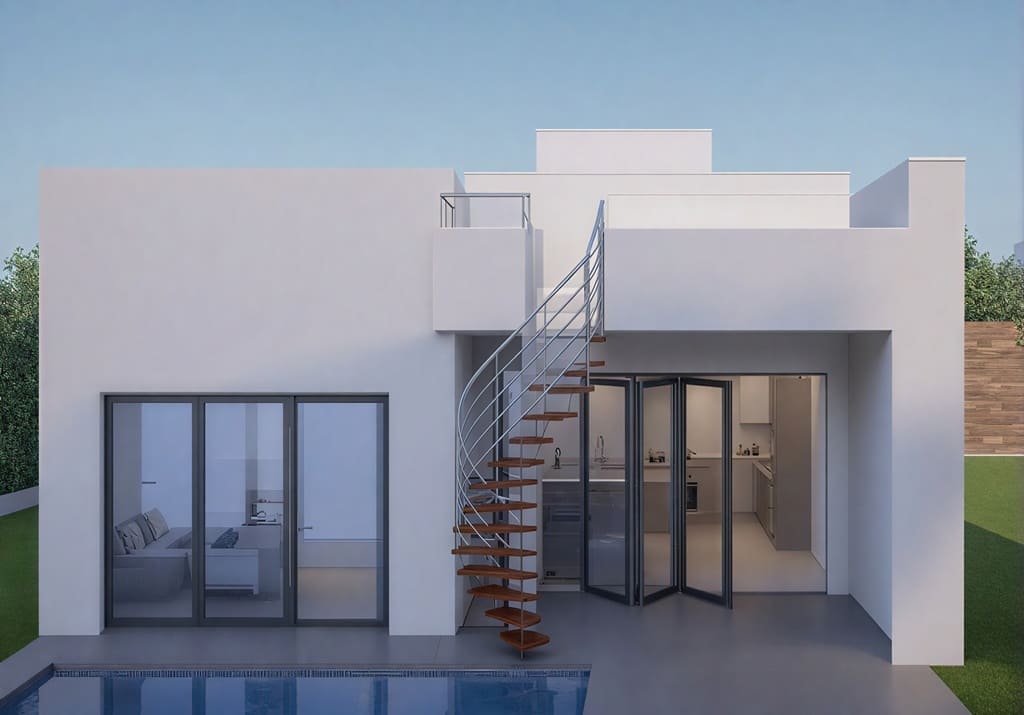
If you own a home in California and you’ve been thinking about building an ADU — a garage conversion, a backyard cottage, an in-law suite, whatever form it takes — you’ve probably noticed that the ADU law seems to change every year. And honestly? They do. California has been on a sustained legislative push when it comes to accessory dwelling units since 2017, and keeping up with what’s actually allowed in your city can feel like a part-time job.
The good news is that the state has generally been moving in one direction: making it easier, faster, and cheaper to build ADUs. Each legislative session has chipped away at another barrier, whether that’s impact fees, parking mandates, setback requirements, or local ordinances that were effectively being used to block construction. Here’s a comprehensive breakdown of what matters most heading into 2026 — and what every California homeowner should understand before breaking ground.
The Big Picture: State Law Overrides Local Rules
One of the most important things California homeowners need to understand is that state ADU law now supersedes most local zoning restrictions. This shift has been years in the making, but it’s now firmly established: even if your city has its own ADU ordinance, that ordinance must comply with the state minimums. Cities cannot simply ban ADUs, impose unreasonable design standards, or make the permitting process so burdensome that nobody actually builds them.
Under current California ADU law, every single-family and multifamily residential property in the state is entitled to build at least one ADU and one Junior ADU (JADU). That’s a floor, not a ceiling — many cities allow more, and some have adopted local ordinances that are even more permissive than the state standard. But no city can offer less than what the state requires.
This is a meaningful protection for homeowners. If your city’s planning department tells you that ADUs aren’t allowed in your neighborhood or that your lot doesn’t qualify, it’s worth double-checking against the current California ADU law before accepting that answer.
What Counts as an ADU in California?
California ADU law defines an ADU as a residential dwelling unit that provides complete independent living facilities for one or more persons. To qualify, it must include a kitchen (with permanent cooking facilities), sleeping area, and a full bathroom. It has to be livable as a standalone unit — not just a bonus room or a studio without a kitchen.
There are four main types of ADUs recognized under California ADU law:
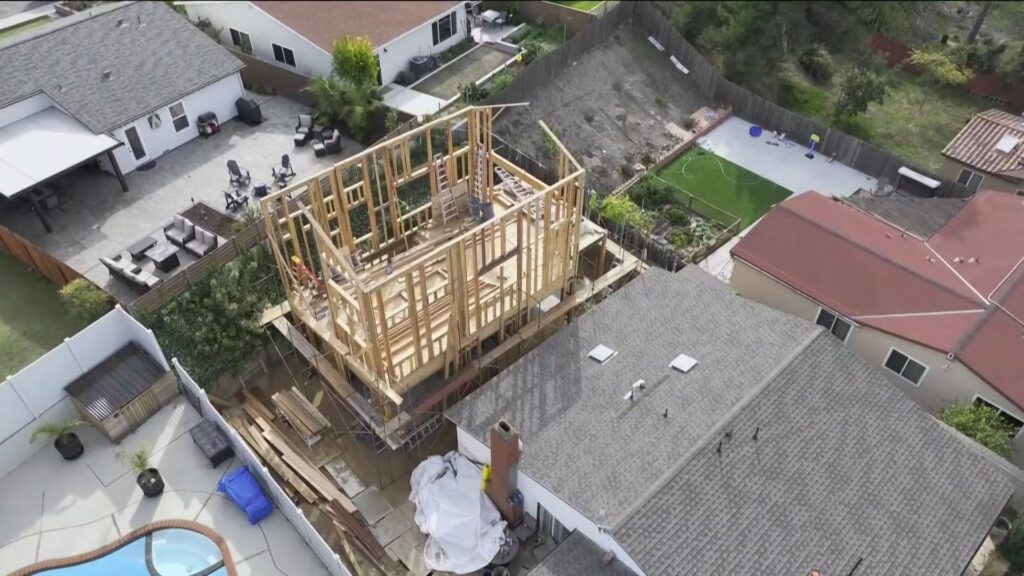
- Detached ADU: A fully separate, standalone structure located on the same lot as the primary residence. This is the most flexible type in terms of size and design.
- Attached ADU: An addition to the existing home that has its own separate entrance and independent living facilities.
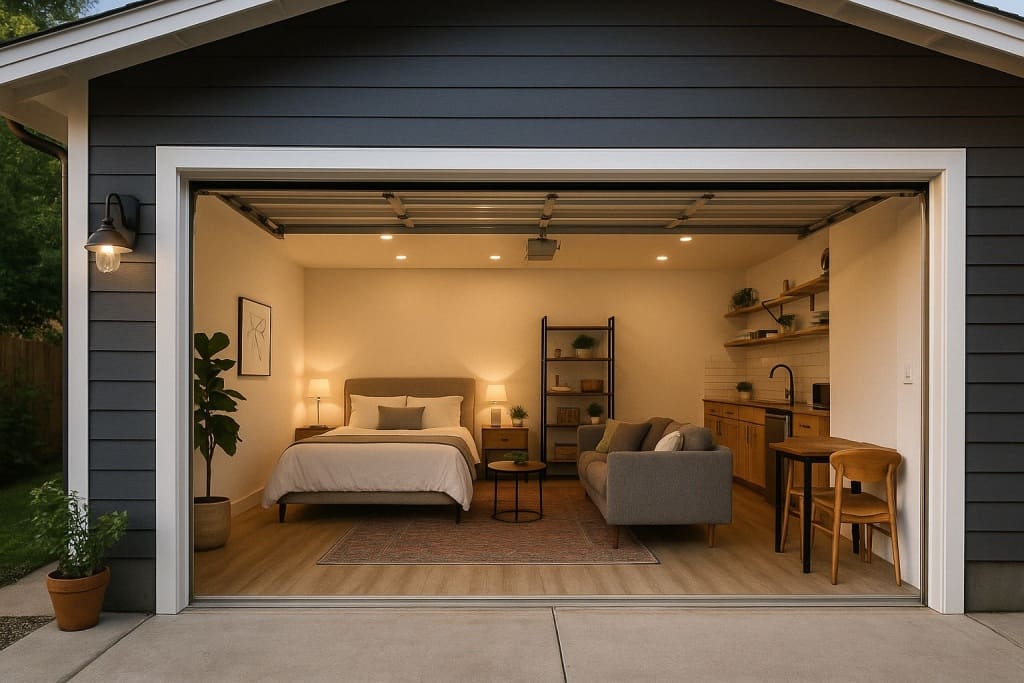
- Garage Conversion ADU: Converting an existing attached or detached garage into a livable unit. This is one of the most popular and cost-effective ADU types in California because the structure already exists.
- Junior ADU (JADU): A smaller unit — capped at 500 square feet — carved out of the existing square footage of the primary home. JADUs must include their own exterior entrance and a kitchenette, but they’re allowed to share a bathroom with the main house under certain conditions.
Each type comes with its own rules around size, setbacks, and eligibility, so knowing which category your project falls into matters before you start planning.
Size Limits and Setbacks
Under California ADU law, detached ADUs can be built up to 1,200 square feet. JADUs max out at 500 square feet. Attached ADUs are generally limited to 50% of the existing primary dwelling’s square footage, up to 1,200 square feet — though local ordinances can set different limits within state guidelines.
Setback rules have been significantly relaxed compared to what many cities required just a few years ago. State law now mandates only a 4-foot rear yard and side yard setback for new detached ADUs. This is a notable reduction from the 5-foot or even 10-foot setbacks that cities previously imposed, and it opens up many more lots for ADU construction than homeowners might assume.
Height limits depend on location. The general baseline for detached ADUs is 16 feet, but properties located within half a mile of a major transit stop, or in certain other qualifying zones, may be eligible for allowances up to 25 feet — enough to accommodate a two-story ADU in some cases. If your property is in a transit-rich area, it’s worth exploring whether you qualify for the higher height allowance.
Permit Timelines and Fees
Speed and cost have historically been two of the biggest pain points in ADU permitting. California ADU law has addressed both.
Cities are now legally required to approve or deny ADU permit applications within 60 days of receiving a complete application. This is a hard deadline under state law, and cities that miss it can face consequences. For homeowners, it means you’re not waiting indefinitely in a queue — there’s a real timeline to hold your local agency to.
On the fee side, impact fees for ADUs under 750 square feet are entirely prohibited under state law. For ADUs over 750 square feet, any impact fees assessed must be proportional to the ADU’s size relative to the primary dwelling — cities can’t charge ADU builders the same fees they’d charge for a brand-new single-family home. This change alone has saved many California homeowners tens of thousands of dollars.
It’s also worth noting that ADU projects that don’t require new or separate utility connections may be exempt from certain connection fees — another cost-saving provision that wasn’t always available.
Parking Requirements (Or Lack Thereof)
Parking has been another sticking point historically. Under current California ADU law, cities cannot require additional parking spaces for ADUs in several common scenarios, including when the ADU is:
- Located within half a mile of public transit
- Part of a garage conversion
- On a property within a historic district (in most cases)
This means that in many urban and suburban parts of California, you can build an ADU without sacrificing any existing parking spaces or adding new ones. For smaller lots where parking is at a premium, this can make the difference between a project being feasible or not.
Owner-Occupancy Requirements
This is an area where homeowners should pay close attention. California suspended the owner-occupancy requirement for ADUs built between 2020 and 2025 — meaning you didn’t have to live on the property to build or rent an ADU during that period. That provision was designed to encourage more ADU construction by making the investment attractive to non-owner landlords as well.
As of 2026, the status of this suspension is worth verifying directly with your local planning department, as the provision was set to expire at the end of 2025 and the Legislature was considering whether to extend it. Some cities have adopted their own owner-occupancy rules that may apply independently of state law.
If you’re planning to build an ADU as a rental investment property without living on-site, confirming the current owner-occupancy rules before you proceed is an important step.
Multifamily Properties: An Expanding Opportunity
It’s not just single-family homeowners who benefit from California ADU law. Owners of multifamily residential properties — apartment buildings, duplexes, and similar structures — can also add ADUs. Under state law, multifamily properties can generally add:
- Two detached ADUs on the same lot as an existing multifamily building
- ADUs converted from non-livable space within the existing structure (like storage rooms, boiler rooms, or carports), with the number permitted depending on the total number of existing units
This has opened a significant new avenue for multifamily property owners to add rental income without acquiring new land or dramatically reconfiguring existing buildings.
AB 2221 and SB 897: Recent Legislative Updates
Two pieces of legislation that continued to shape the ADU landscape in recent years are AB 2221 and SB 897, both of which strengthened homeowner protections and clarified some previously ambiguous rules. Key provisions include clearer standards for ADU height, stronger enforcement of the 60-day permit timeline, and additional guardrails preventing cities from using design review requirements as a backdoor method of blocking ADU construction.
If your city has been slow to update its local ADU ordinance to reflect these changes, you still have the right to cite state law. California ADU law is clear that if a local ordinance conflicts with state ADU law, state law controls.
What This Means for You
The bottom line is that California has made building an ADU more accessible than at any point in the state’s history. If you’ve been putting off a project because you assumed permitting would be a nightmare, that your lot didn’t qualify, or that your city would simply block it, it’s worth taking a fresh look in 2026. The legislative environment has changed substantially, and many homeowners who were told “no” a few years ago would get a different answer today.
That said, rules still vary across California. What’s allowed in Los Angeles isn’t necessarily the same as what’s permitted in Sacramento, Fresno, or San Diego. An experienced local ADU contractor who actively works in your city is your single best resource for navigating current rules, understanding what your specific lot can accommodate, and avoiding costly mistakes.
Start with a conversation with your local planning department, confirm the owner-occupancy status, and get a quote from a contractor who knows your market. The process is more straightforward than many homeowners expect — and the financial and personal benefits of adding an ADU to your property can be significant.