
You’ve done the research, found a contractor, and spent weeks on design. Then the city sends back your plans with a correction notice — or worse, a flat rejection. It’s one of the most demoralizing experiences in the ADU process, and it’s far more common than most homeowners expect.
ADU permit rejections aren’t random. They follow patterns. The same ADU permit mistakes show up across jurisdictions, project types, and experience levels — from first-time homeowners to seasoned investors. Understanding the most common ADU permit problems before you submit plans is the most effective way to avoid delays and unexpected redesign costs.
This guide breaks down the ten most frequent reasons why ADU permits get rejected — with real-world rejection examples, financial consequences, and what to do before your plans go anywhere near the building department.
For help connecting with ADU professionals who know your local permit environment, FindADUPros is worth checking before you finalize anything.
Why Do ADU Permits Get Rejected? The Top 10 Mistakes
The Real Cost of Getting It Wrong
Before the list: permit rejection isn’t just a paperwork inconvenience. Each ADU correction notice costs real money. Architectural and engineering revision fees typically run $75–$150 per hour. If structural drawings need to be completely redrawn because of an easement conflict or setback error discovered after submission, homeowners routinely face an unexpected $2,000–$5,000 bill from their design team — just to get back in line for another review.
If you’ve taken out a construction loan, the math gets worse. A three-month delay caused by sequential correction cycles can cost thousands in interest payments before a single piece of lumber is cut. The building department plan check timeline doesn’t pause while your designer fixes errors.
That’s the financial context. Now the mistakes.
1. ADU Setback Violations: State Rules vs. Local Zoning
Setback violations are the single most common reason ADU permits get rejected. A setback is the minimum required distance between your ADU and your property line — and the rules vary by jurisdiction, zoning district, lot type, and ADU type.
California state law sets a baseline of four-foot side and rear setbacks for most ADUs. But local ordinances layer additional requirements on top, and many homeowners apply state minimums without checking whether their city has stricter standards. That’s the gap where rejections happen.
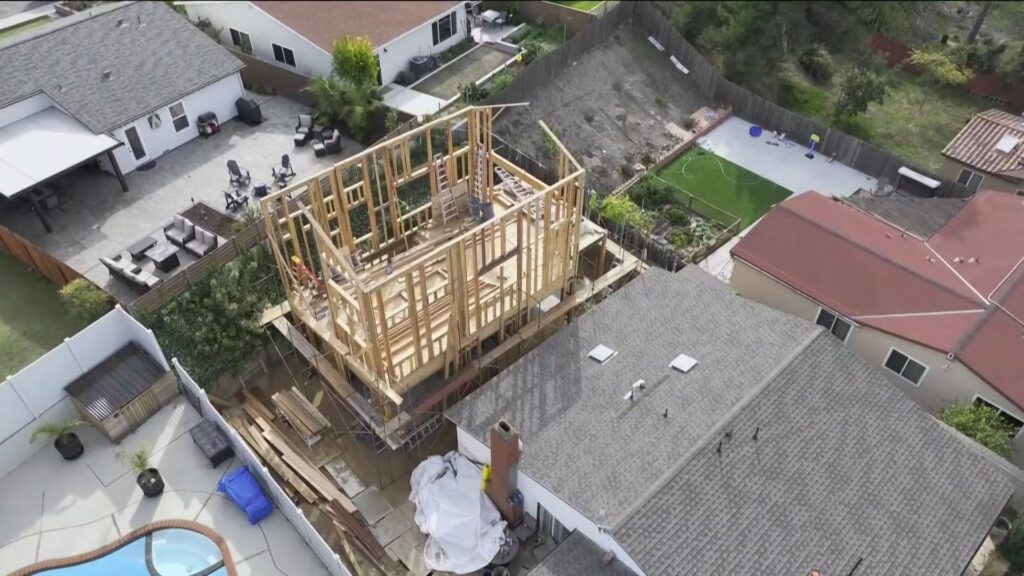
Real-world example: A San Diego homeowner submitted plans for a detached ADU placed three feet from the rear property line — compliant with state minimums — without realizing the specific zoning district required five feet for detached structures. The plans were rejected at plan check. The ADU had to be shifted two feet forward, which pushed it closer to the primary home and triggered a minimum building separation review. One oversight, two additional correction cycles.
The Corner Lot and Irregular Lot Complexity Factor
Corner lots create a specific type of ADU zoning mistake. The “rear” of a corner lot is defined differently from a standard interior lot — what appears to be the back of your property may legally be a street-facing side yard with larger setback requirements. Irregular lot shapes compound this: if your lot isn’t a standard rectangle, have a licensed surveyor confirm your property lines and setback envelope before your designer draws anything.
2. Encroaching into Hidden Easements: The $500 Title Report Solution
Easements are one of the most misunderstood — and most financially punishing — factors in ADU permit applications. An easement gives a third party the legal right to use a portion of your property: utility access, drainage, neighbor ingress. You own the land, but you cannot build on the easement area without the holder’s explicit permission.
The problem is most homeowners don’t know where their easements are until a permit application surfaces them. To look up easements on your property, start with a preliminary title report — a $300–$500 document that maps every recorded restriction, easement, and lien. It’s the single most cost-effective pre-submission step available.
As of July 2025, San Diego has been requiring a six-foot buffer from sewer easements — meaning your ADU must clear the recorded easement boundary by an additional six feet beyond the easement line itself.
Real-world example: A prefab ADU project showed the structure placed 9.6 feet from the rear property line — well within standard setbacks. What the plans missed was a recorded 20-foot light and air easement along that boundary. The structure was encroaching 10.4 feet into it. Rejected before plan check was complete. The prefab unit’s dimensions also didn’t match between the site plan and the manufacturer’s drawings — the site plan showed 44 feet, the manufacturer’s documents referenced 42 feet 2 inches — creating a second rejection trigger on the same application. Two separate errors, one submission.
3. Miscalculating ADU Height Limits: How Sloped Lots Trigger Rejections
Height limits for ADUs are set by local zoning ordinances, and measurement methodology varies by jurisdiction — some measure from finished grade to the roof peak, some to the midpoint of a sloped roof, some to the top of the wall plate. Using the wrong method is a clean ADU zoning mistake that sends plans back without a hearing.
The most frequent version of this problem involves prefab or modular ADUs where the manufacturer’s standard unit height exceeds the local limit. A unit designed to 18 feet may be legal in one city and rejected in another where the limit is 16 feet. Modifying prefab height is expensive and structurally complex.
Sloped lots add another layer. When a lot grades significantly, the finished grade at different points around the ADU’s perimeter varies — and height is typically measured from average finished grade. Calculating this incorrectly, or failing to account for grading changes during site prep, produces a structure that passes desk review and fails field inspection.
Check your local jurisdiction’s ADU-specific design standards document — many cities publish these separately from the general zoning code. If yours doesn’t, get the measurement methodology in writing from the planning department before your designer finalizes the structure.
4. Incomplete Plan Sets: Why Inconsistent Title Blocks Cause Delays
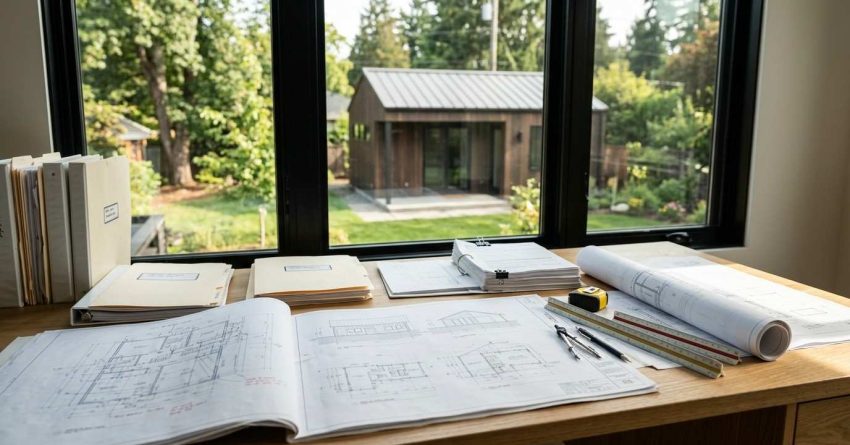
This is the most avoidable reason ADU applications fail, and it accounts for a significant share of first-submission rejections. Plan check reviewers can only approve what’s in front of them. Missing information doesn’t get the benefit of the doubt — it gets a correction notice and goes to the back of the building department plan check timeline.
📑 Pre-Submission Plan Completeness Audit
Before submitting your packet to the building department, verify your designer has cross-checked the following across every page:
- Title Block Harmony: Assessor’s Parcel Number (APN), zip code, and street name spelling must match perfectly from Sheet A-1 through the structural calculations
- Dimensional Math: The outer footprint dimensions on the Site Plan must exactly equal the sums of the interior dimensions on the Floor Plan
- The Energy Stamp: Title 24 energy compliance calculation pages must be embedded directly into the digital plan set — not attached as a separate PDF
- Utility Routing: The path of the sewer lateral and its connection point to the city main must be clearly drawn, with clean-out locations noted
- Structural Calculations: Detached ADU structural engineering calculations, stamped by a licensed structural engineer, must be included — not referenced as “to follow”
If your designer can’t confirm every item on this list before submission, that’s your signal to wait.
5. Exceeding Maximum Lot Coverage Limits
Every residential lot has a maximum coverage limit — the percentage of lot area that can be occupied by structures. The critical ADU permit mistake here is calculating coverage using only the ADU footprint without counting every other structure on the property. Existing covered patios, detached garages, pergolas — these all contribute to lot coverage in most jurisdictions.
California law prohibits lot coverage from being the sole basis for rejecting an ADU under 800 square feet. But homeowners in states without that protection, and those proposing larger units in California, can still face this rejection. Verify your current lot coverage using your local GIS mapping tool or a surveyor’s calculation before you lock in your ADU’s footprint.
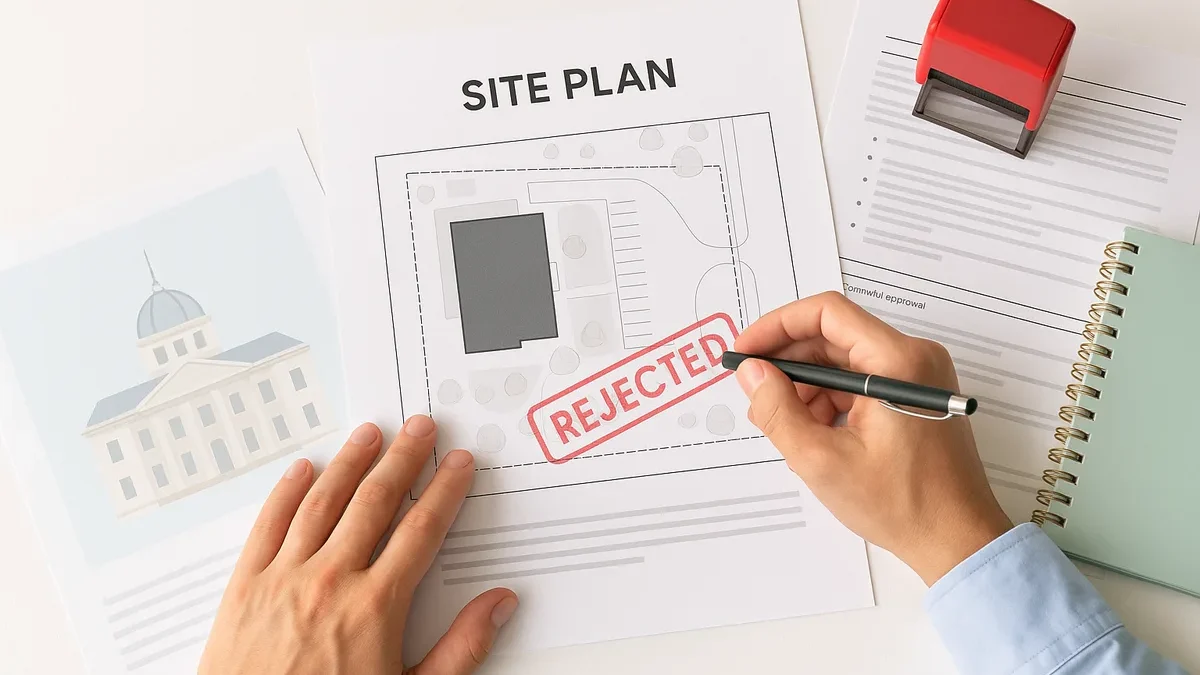
6. Utility Upgrade Issues That Stall Applications Mid-Review
A significant number of ADU permit problems aren’t discovered at initial submission — they surface when a plan checker routes the application to the utility department and the existing infrastructure can’t support the additional load.
The most common version: the primary home’s electrical panel is already at or near capacity. An ADU requires its own subpanel or dedicated circuit allocation. If the main panel needs an upgrade, that work must be shown in the permit application — not discovered during construction. Similarly, some jurisdictions require a sewer capacity study before approving ADU permits. Plans that don’t address utility connections explicitly create a mid-review stall that adds weeks to the building department plan check timeline.
Show the electrical panel location, the proposed subpanel in the ADU, the water meter, the service point, the sewer lateral, and every clean-out — all in the initial submission.
7. The Unpermitted Existing Structure Trap
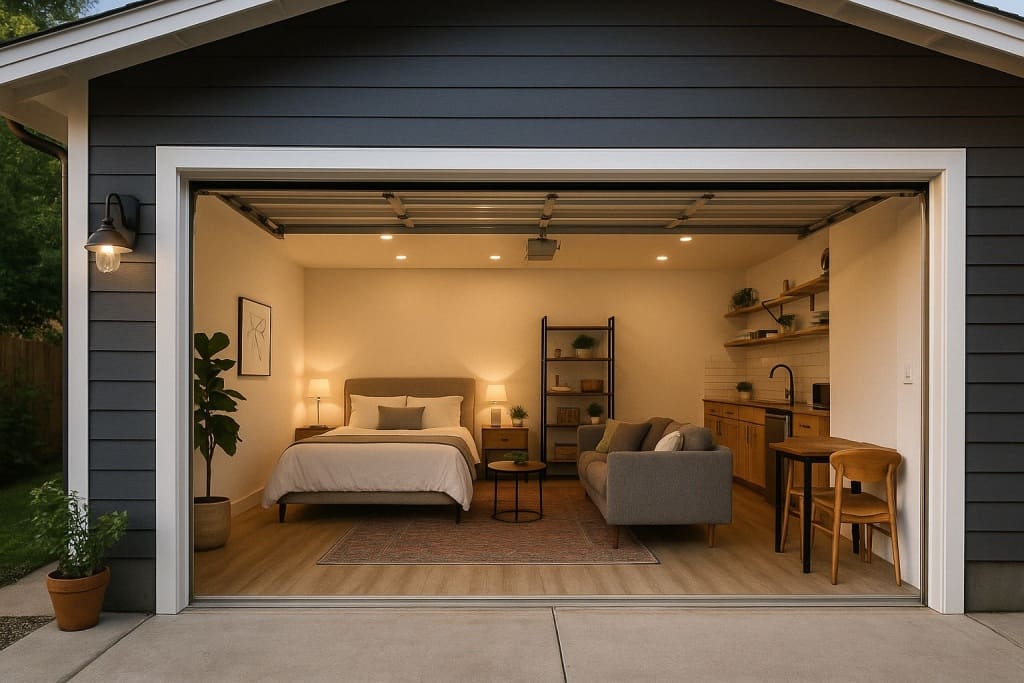
This one surprises investors and long-time homeowners alike. When someone applies to convert an existing garage or detached structure into an ADU, the plan checker pulls permit records for the original structure. If that structure was built without a permit — which is common in properties developed before the 1980s — the city typically requires the homeowner to bring the entire existing structure up to current building codes before the ADU conversion can be approved.
That means the garage you planned to convert for $80,000 may first require $20,000–$40,000 in code compliance work: fire-rated drywall, updated electrical, proper egress windows, energy envelope improvements. The ADU permit doesn’t get issued until the base structure passes inspection.
Pull permit records for any existing structure you plan to convert before your designer spends a dollar on plans. Most counties maintain searchable permit databases online. A call to the building department with your address will surface any unpermitted structures in about ten minutes.
8. Historic Preservation Overlays and Design Review Districts
If your home sits within a local Historic Preservation Overlay Zone (HPOZ) or a design review district, standard state ADU exemptions often do not protect you from exterior aesthetic requirements. The city can reject standard siding materials, window finishes, or roof pitches that don’t match the historic character of the neighborhood — even if the ADU is otherwise fully code-compliant.
This is a trap that catches homeowners who assume that because state ADU law overrides many local restrictions, it overrides all of them. It doesn’t. Design review in historic districts is one area where local jurisdiction retains significant authority over ADU appearance, and correction notices from historic preservation boards can be some of the most expensive to resolve — particularly if they require custom materials or a structural redesign of the roofline.
Check whether your property is within an HPOZ, a historic district, or any design review overlay before committing to exterior materials or form. Your city’s planning department website typically maintains an overlay zone map.
9. The JADU Owner-Occupancy Distinction Investors Miss
This section is often misread, so the clarification matters. California eliminated owner-occupancy requirements for full ADUs in 2020. What many investors don’t realize is that Junior ADUs (JADUs) — conversions within the existing primary home structure, up to 500 square feet — still legally require the owner to reside in either the primary home or the JADU itself.
Submitting a JADU application as an investor who doesn’t occupy the property is an instant rejection in California and in other states that maintain the JADU distinction. The same investor who would have no problem building a full detached ADU on the property gets rejected the moment they propose an interior conversion under the JADU framework.
If you’re an investor building on a property you don’t occupy, apply for a full ADU — not a JADU. If you’re a homeowner who plans to eventually sell, understand that the owner-occupancy requirement transfers with the JADU designation and may affect future buyers.
10. Fire Access and Safety Problems
Fire access requirements are among the most technical of the common ADU permit problems. The most common rejection triggers:
- Insufficient vehicle access: Fire departments require aerial apparatus access within a defined distance of any habitable structure. A rear-yard ADU at the end of a narrow, obstructed driveway may require access improvements before approval
- Emergency egress failures: Sleeping areas require windows or doors of minimum dimensions for emergency egress — a frequent problem in garage conversions with small or no windows in the proposed sleeping area
- Fire hazard severity zone requirements: Properties in Wildland-Urban Interface zones or Very High Fire Hazard Severity Zones face additional review from the fire department, separate from standard plan check
If your property is in any fire overlay zone, schedule a pre-application meeting with the fire department before submitting plans. It costs nothing and can prevent a multi-week correction cycle.
Your Pre-Submission Protection Plan
Understanding why ADU permits get rejected matters. Acting on that understanding before submission is what actually prevents rejection:
- Run a title report ($300–$500) before finalizing your ADU location — it surfaces every easement and restriction that can make a planned location unbuildable
- Pull permit records for any existing structure you plan to convert — an unpermitted base structure must be brought to code before ADU approval
- Check for historic overlay zones on your city’s planning portal before committing to exterior materials
- Verify JADU vs. full ADU eligibility if you’re an investor or if the proposed unit is within the primary home footprint
- Confirm your electrical panel capacity before your designer finalizes the utility connection plan
- Use the pre-submission checklist above to audit your plan set before it leaves your designer’s desk
Working with a design-build firm or contractor that has submitted ADU permits in your specific city — and knows the local plan check preferences, flagged items, and department workflows — is the single most effective way to reach first-submission approval.
For vetted ADU professionals with local permit experience in your market, visit FindADUPros.
Frequently Asked Questions
What is the most common reason ADU permits are rejected?
Setback violations are the most frequent single cause, followed closely by incomplete or inconsistent plan sets. Both are avoidable with thorough pre-submission review by someone familiar with your local jurisdiction’s requirements.
How much does a permit rejection actually cost?
Beyond the time delay, architectural and engineering revision fees run $75–$150 per hour. A full structural redraw due to an easement or setback error typically adds $2,000–$5,000 in unexpected design fees. If you’re carrying a construction loan, each month of delay also adds interest cost before construction begins.
Can easements stop me from building an ADU?
An easement within your proposed ADU footprint will stop the project as designed. An easement elsewhere on the property may reduce your buildable area through required buffers but doesn’t necessarily prevent construction. To look up easements on your property, run a preliminary title report and, in some jurisdictions, commission a boundary survey before finalizing placement.
What is the JADU owner-occupancy rule?
A Junior ADU (JADU) — an interior conversion of up to 500 square feet within the primary home — legally requires the owner to occupy either the JADU or the primary home in California and many other states. This requirement does not apply to full ADUs. Investors who don’t occupy the property should apply for a full ADU rather than a JADU to avoid an automatic rejection.
What’s the best way to avoid ADU permit rejections?
Hire professionals with documented ADU permit approval experience in your specific city, run a title report before finalizing your design, use the pre-submission checklist to audit your plan set, and address utility capacity before plans are submitted. The most expensive ADU permit mistake is the one that sends your project back to the start.