More square footage is almost always the right instinct. What’s less obvious is which path to that square footage actually makes financial sense for your property, your goals, and your timeline.
The ADU vs home addition cost question comes up constantly among homeowners — and it deserves a better answer than “it depends.” Because while it does depend on your situation, the financial mechanics of these two options are genuinely different. One generates income. One doesn’t. One unlocks specific legislative cost protections. One gives you more flexibility at resale. These distinctions compound over time in ways that make the upfront cost comparison only the starting point.
This guide breaks down every meaningful difference between building an ADU and expanding your home — so you can make the decision with a clear picture of what you’re actually buying.
For help evaluating which option works for your specific property, FindADUPros connects you with local professionals who can run the numbers on both.
ADU vs Home Addition Cost: Per-Square-Foot Math Explained
Let’s start with the question most homeowners ask first: is an ADU cheaper than an addition?
The short answer: not on a per-square-foot basis. But that framing misses what actually matters.
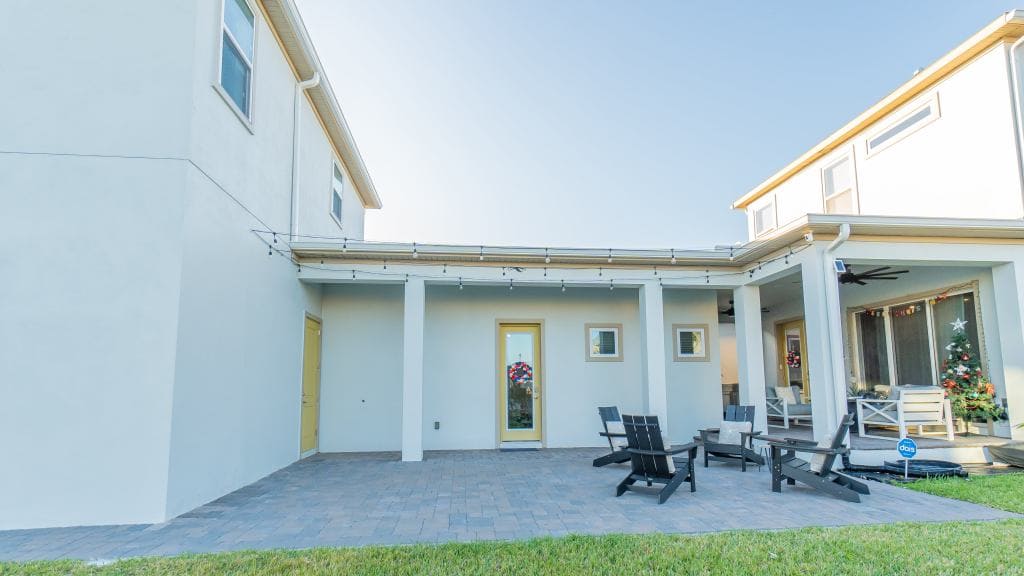
The cost per square foot for a home addition runs $150–$300 nationally, depending on scope, structure type, and finish level. A straightforward 400 sq ft family room addition might cost $80,000–$120,000. A primary suite with a bathroom and walk-in closet on the same footprint could reach $150,000–$200,000. Second-story additions are the most expensive — often $300–$500 per square foot — because of the structural complexity of building over an existing home.
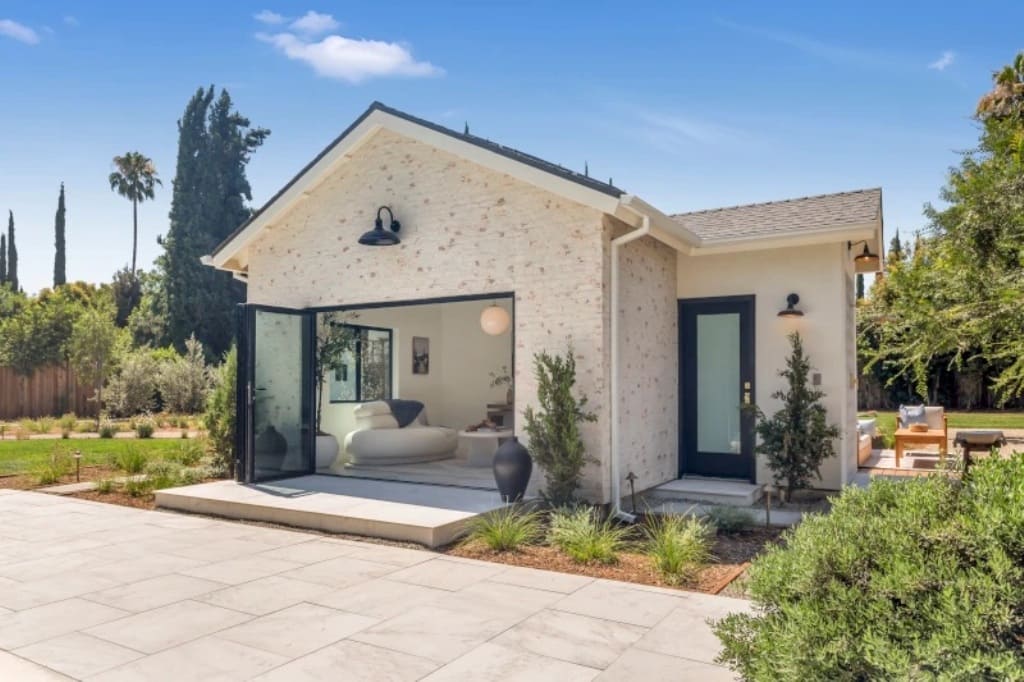
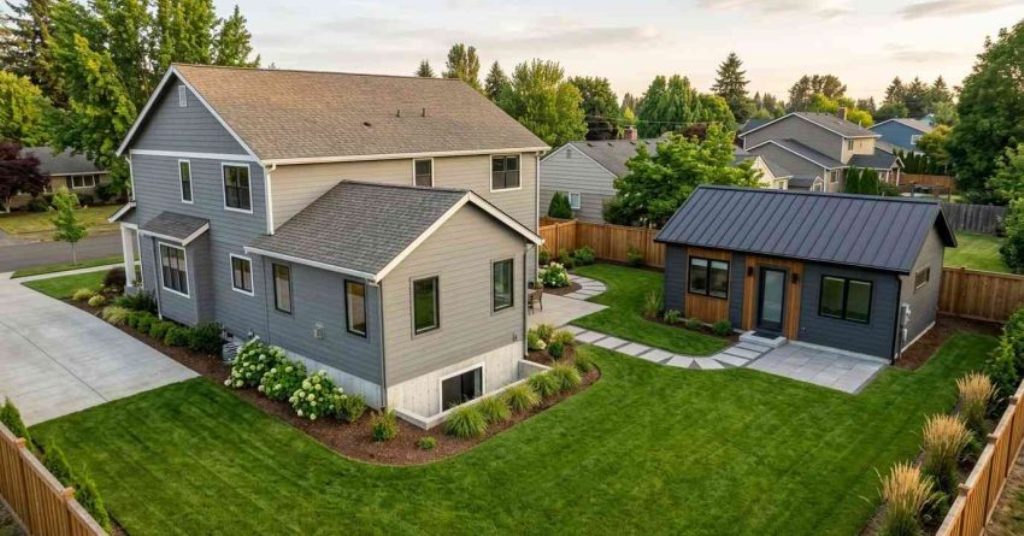
ADUs cost more per square foot: typically $200–$400 nationally, and $300–$500+ in high-cost states like California. The reason is infrastructure. An ADU requires a fully independent living system — separate kitchen, bathroom, HVAC, utility connections, and its own electrical subpanel. A detached ADU in the Bay Area currently runs $250,000–$500,000 all-in. A garage conversion — the most cost-effective ADU path — typically lands between $100,000 and $175,000.
So on raw construction cost, home additions cost less. But raw cost is the wrong metric. What matters is what each dollar returns.
The Invisible Costs of Addition Tie-Ins vs. Detached Utility Connections
Before you finalize either path, these four site conditions will shape your actual budget — and they rarely appear in contractor estimates until construction is underway.
Pre-Plan Budget Feasibility Audit
Before signing with any architect or builder, verify how your site maps against these four budget drivers:
- Main Electrical Panel Capacity: A detached ADU almost always requires upgrading to a 200-amp main panel ($3,500–$6,000). A home addition may pull from existing panel capacity if mini-splits are used — saving that cost entirely.
- Gravity Sewer Lateral: If your backyard slopes away from the street, a detached ADU will require an ejector pump system to push waste uphill to the city main. A home addition uses the home’s existing gravity-fed waste lines.
- Roofline Tie-In Complexity: Tying a home addition into an existing roofline requires removing roofing material, installing structural headers, and engineering valley flashing — complex carpentry at premium labor rates. An ADU features a clean, isolated four-wall roof structure that dramatically lowers per-square-foot framing cost.
- HVAC System Zoning: A home addition frequently overburdens existing central HVAC, forcing a complete system swap. ADUs use independent ductless mini-split systems that keep utility costs separated and don’t touch the primary home’s mechanical systems.
Running this checklist before your first design meeting surfaces the real budget gap between the two options — which often looks different from the per-square-foot comparison alone.
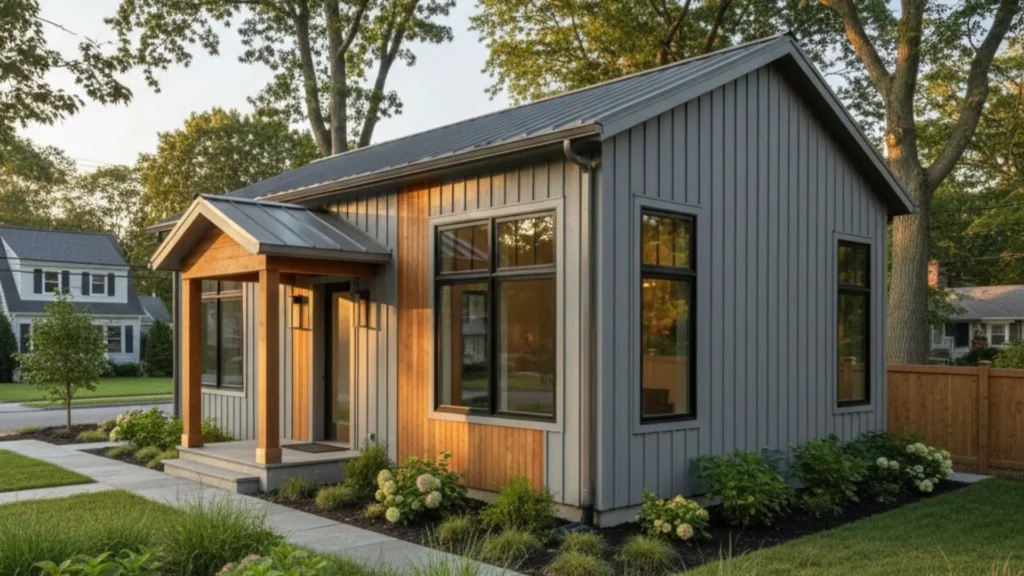
The ROI Reality: Appraised Resale Value vs. Monthly Rental Yield
This is where the ADU vs home addition comparison diverges most sharply.
Home additions return 50–75% of their investment at resale, and that figure deteriorates as scope grows. Midrange primary suite additions recoup roughly 29% of cost at resale. Upscale versions drop to around 15%. Large additions rarely return their full cost — they improve daily living without translating dollar-for-dollar into appraised value.
ADUs perform differently. A permitted detached ADU typically adds 15–35% to a home’s overall value, and in high-demand markets, homes with ADUs sell for up to 35% more than comparable properties without one. The average at-resale ROI on a detached ADU is roughly 41% — but that number understates the full picture because it excludes rental income earned during ownership.
Why Appraisers Treat ADUs and Additions Differently
This distinction matters more than most homeowners realize.
Home additions are straightforward for appraisers. They alter the main home’s square footage in a way that maps cleanly to comparable sales data. A four-bedroom home in your neighborhood sells for X. Your addition creates a fourth bedroom. The appraiser has comps and a methodology.
ADUs are harder for appraisers to value accurately. When using the income approach — where rental yield drives the valuation — appraisers frequently struggle to find “accessory-unit” or “income-producing” comparables within a one-mile radius, particularly in neighborhoods where ADUs are still relatively new. This often produces conservative initial appraisals that understate what the unit will actually contribute to the property’s market value over time.
The practical advice: keep exhaustive documentation of your ADU’s construction costs and, once rented, maintain a clean rental ledger. Both documents become critical inputs when you hand files to an appraiser at refinance or resale. A well-documented rental history — showing consistent income at market rates — is far more persuasive to an appraiser using the income approach than the ADU’s square footage alone.
The variable that changes the entire financial equation is what a home addition structurally cannot do: generate monthly income while you own it.
Rental Income: The Advantage a Home Addition Can’t Match
A home addition cannot be rented separately. An ADU can. That single distinction is the core financial argument for choosing an ADU over expanding the primary home.
In Los Angeles, a well-positioned ADU generates $2,000–$3,500 per month in long-term rental income. Bay Area detached ADUs command $2,500–$4,000 per month. In Portland, the range is $1,500–$2,500 depending on size and location. A $120,000 ADU generating $1,500–$2,500 per month can fully recoup its construction cost in 5–7 years through rental income alone — before any property value appreciation is counted.
A $200,000 home addition, by contrast, returns value only at the moment of sale. There is no income stream during ownership.
This is what makes the ADU or house extension question more nuanced than a construction cost comparison. You’re not choosing between two renovation projects. You’re choosing between a renovation and an income-producing asset.
Permitting Timelines: Navigating the 60-Day State ADU Shot Clock
This is the part of the ADU vs home addition cost conversation that most homeowners underestimate — until they’re deep in the permit process.
Home additions are generally simpler to permit. They’re governed by standard residential building codes, typically don’t require separate utility service connections, and in most jurisdictions aren’t subject to discretionary planning commission review. Timeline from submission to approval runs 4–8 weeks for straightforward projects. That said, in some municipalities, significant additions can trigger neighborhood notification requirements or design review hearings that drag timelines unpredictably.
ADUs benefit from a legal protection that home additions don’t have. Under current California housing reforms and similar statutes in other progressive states, local agencies face a strict 60-day ministerial approval clock for ADU permit applications. This is not discretionary — it’s a legal mandate. If a jurisdiction delays beyond 60 days without issuing a valid correction notice, homeowners have legal remedies available. A home addition has no equivalent shot clock and remains entirely subject to subjective planning reviews and discretionary hearings that can stall for months.
The 750-square-foot threshold is the other critical permitting advantage exclusive to ADUs. California state law completely exempts ADUs under 750 square feet from municipal development impact fees — the parks, schools, and traffic impact charges that cities typically assess on new construction. These fees can add $10,000–$25,000 to a project’s total cost in many jurisdictions. Home additions of any size are subject to them. Sizing your ADU to stay under 750 square feet isn’t just a design preference — it’s a meaningful structural cost advantage.
Pre-approved city plan sets — available free in many California cities — can cut design fees by 50% and bypass the standard plan check queue entirely. In markets with mature ADU ecosystems, the permit process has become significantly more predictable for homeowners working with experienced local teams.
Property Tax Protection: How Prop 13 and SB 1164 Shape Your Assessment
Both projects increase your property taxes. The mechanics differ in ways that significantly affect your long-term carrying cost.
What Proposition 13 Already Protects
Under California’s Proposition 13, your existing home’s assessed value is protected from full market-rate reassessment when you add either a home addition or an ADU. The county assessor uses a blended approach — adding the estimated construction value of the new structure to your existing assessed base, without resetting the entire property’s value to current market rates. This protection applies to both project types automatically.
For a home addition, expect roughly 1–1.25% of the addition’s assessed value added annually to your property tax bill. A $150,000 addition adds approximately $1,500–$1,875 per year.
What SB 1164 Actually Does for ADU Owners
This is where precision matters. California’s Senate Bill 1164 goes a step further than Prop 13’s standard blended assessment protection. SB 1164 allows eligible homeowners to temporarily exclude the ADU itself from property tax assessment entirely — for up to 10 years, or until a change of ownership occurs — specifically to encourage housing production. This is not the same as Prop 13’s standard protection; it’s an additional ADU-specific deferral that can meaningfully reduce short-term carrying costs while rental income stabilizes.
A $300,000 ADU that would otherwise add $3,000–$4,500 annually to your property tax bill under blended assessment could qualify for full assessment deferral under SB 1164 for a decade. That’s a cumulative tax advantage of $30,000–$45,000 that no home addition can access.
The Rental Depreciation Advantage
The tax advantage that exclusively benefits ADU owners who rent their unit is depreciation. Under Schedule E federal tax treatment, you can depreciate the ADU structure over 27.5 years and deduct legitimate rental expenses — maintenance, property management fees, insurance, and utilities you cover — directly against rental income. This can substantially reduce net taxable rental income, improving the actual after-tax return on the investment. A home addition adding square footage to a primary residence generates none of these deductions.
Starting January 1, 2026, ADUs under 500 square feet in California may also result in a smaller assessed value increase under updated assessor guidance — an additional tax advantage for smaller conversions and JADUs.
Resale Value and Appraisal Dynamics: What Buyers Actually Pay
In suburban markets where square footage drives comparable sales, home additions can perform well at resale. A four-bedroom house commands more than a three-bedroom one in traditional markets, and appraisers have clear comps. Buyers prioritizing family space over investment flexibility may prefer an expanded primary home.
In urban and high-demand markets, ADUs win clearly. In long-term California studies, homes with ADUs appreciated 22% more than those without. The combination of a primary home and a separate income-producing unit attracts a premium buyer profile: investors, house-hackers, buyers with aging parents, and buyers who want rental optionality without committing to it immediately.
California’s AB 1033, signed in 2023, adds another resale dimension: it allows ADUs to be sold separately from the primary home as condominiums in participating jurisdictions. This emerging exit option doesn’t exist for home additions.
The honest appraisal challenge remains: ADU income-approach valuations require comparable rental data that appraisers may not have nearby. Documenting construction costs and maintaining a clean rental ledger from day one is what closes that gap when it matters most.
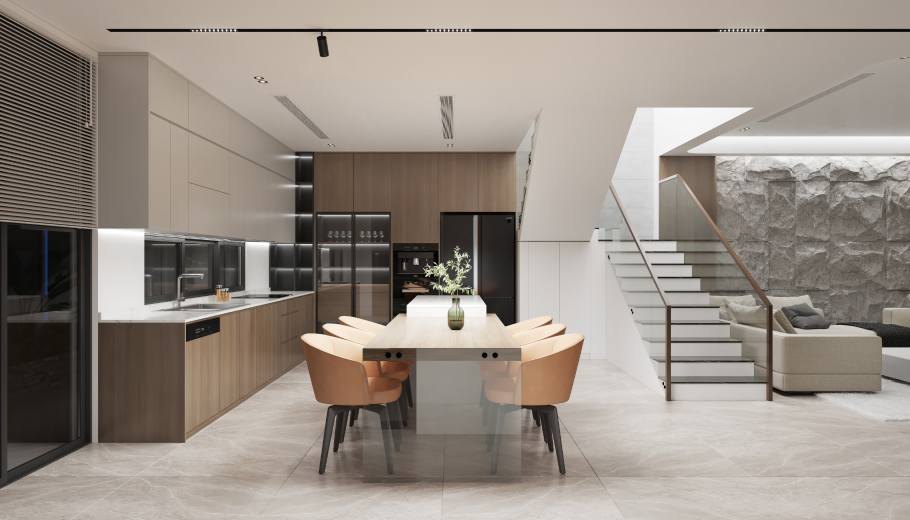
Multigenerational Living: Matching the Unit to the Relationship
The home addition vs guest house decision is especially personal when multigenerational living is the goal.
Home additions suit arrangements where the family member wants to be close but integrated — shared entrance, shared common areas, private bedroom and bath. This works well for parents with mobility needs who benefit from proximity to the primary household throughout the day.
ADUs suit arrangements where everyone thrives with genuine independence — separate entrance, separate kitchen, separate outdoor space. Adult children returning home, aging parents who want to maintain their own daily routines, or households where the primary homeowner also needs the unit to function as a rental if circumstances change.
The flexibility argument is real. Parents who are independent today may need more assistance in five years. An ADU that currently houses a parent can become rental income if that parent moves to assisted living. A home addition has no equivalent pivot.
Which Adds More Value in 2026: The Bottom Line
Choose a home addition if:
- You need integrated square footage for a growing family with no interest in landlording
- Your lot doesn’t support ADU setbacks or coverage requirements
- Your budget is tighter — additions typically cost 20% less upfront
- You’re in a market where buyers value primary home square footage over rental yield
Choose an ADU if:
- Rental income is part of your financial strategy
- You’re planning for multigenerational living that benefits from real independence
- You want the SB 1164 tax deferral and the 750 sq ft impact fee exemption
- You’re in a high-demand market where ADU-equipped properties command strong premiums
- You want an asset that can be rented, sold separately under AB 1033, or repurposed as needs evolve
On a ten-year horizon, the ADU outperforms a home addition in most markets — primarily because of rental income a home addition structurally cannot generate, compounded by tax protections that don’t apply to standard additions. The upfront cost is higher and the permit process has more moving parts. But for homeowners who treat this as an investment rather than a renovation, the math is clear.
For personalized guidance on which option works for your specific property and market, visit FindADUPros.
Frequently Asked Questions
Is an ADU cheaper than a home addition per square foot?
No — home additions typically run $150–$300/sq ft versus $200–$400/sq ft for an ADU. The ADU’s higher cost reflects the infrastructure required for an independent unit: separate kitchen, bathroom, HVAC, and utility connections. However, ADUs generate rental income that can recoup their construction cost in 5–7 years in many markets, while a home addition returns value only at resale.
Which adds more property value — an ADU vs. a home addition?
In high-demand urban markets, ADUs consistently outperform. Homes with ADUs sell for up to 35% more than comparable properties without one, and California data shows 22% more long-term appreciation. Home additions perform comparably in traditional suburban markets where buyers prioritize integrated square footage. The ADU’s advantage grows significantly when rental income during ownership is included in the calculation.
What does SB 1164 actually do for ADU property taxes?
SB 1164 goes beyond Proposition 13’s standard blended assessment protection. It allows eligible California homeowners to defer the ADU’s property tax assessment entirely for up to 10 years — or until a change of ownership. Proposition 13 already prevents full property reassessment when you add any new construction; SB 1164 provides an additional ADU-specific deferral on top of that standard protection.
What is the 750-square-foot ADU cost advantage?
California law fully exempts ADUs under 750 square feet from municipal development impact fees — the parks, schools, and traffic charges cities assess on new construction. These fees can add $10,000–$25,000 to a project’s total cost. Home additions of any size are subject to them. Designing your ADU to stay under 750 square feet is one of the most effective cost optimization strategies available.
Can I build both an ADU and a home addition?
Yes, in most jurisdictions — provided the combined footprint stays within your lot’s maximum coverage limits and Floor Area Ratio (FAR). Many homeowners address immediate space needs with an addition first, then add an ADU when finances allow. Confirm coverage capacity and FAR limits with your local planning department before committing to both.