Florida’s rising housing costs are pushing more homeowners to explore ADUs as a way to earn rental income or add flexible living space. But before you build, understanding Florida ADU laws is crucial — and more complicated than most guides let on.
Here’s the reality: there’s no single statewide rule. ADU regulations in Florida are set at the city and county level, meaning rules can differ dramatically between Miami, Orlando, and Tampa. HOA covenants can override city permissions entirely. And building in Florida’s hurricane exposure zones adds structural engineering requirements that don’t exist anywhere else in the country.
This guide covers what actually matters in 2026 — the legislation, the city-by-city rules, the construction surcharges, and the financial traps most homeowners discover too late. Use the FindADUPros Zoning Information Lookup to confirm your local eligibility before spending anything on design.
Florida ADU Laws: Navigating the Local Zoning Maze in 2026
SB 48: The Statewide Reform That Changes the Baseline
Florida’s ADU landscape is shifting in 2026. Florida SB 48 strengthened Florida Statutes §163.31771 with three key provisions: cities cannot ban ADUs in single-family zones, cannot cap ADUs below 1,000 sq ft, and cannot require owner-occupancy as a blanket condition of approval. Cities retain authority over setbacks, design standards, height limits, short-term rental rules, and impact fees. The law sets a floor — cities can be more permissive, not more restrictive.
Counties must adopt compliant ADU ordinances by December 1, 2026. Until then, existing local rules remain in effect — which means the city-by-city variation described below still governs most permit applications filed today.
One critical point: private deed restrictions and HOA covenants are not preempted by Florida’s ADU statutes. Florida courts have consistently upheld private deed restrictions over municipal zoning when the restriction is properly recorded. Clearing your HOA documents is the first step — before zoning research, before design, before anything else.
Most ADU regulations in Florida cover:
- Zoning eligibility (whether ADUs are allowed on your property)
- Lot size and density limits
- Setback and height restrictions
- Parking and occupancy rules
- Utility connections and flood zone compliance
The Florida Building Code Challenge: Wind Loads, HVHZ, and Structural Surcharges
This is the single most important section of this guide for anyone building anywhere in Florida — and the one that most generic ADU articles skip entirely.
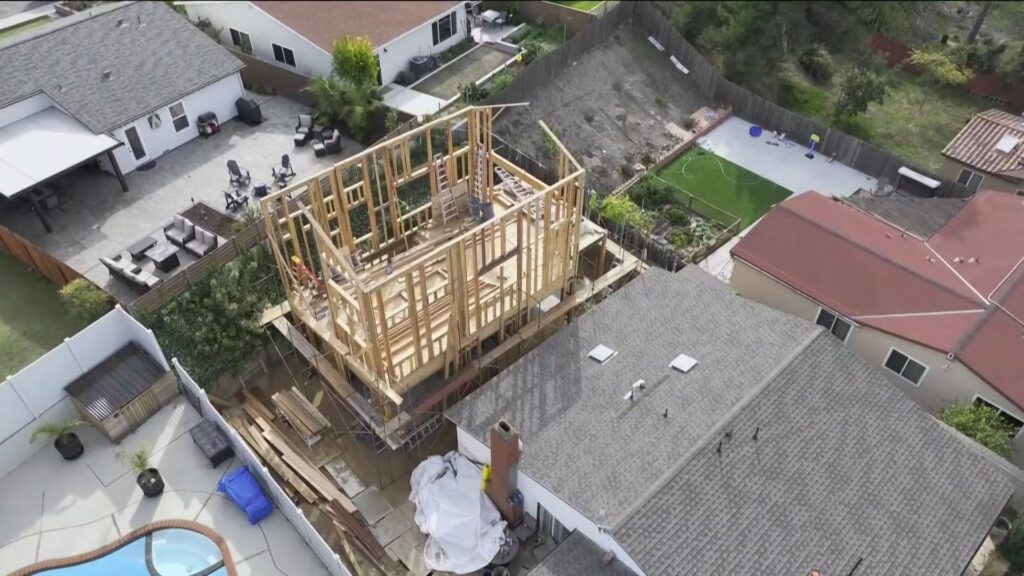
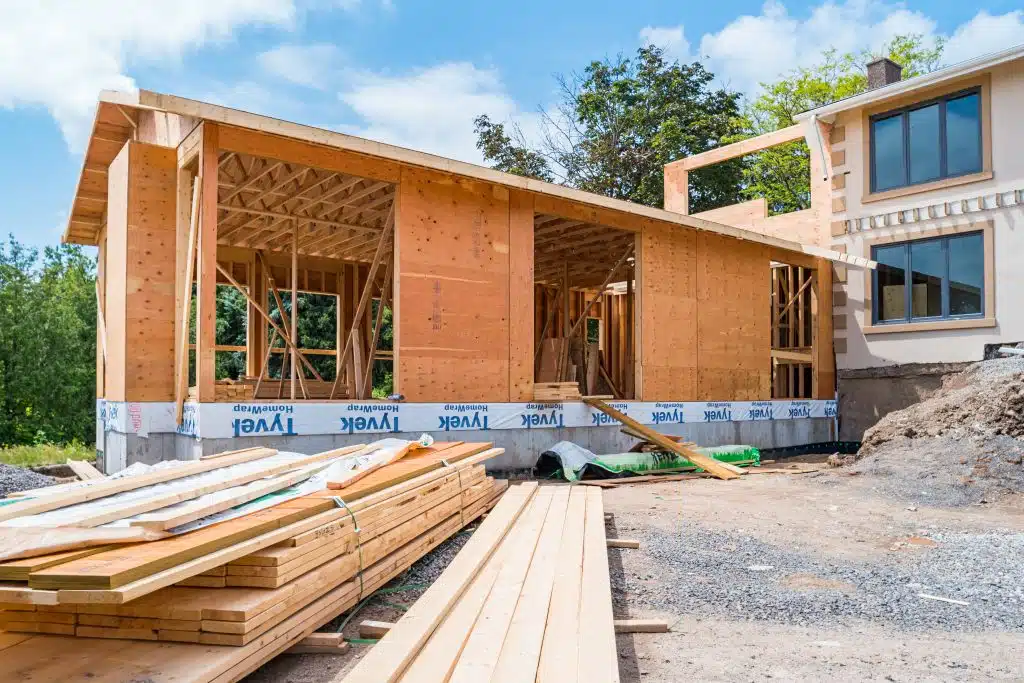
Building a detached ADU in Florida is not like building one in California or Texas. Every structure must comply with the strict wind-load requirements of the Florida Building Code (FBC). In coastal areas and the High-Velocity Hurricane Zone (HVHZ) — which covers Miami-Dade and Broward counties — requirements escalate significantly:
- Reinforced concrete block (CMU) construction is standard for exterior walls
- Impact-rated windows and doors are mandatory — standard glazing is not permitted
- Heavy-duty roof tie-down strapping connecting roof trusses to wall framing is required
- Wind-load-rated garage doors (if applicable) must be specifically rated for local design wind speeds
Detailed Cost Breakdown: CMU vs. Hurricane-Strapped Wood Frame for a 600 Sq Ft Florida ADU
The structural method you choose is the biggest single cost variable in any Florida ADU project. Here’s a granular comparison for a standard 600 sq ft detached backyard cottage:
| Cost Category | CMU (Concrete Block) Construction | Hurricane-Strapped Wood Frame |
|---|---|---|
| Foundation | Monolithic slab with turned-down edge, $8,000–$12,000 | Monolithic slab, $6,000–$9,000 |
| Exterior wall framing | CMU block labor and materials, $18,000–$28,000 | Engineered lumber framing with hurricane clips, $10,000–$16,000 |
| Roof structure | Concrete tie beam + hip roof truss, $14,000–$20,000 | Engineered hip roof with required strap connectors, $10,000–$15,000 |
| Roofing material | Concrete tile or metal (FBC compliant), $8,000–$14,000 | Metal roofing (30+ psf wind-rated), $7,000–$12,000 |
| Windows and doors | Impact-rated units required: $8,000–$15,000 | Impact-rated units required: $8,000–$15,000 |
| Exterior finish | Stucco (standard on CMU), $4,000–$7,000 | Stucco or fiber cement siding, $5,000–$9,000 |
| Insulation and drywall | Spray foam in CMU cells + interior drywall, $6,000–$9,000 | Batt insulation + drywall, $5,000–$8,000 |
| Electrical, plumbing, HVAC | $25,000–$40,000 (similar across methods) | $22,000–$38,000 |
| Interior finishes (mid-grade) | $18,000–$28,000 | $18,000–$28,000 |
| Permits, engineering, design | $8,000–$18,000 (higher due to structural engineer stamp) | $6,000–$14,000 |
| Total all-in estimate | $117,000–$191,000 | $97,000–$164,000 |
| Cost per sq ft | $195–$318/sq ft | $162–$273/sq ft |
When CMU is required vs. when wood frame is permitted:
In the HVHZ (Miami-Dade, Broward), CMU or an engineered equivalent is effectively the standard for detached structures — contractors and plan reviewers expect it, and wood-frame designs face intense scrutiny and often additional wind-load engineering. Outside the HVHZ but still in a coastal exposure category (most of coastal Florida), properly engineered wood-frame construction with hurricane straps, clips, and impact-rated openings can meet FBC requirements — and costs 15–25% less than CMU for the same footprint.
The hidden cost both methods share: concrete slab-on-grade foundations provide hurricane resistance and flood protection, costing $6–$14 per square foot for a standard ADU — but properties in FEMA Special Flood Hazard Areas (SFHA) require elevated foundations, which can add $15,000–$35,000 regardless of whether the structure is CMU or wood frame.
For inland Florida (Orlando, Gainesville, Tallahassee, most of Central Florida), standard wood-frame construction meeting FBC wind speed requirements — typically 130–140 mph design wind — is widely accepted and is the most cost-effective path. ADU construction in Florida typically costs $150 to $400 per square foot depending on whether the unit is attached or detached, the level of finish, and local material and labor costs.
Forward-thinking Florida municipalities are beginning to offer pre-approved, hurricane-rated ADU templates to cut architectural design fees and speed approvals. Gainesville maintains a free pre-approved plan library (models 722A/B/C and 738B). Check your local building department’s portal for fast-track programs before commissioning custom plans.
Municipal Breakdown: Comparing ADU Rules in Miami, Orlando, and Tampa
Miami 21 Zoning: Transect Allowances and Architectural Facade Matching
Miami operates under the Miami 21 zoning code — a transect-based system that determines what’s allowed based on the “urban intensity” of each zone:
Miami 21 restricts ADUs to T3-O, T4, T5, and T6 transect zones — T3-R and T3-L (Restricted and Limited), which cover the majority of single-family Miami neighborhoods, typically do not permit ADUs.
This is a critical reality most Miami homeowners discover only after paying for design plans: the majority of single-family Miami properties are in T3-R or T3-L zones and are not eligible for ADUs under current code. Confirm your transect zone on Miami’s GIS zoning map before any other step.
Where ADUs are permitted, Miami 21 requires:
- Architectural matching of the main residence’s facade, roof pitch, and materials
- 400–800 sq ft maximum depending on transect zone
- One off-street parking space unless within a designated transit corridor
- Short-term rentals are permitted with proper licensing in Miami (unlike many Florida cities)
Orlando’s Accessory Unit Mandates: Square Footage Caps and Transit Waivers
In Orlando, ADUs must be rented for a minimum of 30 days. Owner occupancy is not required. This makes Orlando one of the more investor-friendly markets in Florida — but the 30-day minimum rental rule eliminates Airbnb-style income potential.
Orlando-specific requirements:
- Minimum lot size of 5,500 sq ft required for ADU eligibility
- ADUs permitted in all Residential (R) zoning districts and most Mixed Residential-Office (MXD) districts
- One off-street parking space required, but can be waived if within 1/4 mile of a Lynx transit stop
- Detached units restricted to rear yard; must meet standard accessory setbacks
- Free pre-approved ADU plans available from Orlando’s Development Services Department — using one cuts plan review time significantly
Tampa’s Neighborhood Expansion: Where Can You Legally Build a Backyard Suite?
Tampa’s ADU rules are the most geographically restrictive of the three major markets. ADUs are only permitted in 8 designated eligible neighborhoods under RS-50, SH-RS, and RS-60 zoning. The majority of Tampa residential parcels are outside eligible areas.
Outside those eight neighborhoods, ADUs can only be built for a family member. These are referred to as Extended Family Residences (EFRs) and require owner-occupancy.
Additional Tampa requirements:
- Capped at 750 sq ft or 50% of the main home’s footprint (whichever is less)
- No additional parking required for ADUs under 600 sq ft
- Special Use permit application required for all ADUs and EFRs
- Tampa requires a 7-day minimum stay for short-term rentals — effectively limiting but not eliminating vacation rental use
Florida’s Big Three: Side-by-Side Comparison
| Municipality | Max Size | Owner-Occupancy | Parking | Short-Term Rental | Key Structural Trigger |
|---|---|---|---|---|---|
| Miami (Miami 21) | 400–800 sq ft (transect-dependent) | Required for most zones | 1 space (waived in transit corridors) | Permitted with licensing | CMU/HVHZ construction standard |
| Orlando | Up to 800 sq ft; 40% of primary home | Not required | 1 space (waived near Lynx transit) | 30-day minimum stay | Standard FBC wind-load (130–140 mph) |
| Tampa | 750 sq ft or 50% of primary | Required (Special Use) | None under 600 sq ft | 7-day minimum stay | Standard FBC wind-load; elevated foundation in flood zones |
Hidden Obstacles: HOA Restrictive Covenants and Utility Impact Fees
The HOA Override: Florida’s Biggest ADU Trap
Florida has one of the highest concentrations of HOAs in the United States — and unlike California, where state law strips HOAs of their power to ban ADUs, Florida law still allows HOAs to completely prohibit accessory dwellings. Review your governing documents before spending money on plans. HOA rules are a private contract, and Florida’s ADU legislation doesn’t nullify them.
This is the most common expensive mistake in Florida ADU planning: a homeowner confirms their city allows ADUs, pays $8,000–$15,000 for architectural plans, and then discovers their HOA covenant has a blanket prohibition on secondary structures. The plans are worthless.
Before any other step: pull your property’s declaration of covenants from your county clerk’s online records and search for “accessory structure,” “additional dwelling unit,” and “secondary unit” language.
The Water and Sewer Connection Trap: Budgeting for System Development Charges
When connecting a new ADU to city water and sewer lines, Florida utilities levy “system development charges” or capital improvement fees that most homeowners don’t see coming. Orlando Utilities Commission (OUC), Tampa Water Department, and Miami-Dade Water and Sewer Department each assess these charges separately from the building permit fees. Budget $3,000–$8,000 for utility connection and impact fees before construction begins — not after.
Properties on septic systems need sufficient drain-field capacity for the additional dwelling unit, and may need a system upgrade costing $4,000–$25,000. You cannot build over a septic tank, leach field, or reserve field.
The Financial Blueprint: What Does an ADU Actually Cost in Florida?
Analyzing the ROI: Long-Term Leasing vs. Local Short-Term Rental Restrictions
Florida ADU rental income potential varies significantly by market:
- Miami: $1,800–$3,500/month for a permitted ADU in eligible transect zones; short-term rentals permitted with licensing
- Orlando: $1,400–$2,200/month at the 30-day minimum rental threshold
- Tampa: $1,500–$2,400/month in the eight eligible neighborhoods; 7-day minimum stay permits limited vacation use
The short-term rental calculus is the most important financial consideration for many Florida homeowners. State law does not preempt local STR rules — always verify with your city before building for short-term rental income. Many homeowners build ADUs specifically for Airbnb income, only to discover the 30-day minimum rental requirement in their city makes vacation rental income impossible.
Use the FindADUPros ADU Cost Calculator and ADU Loan Calculator to model realistic ROI before committing to a construction budget.
Common Permit Traps That Trigger Instant Rejections by Florida Planning Boards
The Sunshine State Site-Feasibility Protocol
Before hiring an architect or paying for structural engineering, verify these property conditions:
- HOA and deed restrictions first: Pull your declaration of covenants from your county clerk’s records before any other step. An HOA prohibition stops the project regardless of city zoning
- Coastal Construction Control Line (CCCL): If your property sits seaward of the CCCL, a Florida Department of Environmental Protection permit review is triggered in addition to city building permits
- Impervious Surface Ratio (ISR): Most Florida cities limit total hardscape coverage to 40–50% of lot area. A large pool, patio, or driveway may leave zero legal footprint for an ADU
- FEMA Flood Zone (FIRM Maps): Check your FEMA Flood Map. Zone AE, VE, or other SFHA designations require the ADU’s finished floor to be elevated above Base Flood Elevation — requiring a raised foundation that adds $15,000–$35,000
- Protected tree canopy: Florida cities protect mature native trees (Live Oaks, Bald Cypresses). Building within a critical root zone can trigger permit rejection or mandatory mitigation fees
- Septic capacity: If your property uses a septic system, verify drain-field capacity before designing. Adding bedrooms to the property may require a full system upgrade
- Ignoring transect zone eligibility in Miami: Most single-family Miami properties are in T3-R or T3-L zones that don’t permit ADUs — verify before spending on plans
- Assuming Tampa allows ADUs citywide: Only 8 designated neighborhoods qualify for full ADUs; everywhere else requires EFR family-use restrictions
- Skipping the HOA document check: The most common and most expensive Florida ADU mistake
- Underbudgeting for hurricane construction: Standard $100–$300/sq ft national ADU cost estimates don’t reflect Florida’s FBC wind-load and HVHZ requirements
- Building for Airbnb without verifying STR rules: Most Florida cities impose 30-day minimum rental requirements that eliminate vacation rental income
The Bottom Line
Florida’s ADU landscape in 2026 is genuinely improving — SB 48’s statewide preemption framework is the most significant legislative reform the state has seen on housing density. But the city-by-city variation, HOA override power, hurricane construction surcharges, and flood zone requirements make Florida one of the most technically complex states to build an ADU in.
Get your HOA documents before your zoning research. Confirm your transect zone in Miami, your neighborhood eligibility in Tampa, and your flood zone designation everywhere on the coast. Budget for FBC wind-load compliance — not national averages. And verify short-term rental rules before designing an income strategy around vacation rental returns.
For vetted Florida ADU contractors who understand local building codes, permit environments, and hurricane construction requirements, visit FindADUPros. Use the AI ADU Design Advisor to explore design options before engaging an architect.
Frequently Asked Questions
Are ADUs legal in Florida?
Yes — but they’re regulated locally. SB 48 prohibits cities from banning ADUs in single-family zones and caps ADUs at a minimum of 1,000 sq ft. However, HOA covenants remain enforceable and can prohibit ADUs regardless of city zoning. Always check both your local zoning and your HOA documents.
How much does it cost to build an ADU in Florida?
Costs range from $150–$450+ per square foot depending on location, construction method, and hurricane zone requirements. A standard 600 sq ft ADU runs $97,000–$164,000 using hurricane-resistant wood frame and $117,000–$191,000 using CMU block construction. Coastal and HVHZ properties in Miami-Dade and Broward sit at the higher end due to FBC wind-load compliance requirements.
Can I rent my Florida ADU as an Airbnb?
It depends on your city. Miami and Sarasota allow short-term rentals with proper licensing. Tampa requires a 7-day minimum stay. Orlando, Fort Lauderdale, and Clearwater require 30–31-day minimums that effectively prohibit Airbnb-style use. State law does not preempt local STR rules.
Does my HOA affect my ability to build an ADU in Florida?
Yes — significantly. Florida’s ADU legislation does not preempt private HOA covenants. If your HOA declaration prohibits accessory structures or additional dwelling units, you cannot build an ADU even if your city’s zoning allows it. Pull your HOA documents from your county clerk’s records before spending anything on plans.
What is the HVHZ and how does it affect ADU construction?
The High-Velocity Hurricane Zone (HVHZ) covers Miami-Dade and Broward counties. In these areas, ADU construction requires reinforced concrete block (CMU) walls or engineered equivalent, impact-rated windows and doors, heavy-duty roof tie-down strapping, and structural engineering stamps. These requirements add 15–20% to construction costs compared to non-HVHZ coastal counties using wood-frame construction.