At some point in every ADU project, a homeowner hits a fork in the road: do you hire a design-build ADU company that handles everything under one roof, or do you find your own architect, then separately hire a general contractor to build what they designed?
Both paths lead to the same destination — a permitted, built ADU on your property. But the experience getting there, the cost predictability, and the level of stress involved can look very different. Neither approach is universally superior. What matters is matching the delivery method to your project, your personality, and what you actually value most.
For help finding vetted ADU professionals in your area, FindADUPros is worth bookmarking before you commit to anyone.
At-a-Glance: Delivery Method Comparison Matrix
Here’s the core trade-off before we get into the detail:
| Evaluation Factor | Design-Build ADU Company | Separate Architect + Contractor |
| Contract Framework | Single contract, one team | Two separate contracts |
| Primary Contact | One point of contact | You (homeowner as middleman) |
| Cost Predictability | High — often fixed-price | Low — sequential bidding, overrun risk |
| Change Order Risk | Low — caught internally during design | High — gaps in documents become billable |
| Average Timeline | Faster — overlapped phases | Slower — strictly sequential |
| Permit Coordination | Integrated, specialist knowledge | Split responsibility, communication lag |
| Design Flexibility | Moderate — optimized for standard builds | High — independent architect advocates for design |
| Best Suited For | First-timers, standard lots, speed | Custom work, historic zones, experienced managers |
What “Design-Build” Actually Means (and What It Doesn’t)
A design-build ADU company handles both design and construction under one contract. You work with a single firm from concept through permitted plans through the build. Most firms employ in-house drafters or designers — sometimes licensed architects — working alongside project managers and field crews.
The alternative — design-bid-build — is the traditional model: hire an independent architect to develop your plans, take those plans out to bid among general contractors, select one, and manage both relationships yourself.
The distinction sounds procedural. It isn’t. It shapes almost every decision point in your project — from how you find out your budget is blown, to who’s responsible when something goes wrong on site.
Communication Efficiency: One Team vs. Three-Way Relay
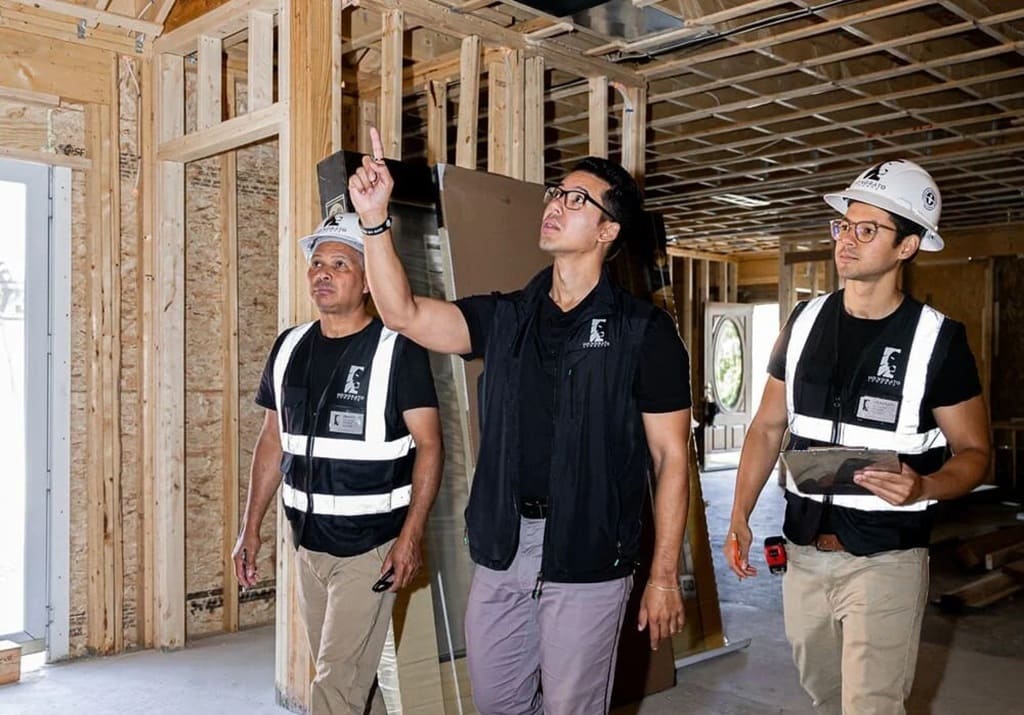
In a design-build model, the person who draws your ADU and the person who builds it work for the same company. They share the same software, attend the same meetings, and answer to the same management. When a field condition changes, the builder and designer resolve it internally and loop you in with a solution — not a problem.
You have one point of contact. You’re not relaying information between two professionals with different communication styles and different interpretations of what you said last Tuesday.
In the traditional model, when an architect and a contractor haven’t worked together before, communication gaps are a predictable source of friction — and that friction falls on the homeowner to navigate. The architect draws something one way; the contractor interprets it differently; both are technically correct; and you’re fielding calls from both sides. This is the most common complaint from homeowners who’ve gone through the traditional model.
ADU Cost Control: Is Design-Build Cheaper Than a General Contractor?
The Timing Problem in Traditional Design-Bid-Build
The classic problem with design-bid-build is timing. An architect designs your ADU without necessarily knowing what today’s subcontractors will charge. You don’t find out whether you’re over budget until the bids come back — at which point you’ve already paid for plans that may need redesigning.
This sequential approach means any design changes to bring costs down trigger expensive redesigns. A design-build ADU company builds cost awareness in from day one — the builder is in the room when the design is being drawn, calibrating every decision against real subcontractor pricing. And many turnkey ADU companies offer fixed-price contracts — while generic contractors typically come in 20–40% over their initial estimates.
What You’re Actually Paying For in Both Models
Architect fees for a straightforward ADU run $5,000–$30,000 depending on scope: schematic design only sits at the low end; full construction documents with structural engineering stamps and Title 24 compliance push toward the top. General contractor fees add another 10–20% on top of construction costs. Whether that combined total beats a design-build firm’s all-in price depends on which firms you’re comparing — but the budget certainty is rarely on the traditional model’s side.
Hidden Costs That Hit Both Models
Regardless of which path you choose, these costs are frequently omitted from initial quotes:
- Soil report / geotechnical engineering: $2,000–$5,000, required before foundation design can be finalized
- Utility trenching and panel upgrades: $5,000–$15,000 to run services to a detached ADU, plus any panel upgrade required
- City development impact fees: $10,000–$25,000 in some jurisdictions, triggered on ADUs over certain size thresholds
- Plan check corrections: In the traditional model, every city revision requiring an architect’s response adds billable hours
⚠️ Note: A design-build specialist typically bundles most of these into a single all-in quote. With separate professionals, each line item arrives independently — usually at the worst possible moment.
Change Orders: Where Budgets Go to Die
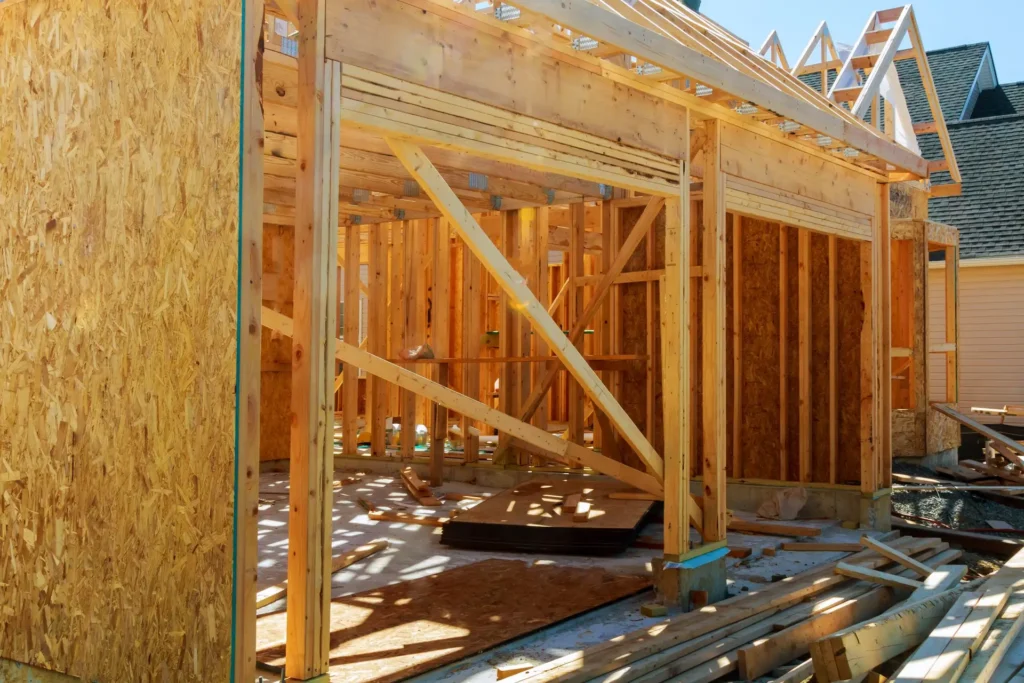
In design-bid-build, change orders frequently result from incomplete plans or site conditions the architect didn’t account for. The contractor bills for any deviation from the approved documents. If those documents had gaps — which they routinely do — the gaps become billable change orders.
Here’s what that looks like in practice: The framing crew discovers that the plumbing stack location in the architect’s drawings collides with a structural beam. Construction halts. The architect redrafts. The contractor issues a $3,000–$5,000 change order for standby time. The homeowner waits two to three weeks — for a problem that would have been caught in a 20-minute internal design meeting in a design-build model.
Design-build doesn’t eliminate change orders entirely. Owner-requested scope changes generate them in any model. The difference is that design-build eliminates most contractor-driven surprises by closing the gap between what was drawn and what can actually be built.
Timeline, Accountability & Permit Coordination
Timeline: 2–4 Months Faster
Traditional design-bid-build is strictly sequential. Design-build allows phases to overlap — permitting can begin while design is still being finalized, typically cutting 2–4 months off the total project. FMI projects design-build will represent over 47% of all US construction spending by 2028 — driven by owners who’ve experienced the timeline predictability firsthand.
Accountability: One Firm, Full Responsibility
In design-bid-build, when something goes wrong, the architect blames the contractor, the contractor blames the architect, and the homeowner is stuck in the middle. Design-build collapses that triangle. One firm manages both design and construction — one firm is responsible for the outcome. For a first-time ADU builder, this single point of accountability is arguably the most valuable feature of the entire model.
Permit Coordination: Specialist Knowledge Wins
Design-build firms that specialize in a specific market develop deep familiarity with local plan check requirements and common correction items — translating into fewer correction cycles and faster permits. When a city comment requires a design revision, a design-build team resolves it internally the same day. With separate professionals, that same comment triggers a multi-party communication chain before anyone can respond.
When Design-Build Works Best
Design-build ADU companies deliver the most value when:
- You’re building your first ADU and don’t want to manage parallel design and construction contracts
- Cost predictability matters more than lowest possible cost — fixed-price contracts suit homeowners who need a firm number before financing
- Your project is on a standard lot — a detached studio or one-bedroom on flat ground is exactly what these firms are optimized for
- Speed is a genuine priority — overlapped phases mean you’re generating rental income months sooner
- You’re in a major metro with specialist firms — Los Angeles, San Diego, Seattle, and Phoenix all have firms with hundreds of completed ADUs
When Separate Professionals May Save Money
The traditional model makes more sense when:
- You already have a complete set of plans — city pre-approved plan libraries give you permit-ready drawings for free; you just need competitive construction bids
- Your project requires genuinely custom design work — challenging sites, historic districts, or highly specific visions benefit from an independent architect advocating purely for design quality
- You have a trusted, ADU-experienced contractor — a known builder paired with an independent architect delivers competitive pricing with familiar execution
- You have project management experience — homeowners who’ve managed renovations before can capture competitive bidding savings without coordination overwhelm
Pro Tip: If you go the separate-professional route, the single most important step is confirming that your architect and contractor have worked together on ADU projects before. A pre-existing relationship eliminates the most common friction points in this model.
The Bottom Line
For most homeowners building their first ADU, the best ADU project delivery method is the one that gives you the clearest cost picture upfront, the fewest surprises during construction, and a single person to call when something goes wrong. A well-run turnkey ADU company delivers all three.
That doesn’t make the traditional model wrong. If you have existing plans, a trusted contractor, and the experience to manage the process, the architect-plus-GC path can be the smarter financial choice — especially when competitive bidding drives construction costs down.
The delivery method that fits your project and your risk tolerance will always outperform the one that doesn’t.
Your Next Step: Vet Both Options Before You Commit
Don’t make this decision based on a single quote. Talk to representatives of both models with specific questions: their permitting track record, how they handle change orders, what’s included in their pricing, and references from completed ADU projects in your jurisdiction.
FindADUPros is built for exactly this moment — a free resource to filter and compare vetted ADU professionals, design-build firms, independent architects, and specialist contractors by location and delivery model.
→ Before you sign anything: Use FindADUPros to build your comparison list. A 30-minute evaluation process now is worth far more than a change order dispute six months into construction.