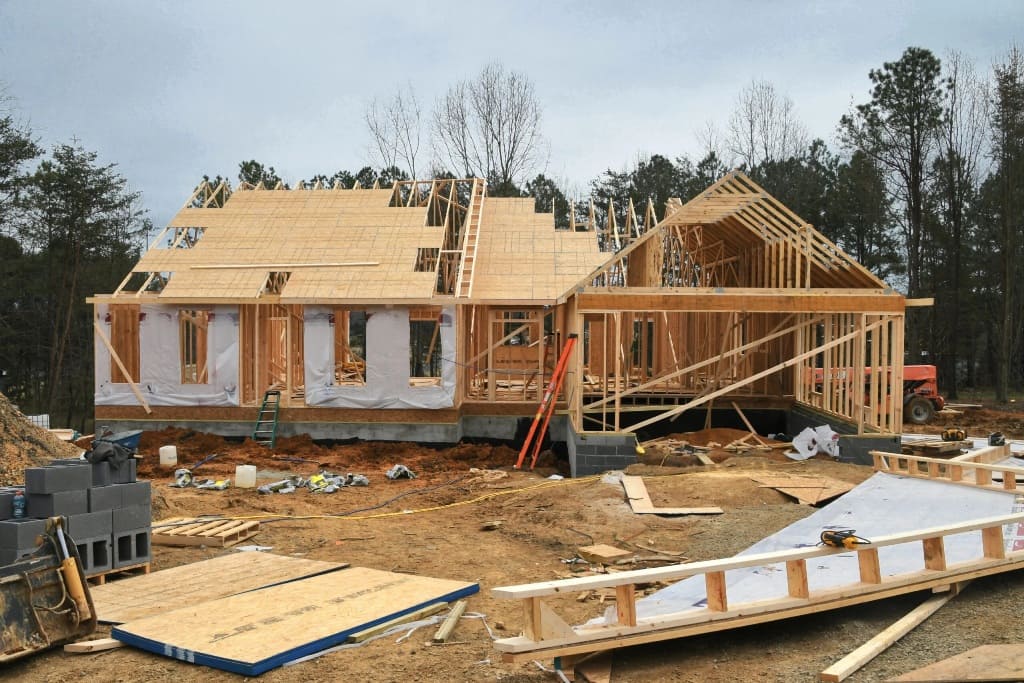

To hire an ADU contractor with confidence, run four checks before you sign anything. Confirm the license and insurance on your state’s own database. Look up permit records for ADUs the builder has finished in your city. Compare itemized bids written against the same plans. Then sign a contract where every payment follows work that has been done and inspected.
This ADU contractor hiring guide covers those checks in order, with 15 questions to ask, a way to compare bids, California’s payment rules, and the warning signs that justify walking away. Licensing and payment law differ by state, so each statute below names its state. California gets the most detail because its contractor board publishes specific ADU guidance.
Last reviewed November 2026. This is general information, not legal advice.
Choose a hiring path first
How to choose an ADU contractor depends partly on how you structure the project.
| Path | How it works | What to watch |
|---|---|---|
| Design-build firm | One company designs, permits and builds | Ask which entity holds the contractor license and signs the construction contract. Some ADU companies subcontract construction to a separate licensed builder. |
| Designer first, then bids | You own the drawings and collect bids from general contractors | Every builder prices the same plans. Alameda County’s ADU Resource Center recommends at least three bids. |
| Prefab or modular | The unit is built off site and installed | In California, a licensed C-47 manufactured housing contractor can install it. Ask who does the foundation and utility connections. |
| Owner as general contractor | You hire and manage every trade | Alameda County’s guidance says owners who do this often have a hard time. Check your city’s owner-builder rules first. |
For a closer look at remodelers versus ADU specialists, see ADU specialist vs general contractor.
Get plans and numbers ready before the first call
Bids are only comparable when every builder prices the same drawings. Check what your lot allows with the Zoning Information Lookup and our guide to ADU setback requirements. If you have no concept yet, the AI ADU Design Advisor can help you rough one out. Decide your budget ceiling and how you will fund it, because the payment schedule should match your funding.
Verify the license, bond and insurance yourself
Check the state’s database, not the contractor’s website or the license copy they hand you. For every finalist, confirm:
- The license is active and its classification fits. In California, CSLB says a Class B general building contractor can build an ADU, while specialty trades can only be subcontracted.
- The name and license number on the contract match the license record.
- Bond and insurance status. California contractors carry a $25,000 license bond, which is small next to an ADU contract.
- Workers’ compensation. California contractors with employees must carry it. The rule covering every licensee, even with no employees, was delayed to January 1, 2028.
- A liability certificate sent by the insurer or agent, and whether it covers damage to a neighbor’s property.
- Complaints and discipline on the board’s record.
| State | Who regulates | What to know |
|---|---|---|
| California | Contractors State License Board | Check status, classification, bond and complaints at cslb.ca.gov. |
| Washington | Dept. of Labor & Industries | Contractors must be registered, bonded and insured. Use L&I’s Verify tool. |
| Florida | Dept. of Business and Professional Regulation | Check whether the contractor is certified (statewide) or registered (specific local jurisdictions only). |
| Texas | No statewide general contractor license | TDLR licenses electricians and HVAC; plumbers have their own board. Some cities register general contractors. Permit history and references carry more weight. |
Other states have their own boards; Arizona’s is the Registrar of Contractors. The Contractor License Lookup is built for this step. Confirm its result against your state board, and see ADU contractor license verification for red flags that are easy to miss.
15 Questions to Ask Before You Hire an ADU Contractor
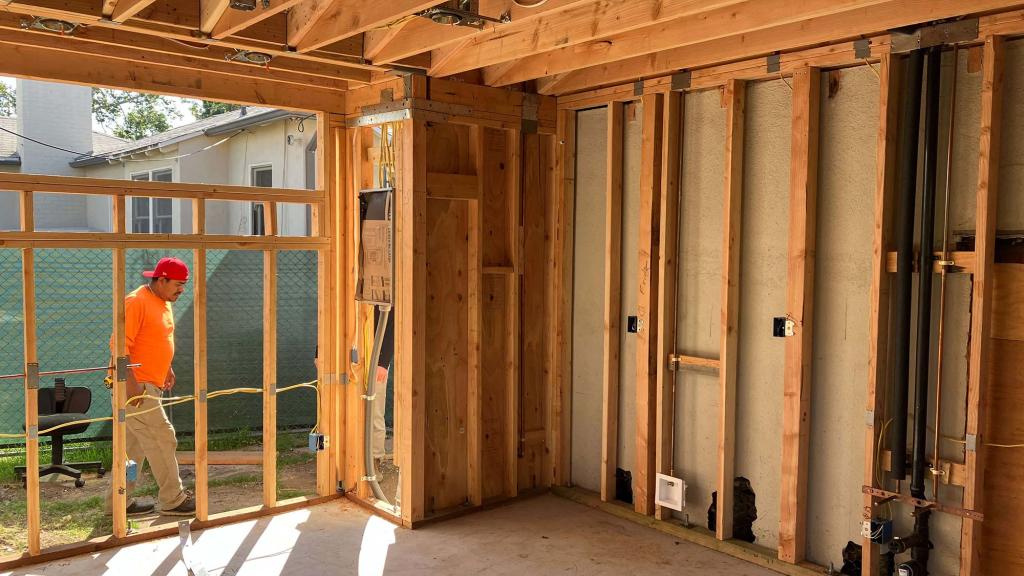
A good builder answers these questions to ask an ADU contractor in writing without fuss.
Track record
1. Which ADUs like mine have you finished in this city, and can I have the addresses? Look each up on the city permit portal for an issued permit, passed inspections and a final sign-off. Photos prove a building exists, not that it was permitted.
2. What share of your work is ADUs rather than remodels? A remodeler can build a good ADU, but a new dwelling brings separate utility service, energy and fire requirements, and plan check.
3. Whose license is on the contract, and who will do the work? Ask for the subcontractors on foundation, framing, electrical and plumbing.
4. Who is my day-to-day contact, and can I speak with two clients from the past year? Ask to visit a project in progress. How a site is kept tells you more than a portfolio.
Price and scope
5. Is this a fixed price for named products, or does it use allowances? An allowance is a placeholder. If you choose pricier finishes, you pay the difference. Ask for a spec sheet naming cabinets, flooring, fixtures and appliances.
6. What is not in this price? Get exclusions in writing: soils report, survey, plan-check and permit fees, utility connection fees, trenching beyond a set distance, electrical service upgrades, landscaping.
7. Who handles utility connections? CSLB’s ADU guidance says to confirm who is handling underground utilities. Ask about trenching distance, meters, the sewer lateral and any panel upgrade. Utilities schedule their own work, so ask what the builder assumed.
8. How will you price surprises like rock, roots or poor soil? Look for a contract definition of “unforeseen conditions.” Any added cost should be a written change order you sign first.
9. Which fees and code-driven items did you include? In California:
- ADUs under 750 square feet of interior living space are exempt from local impact fees, so ask how your city treats a unit of exactly 750. Larger ADUs can be charged only a proportional share. SB 543 clarified in 2026 that this is measured by interior livable space.
- A newly built detached ADU generally needs solar panels under the 2025 Energy Code unless an exception applies. The California Energy Commission says modules can be added to an existing system on the lot. Attached ADUs and conversions are generally treated as additions or alterations.
Outside California, ask which local fees and energy or fire requirements the bid assumes.
Permits and schedule
10. Who pulls the permit, and who pays for plan-check corrections? California requires a city to act on a complete ADU application within 60 days, but corrections and incomplete submittals are where time disappears.
11. What is your realistic schedule, and where could it slip? Alameda County puts construction at 6 to 12 months and total project time at 12 to 18 months for most ADUs. See how long it takes to build an ADU.
12. Who schedules inspections, and what do you show me after each? The builder usually arranges them, but Alameda County notes that making sure they happen is still the owner’s responsibility.
Contract and risk
13. What is the payment schedule, and what work triggers each payment? Compare the answer with the payment rules below.
14. How are change orders and lien waivers handled? Changes in writing before work starts, and a lien waiver with each payment.
15. What warranty do you give, and what happens if your company stops operating? A warranty is only as good as the company behind it. Ask how long it has operated under its current name and how it pays subcontractors. When several homeowners claim against one contractor bond, they split the payout.
How to compare bids
A low bid is rarely a bargain. It usually leaves out scope that returns as change orders. Put every bid in the same grid and ask each builder to price the same exclusions list.
| Line item | What to look for |
|---|---|
| Design and engineering | Who is responsible; included or separate |
| Permits and fees | Estimated plan-check, permit and impact fees, and who pays |
| Site work and foundation | Excavation, soils report, survey, drainage |
| Utilities | Trenching distance, meters, sewer lateral, panel upgrade |
| Structure, MEP, energy items | Framing, roof, plumbing, electrical, HVAC, solar if required |
| Finishes and appliances | Named products, not allowances |
| Landscaping and restoration | Included, excluded or an allowance |
| Exclusions and contingency | A written list of what the price does not cover |
For scale, Alameda County’s ADU Resource Center suggests starting with about $450 to $550 per square foot all in, within a much wider range depending on site and finishes. Your market may differ, so run your own numbers in the ADU Cost Calculator.
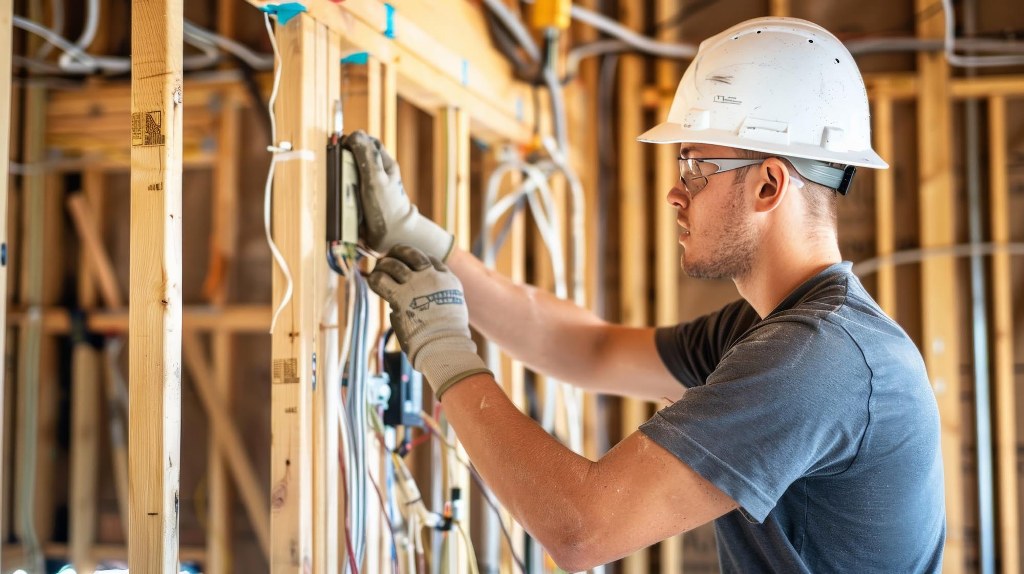
Payment terms that protect you
California rules
CSLB treats ADU construction as home improvement:
- A written contract is required, listing scope, timeline, payment schedule, materials, the license number and your cancellation rights. You generally have three days to cancel, or five if you are 65 or older.
- The down payment cannot exceed the lesser of $1,000 or 10 percent of the price. On a $250,000 ADU, that is $1,000, or 0.4 percent.
- Progress payments must be listed in dollars and cannot exceed the value of work done or materials delivered.
- Be careful with requests to pay for plans or permits before work starts. CSLB suggests asking for an accounting and confirming permit fees with the building department.
CSLB’s ADU guidance includes a sample schedule. The dollar column applies it to an illustrative $250,000 contract.
| Stage | Share | On $250,000 |
|---|---|---|
| Mobilization | 5% | $12,500 |
| Demolition and site prep | 10% | $25,000 |
| Foundation | 10% | $25,000 |
| Framing | 15% | $37,500 |
| Rough MEP | 15% | $37,500 |
| Roof and exterior wrap | 15% | $37,500 |
| Insulation and drywall | 10% | $25,000 |
| Flooring, tile and cabinets | 10% | $25,000 |
| Finish MEP and carpentry | 5% | $12,500 |
| Final inspection | 3% | $7,500 |
| Keys, after the punch list | 2% | $5,000 |
It is a sample, not a requirement. Ask that any down payment be credited against the first progress payment. Some homeowners negotiate a larger holdback until the certificate of occupancy; talk to a construction attorney before relying on that.
Outside California
Deposit limits vary by state, so ask your contractor board or attorney general. The logic holds everywhere: pay for completed, inspected work, keep deposits small, and treat large demands before a permit exists as a red flag. If a construction loan funds the project, match the contractor’s schedule to the lender’s draw schedule, and use the ADU Loan Calculator to see the monthly cost first.
Change orders and lien waivers
Every change order should be written, priced and signed by you before work starts. If a subcontractor or supplier goes unpaid, they can record a mechanics lien against your property even when you paid the general contractor. Collect a lien waiver from the contractor and each subcontractor and supplier: conditional when you hand over a payment, unconditional after it clears. California waivers must substantially follow the statutory forms, which CSLB publishes.
Before you sign
- License, bond and workers’ comp checked on the state database
- Insurance certificate received from the insurer or agent
- Permit addresses checked on the city portal
- Every payment tied to described work, with the down payment within legal limits
- Lien waivers required with each payment
- Change orders require your written signature
- Utilities, site work and exclusions listed line by line
- Contract reviewed by a construction attorney
ADU contractor red flags that justify walking away
- A large deposit before permits. NBC Bay Area reported a homeowner who paid $19,500 up front, 19 times California’s $1,000 limit.
- Payments tied to calendar dates or vague phrases, rather than described work.
- Requests to pay for plans or permits with no accounting.
- Cash deals, vague estimates, or an unlicensed person offering to “handle everything.”
- Financing arranged before any work starts. NBC 7 Investigates reported San Diego County homeowners who said loans were taken out in their names for work that mostly never began. Read every loan document.
- A suspended license or canceled bond. CSLB’s investigation of one ADU builder covered more than 200 complaints across 18 counties, ended in license revocation, and led to criminal charges against its owners.
- Refusal to share completed-project addresses, or pressure to sign the same day.
Our guide to the biggest ADU contractor scams covers more patterns.
From shortlist to signed contract
- Build a shortlist of three to five licensed builders from the Find Contractors directory.
- Verify each on the state database before you call.
- Interview builders while plans are being finalized, and send everyone the same drawings and exclusions list. A price on unfinished drawings is an estimate, not a bid.
- Ask the 15 questions, plus permit addresses and two references.
- Visit a project and check the permit records.
- Compare bids in one grid, then have an attorney review the contract before you sign.