If you have an unpermitted guest house, garage conversion, or backyard cottage, you’re far from alone. Thousands of California homeowners own ADUs that were built without permits and remain in legal limbo.
The good news is that California’s AB 2533, effective January 1, 2025, has made it easier and more affordable to legalize many unpermitted ADUs. While the process is more homeowner-friendly than before, it still requires following the proper legal and permitting steps.
Use the FindADUPros Zoning Information Lookup to check your local jurisdiction’s amnesty program status before taking any next steps.
What Is an ADU Amnesty Program?
An ADU amnesty program gives homeowners a penalty-free way to legalize unpermitted accessory dwelling units by focusing on making them safe rather than penalizing past violations.
Unlike standard permitting, amnesty programs prioritize health and safety instead of requiring every part of the structure to meet current building codes. This greatly reduces the cost and complexity of legalizing an existing ADU.
That focus on essential safety improvements is what makes ADU amnesty programs a practical and affordable option for many homeowners.
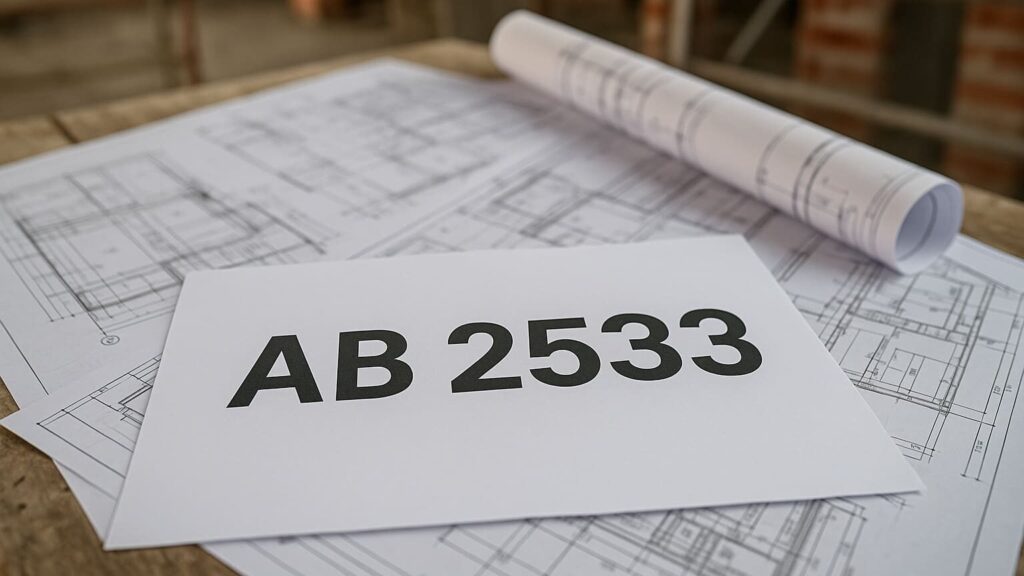
California’s AB 2533: The Most Important Law for Unpermitted ADU Owners
Assembly Bill 2533 went into effect on January 1, 2025. It aims to allow unpermitted ADUs built before January 1, 2020 to become fully permitted without fees, penalties, or enforcement actions.
Who Qualifies
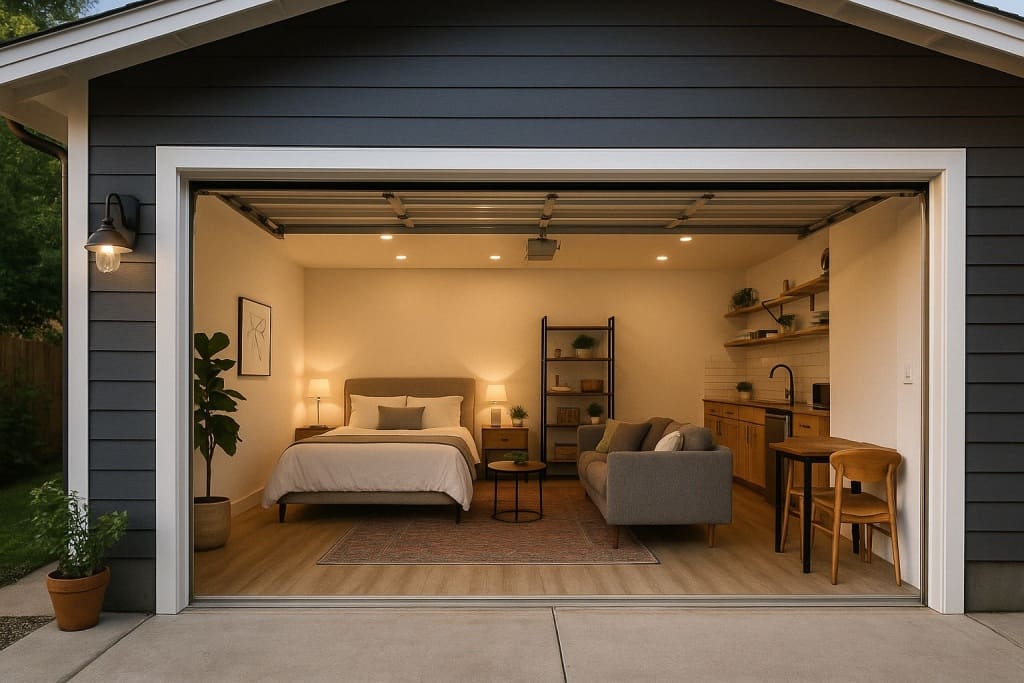
AB 2533 applies to unpermitted ADUs and JADUs constructed before January 1, 2020. That includes garage conversions, backyard cottages, and interior units that were added without permits.
The January 1, 2020, cutoff is non-negotiable. If your unpermitted structure was built after that date, AB 2533 doesn’t apply — you’ll need to go through standard permitting, which may include penalties and full plan review. Structures built between 2018 and 2020 were not covered under the previous amnesty framework (SB 1226), which only protected units built before January 1, 2018. AB 2533 extended that window by two years.
What the Law Protects You From
Under AB 2533, local agencies must provide owners with unpermitted ADUs a checklist of substandard conditions that must be repaired or upgraded in order to receive a city permit. Cities cannot charge retroactive impact fees or connection charges unless new utility infrastructure is required for compliance.
This fee protection is a significant financial benefit. In markets like Los Angeles and San Diego, development impact fees can run $8,000–$25,000. AB 2533 waives these for qualifying units — meaning the cost to legalize an unpermitted structure is substantially lower than the cost of building a new ADU with full fees.
The Safety Checklist: What Inspectors Actually Look For
This is where many homeowners worry unnecessarily. Under AB 2533, your ADU does not have to meet every requirement of the current California Building Code. Instead, inspectors evaluate it under Health and Safety Code Section 17920.3, focusing on essential safety features such as exits, smoke alarms, sanitation, structural soundness, electrical systems, and plumbing.
Egress and exits. Every sleeping area must have a code-compliant emergency exit window or door. This is one of the most common issues in older garage conversions and typically costs $800–$2,500 to correct.
Smoke and carbon monoxide detectors. These are required in sleeping areas and on each level of the dwelling. They are among the simplest and least expensive upgrades.
Electrical safety. Inspectors look for hazards such as exposed wiring, overloaded panels, missing GFCI protection, or other unsafe conditions. Only safety-related repairs are required, with costs generally ranging from $1,500–$8,000.
Plumbing. The inspection covers working drains, proper venting, water supply, and sewage safety. Repairs can become costly if hidden or improperly installed drain lines need replacement.
Structural integrity. The building must be structurally safe and free of major deterioration or foundation failure. Minor cosmetic defects usually do not require correction.
AB 2533 does not require full compliance with current energy codes, solar mandates, insulation standards, or cosmetic upgrades. The emphasis is on correcting health and safety issues—not bringing the ADU up to every modern building code requirement.
Common Code Requirements That Cause Delays
The biggest delays in legalizing an unpermitted guest house usually come from hidden issues discovered during inspection rather than obvious problems.
Concealed plumbing and electrical. If inspectors cannot verify systems hidden behind finished walls, they may require sections to be opened for inspection, adding unexpected time and repair costs.
Unpermitted original structure. If the garage or outbuilding itself was built without permits, you may need to legalize the original structure before the ADU conversion can be approved.
Septic system capacity. On properties without city sewer service, you may need to prove the septic system can support the ADU. If upgrades are required, costs can range from $8,000–$25,000.
Documentation gaps. AB 2533 requires evidence that the ADU existed before January 1, 2020. Records such as property tax documents, utility connections, dated photos, contractor invoices, or appraisal reports can help. If these are difficult to obtain, the application process may take longer.
Step-by-Step: How to Retroactively Permit a Garage Conversion
Step 1: Get a confidential pre-inspection. AB 2533 allows you to get a confidential inspection from a licensed contractor before submitting a permit application — so you can understand your risks and next steps without triggering enforcement. This is the most important first move. Use it to get a realistic assessment of required corrections and costs before committing to the process.
Step 2: Gather documentation of the construction date. Pull property tax records, utility bills, dated photos, satellite imagery, and any contractor records that establish the structure predates January 1, 2020.
Step 3: Submit the AB 2533 application to your local building department. Cities must post clear information online about the AB 2533 process. Permit application fees run $570–$800 depending on the city. Your application package includes the site plan, floor plans, exterior elevations, the completed Substandard Housing Checklist, and your documentation of construction date.
Step 4: Schedule the safety inspection. An inspector reviews the unit against the Health and Safety Code Section 17920.3 checklist and provides a written list of required corrections.
Step 5: Complete corrections with a licensed contractor. Ensure you only hire licensed contractors for the work. Verify credentials through your state licensing board before signing anything. The FindADUPros Contractor License Lookup gives you instant access to license status, bond standing, and any open complaints.
Step 6: Final inspection and Certificate of Occupancy. Once corrections are complete and pass final inspection, you receive a Certificate of Occupancy or Certificate of Compliance. Your ADU is now officially recognized, utility connections can be properly documented, and you’ll no longer have to worry about fines or forced removal.
Timeline: 2 to 6 months from application to approval is the typical range, though complex sites with significant corrections can run longer.
What Does It Cost to Legalize an Unpermitted ADU?
The cost to legalize an unpermitted structure varies significantly based on the structure’s current condition. Here’s the realistic range:
| Condition | Typical Correction Scope | Estimated Cost |
|---|---|---|
| Minor issues only | Egress windows, detectors, minor electrical | $10,000–$25,000 |
| Moderate corrections | Electrical panel work, plumbing rerouting, structural reinforcement | $25,000–$50,000 |
| Significant deficiencies | Hidden plumbing excavation, major electrical, septic work | $50,000–$80,000+ |
Total costs typically range from $10,000 to $60,000 depending on your ADU’s condition.
Compare this against the cost of new ADU construction ($150,000–$400,000 depending on type and market), and legalization is almost always the more financially rational path for qualifying structures — even at the high end of the correction cost range.

State-by-State Variations in Amnesty Programs
California’s AB 2533 is the most comprehensive ADU amnesty framework in the country, but other states are developing their own approaches:
Oregon: The state’s expanded ADU rights framework encourages municipalities to establish streamlined approval processes for existing unpermitted units. Portland has operated a relatively permissive process for several years, focusing on safety rather than full code compliance for structures that predate the city’s ADU boom.
Washington: No statewide amnesty law equivalent to AB 2533 exists, but several cities — including Seattle — have informal pre-application consultation processes that allow homeowners to assess unpermitted structures without triggering immediate enforcement. State-level ADU reforms under HB 1337 have created pressure to expand these programs.
Texas: No statewide amnesty framework. Legalization is handled entirely at the city level, with significant variation. Houston’s lack of formal zoning creates a different set of considerations — deed restrictions remain the primary obstacle rather than zoning code violations.
Florida: No statewide amnesty program. Florida homeowners must work through individual county and city building departments, and the process is governed by the standard building code rather than a safety-first framework. HOA covenants add another layer of complexity.
For homeowners outside California, the practical guidance is the same regardless of state: contact your local building department directly, ask about any existing amnesty or legalization programs, and request a pre-application consultation before submitting anything formally.
Property Tax and Home Equity Implications
Legalizing an unpermitted ADU has financial implications beyond the correction costs.
Property tax: Once a unit is permitted, your county assessor will assess it as new construction — adding the structure’s value to your total assessment. Using California’s blended assessment approach under Proposition 13, expect roughly 1–1.3% of the ADU’s assessed value added annually to your tax bill. On a $100,000 assessed ADU, that’s $1,000–$1,300/year. This increase is real but modest compared to the income the unit can generate.
Importantly, legal ADUs add 20–30% more property value than unpermitted units — meaning the tax increase is accompanied by a far larger equity gain.
Home equity loans and refinancing: Lenders do not count unpermitted square footage in appraisals. If your property has an unpermitted ADU, that structure contributes nothing to your appraised value for HELOC or refinancing purposes. Once legalized, it can be included in the income-approach appraisal, often adding $100,000–$300,000 to the appraised value depending on market and rental income. That equity is then available to access through a HELOC or cash-out refinance.
Use the FindADUPros ADU Loan Calculator to model how your post-legalization equity position could support future financing.
The Bottom Line
The risk of leaving an unpermitted ADU as-is is real: code enforcement complaints, inability to legally rent the unit, exclusion from appraisal value, insurance complications, and potential fines or forced removal. In California, AB 2533 has removed most of the barriers that previously made legalization feel more painful than the risk.
The process is designed to be manageable. Get a confidential pre-inspection first so you know what you’re dealing with before committing. Document the construction date thoroughly. Work only with licensed contractors for the correction work. And use the 2–6 month process as an investment in a legal asset that generates income, holds its value, and doesn’t keep you up at night worrying about code enforcement.
For vetted contractors with AB 2533 legalization experience in your market, visit FindADUPros.
Frequently Asked Questions
How do I know if my unpermitted ADU qualifies for amnesty under AB 2533?
Your ADU must have been built before January 1, 2020 and must not contain serious health or safety violations under California Health and Safety Code Section 17920.3. Eligible units include garage conversions, backyard cottages, basement apartments, and JADUs. Before applying, contact your local building department or request a confidential pre-inspection to confirm eligibility.
How much does it cost to legalize an unpermitted ADU?
Costs typically range from $10,000–$60,000, depending on the ADU’s condition and the repairs required. Minor upgrades such as egress windows, smoke detectors, and electrical fixes often cost $10,000–$25,000, while major plumbing, electrical, or septic work can increase costs to $50,000–$80,000. For most qualifying units, AB 2533 also waives development impact fees, potentially saving homeowners $8,000–$25,000.
Will legalizing my ADU trigger a property tax reassessment?
Yes. Once your ADU is permitted, the county assessor adds only the ADU’s value to your property’s assessment under California’s Proposition 13 blended assessment system. Your primary home’s assessed value is not reset. Expect your annual property tax to increase by about 1–1.3% of the ADU’s assessed value, or roughly $1,000–$3,000, depending on the unit’s value.
Can I access home equity financing before legalizing my ADU?
Not effectively. Unpermitted ADUs are generally excluded from lender appraisals, so they add little or no borrowing value. Once legalized, they can be included in appraisals, potentially increasing your property’s value and making that equity available through a HELOC or cash-out refinance.
Is there an amnesty program for unpermitted ADUs in states other than California?
California’s AB 2533 is the most comprehensive ADU amnesty program in the U.S. Oregon offers simplified processes in some cities, while Washington, Texas, and Florida generally handle legalization at the local level. Before applying, contact your local building department to ask whether an amnesty or streamlined legalization program is available.