It’s the first question every homeowner asks: Can I build an ADU on my property? And the frustrating reality is that the answer depends on a layered set of variables — your zoning designation, your lot’s physical characteristics, whether any overlays or easements apply, and which state you’re in.
ADU zoning requirements have been loosening dramatically across the United States. California eliminated minimum lot size requirements entirely. Massachusetts’s ADU law, effective February 2025, prohibits cities from denying ADUs based on lot size. Washington, Oregon, and Arizona have each passed sweeping legislation removing barriers that existed as recently as 2022.
The less straightforward news: “ADUs are allowed” doesn’t mean “ADUs are allowed anywhere on your lot in any configuration.” Lot type, physical constraints, and overlay zones create real differences in what’s buildable — and discovering these after you’ve paid for design plans is an expensive mistake.
For vetted ADU professionals who know your local zoning environment, FindADUPros is a free resource worth using early in your process.
Can You Build an ADU on Your Property? Zoning Feasibility Explained
The baseline eligibility test for most states is:
- Residential zoning: Your lot must be zoned single-family or multifamily. Commercial zones typically don’t qualify, though some mixed-use zones do
- Primary dwelling present or proposed: ADUs are accessory to a main residence; vacant lots generally don’t qualify
- No minimum lot size in California (Gov. Code §66314(b)(1)), Massachusetts (February 2025), Arizona (HB 2720), and a growing list of other states. If a planner says your lot is too small, they may be citing an overridden ordinance
- Zoning district confirmed: R-1, R-2, RM, and dozens of other designations carry different rules for setbacks, height, and coverage
The fastest way to confirm your zoning is your city or county’s GIS zoning map — searchable by address in most jurisdictions.
Overriding Local Rules: The 800 Sq Ft State Exemption Loophole
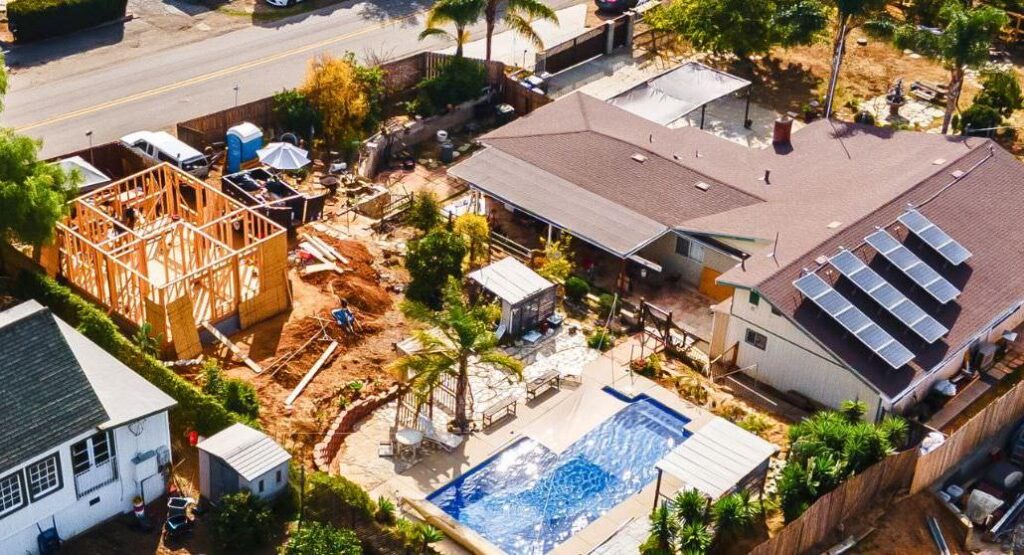
This is the most powerful protection most homeowners don’t know about. Under California’s ADU framework and similar statutes in other progressive states, local agencies cannot use FAR (Floor Area Ratio) or lot coverage limits to block construction of an ADU up to 800 square feet. This is the statewide exemption ADU size limit — a guaranteed floor that overrides local restrictions.
Floor Area Ratio is the ratio of total building floor area to total lot area. Lot coverage is the maximum percentage of the lot footprint that structures can occupy. On small urban lots, both of these calculations would mathematically prevent ADU construction under standard local rules. The state exemption removes that obstacle for units at or below 800 sq ft — a significant protection that most homeowners and even some local planners aren’t aware of.
How Lot Type Dictates Your ADU Footprint: Corner, Interior, and Flag Lots
Standard Single-Family and Interior Lots
In California in 2026, a single-family lot is entitled to build up to four ADUs simultaneously: one attached ADU, one JADU (up to 500 sq ft within the primary home), and two detached ADUs — driven by SB 477 and related 2026 legislation. State minimum setbacks for new detached ADUs are four feet on the side and rear. Height minimums are 16 feet, rising to 18 feet near major transit.
Here’s how those setbacks and fire separation distances play out on a standard interior lot:
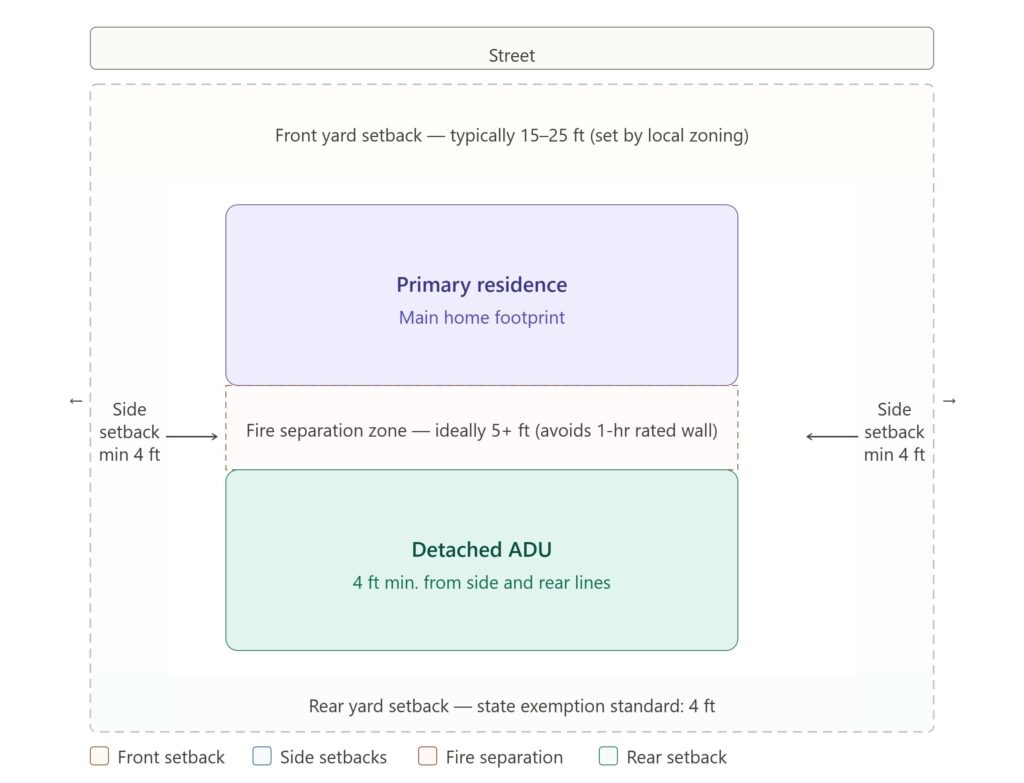
Even on standard lots, these constraints limit buildable area:
- Lot coverage double-check: Count every structure — primary home, garage, covered patio, ADU — against your zoning district’s coverage limit before finalizing footprint
- Utility capacity: Electrical panel, sewer lateral condition, and water service must support the additional unit. These surface during permit processing, not zoning review
Corner Lots
Corner lots appear spacious — often they aren’t for ADU purposes. They have two street-facing frontages, and what appears to be the “rear” of a corner lot is frequently classified as an exterior side yard, which carries setbacks of 10–15 feet rather than the four-foot interior standard. An ADU footprint that fits the apparent rear yard may be sitting in a zone with far larger required buffers.
Always confirm your lot’s boundary classifications — front, exterior side, interior side, and rear — with your city’s planning department before your designer places anything on the lot.
Flag and Narrow Lots
Narrow lots (typically under 40 feet wide) face a straightforward setback math problem: four feet on each side leaves only 32 feet of buildable width on a 40-foot lot — and less on anything narrower. The practical solutions:
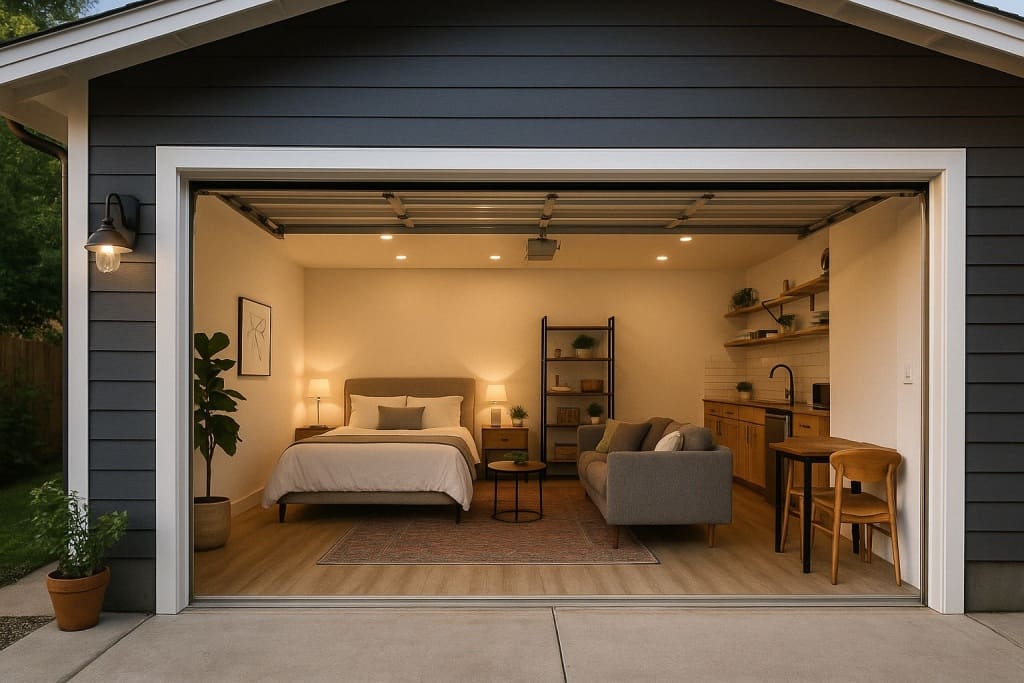
- Garage conversions retain the existing structure’s grandfathered position, eliminating the setback calculation entirely
- JADUs (up to 500 sq ft within the existing home) require no setbacks — the most viable path for genuinely constrained parcels
- Long, narrow floor plans (e.g., 16×30 ft) work within tight buildable widths and stay under the 750 sq ft California impact fee exemption threshold
Understanding ADU Setbacks: Managing Side and Rear Boundary Minimums
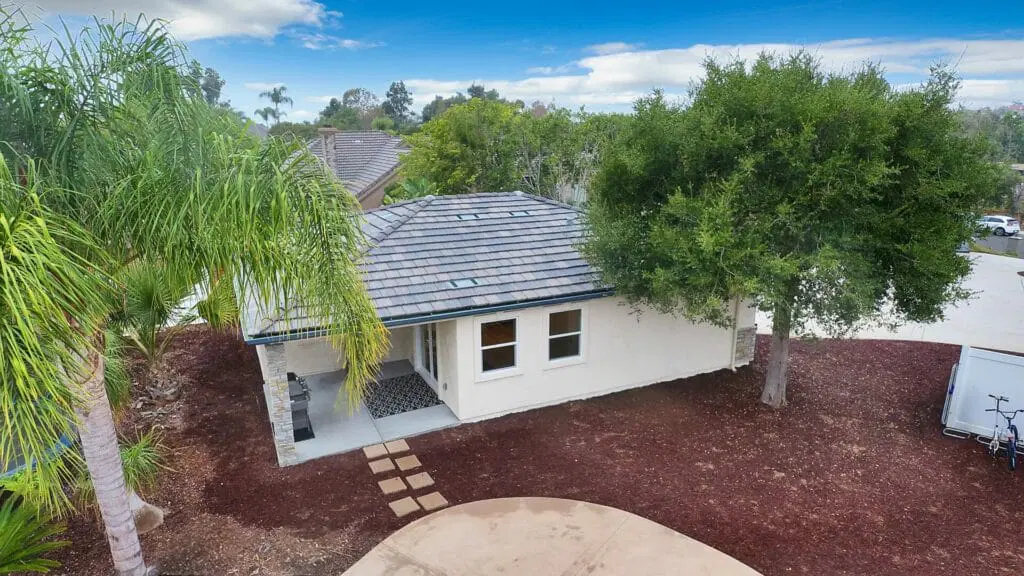
The zoning requirements for detached backyard homes hinge on setbacks — and knowing exactly how close to the property line you can build is the central question on most projects.
The state minimum in California is four feet from side and rear property lines for new detached ADUs. But how close to the property line can you build an ADU before fire code changes the construction requirements entirely? The answer is five feet.
Fire-Separation Codes: Building Close to Property Lines Safely
This is the most underestimated cost trap in ADU construction on constrained lots. Under the International Residential Code (IRC) and California Building Code:
- Less than 5 feet from the primary residence or property line: The wall facing that boundary must be a 1-hour fire-resistance-rated wall assembly — double-layer Type X drywall on both faces, specialized exterior siding, and a complete prohibition on standard window openings on that wall face
- Less than 3 feet from a property line: Construction is generally prohibited without a full fire-rated wall on both sides and no openings whatsoever
The cost implication: a 1-hour fire-rated wall assembly adds $8,000–$15,000 to framing costs compared to a standard wall, and the loss of window openings on that wall face often requires redesigning the unit’s natural lighting strategy entirely. On tight lots where placing the ADU close to the rear boundary seems like the obvious solution, this code requirement frequently forces a footprint revision that costs more than the planning saved.
The practical rule: where site conditions allow, target at least five feet of clearance from both the property line and the primary residence. It costs nothing in construction terms and eliminates the fire-rating requirement entirely.
The Infrastructure Trap: Utility Easements, Sewer Laterals, and Electric Panels
Utility Easements and Right-of-Way Obstacles
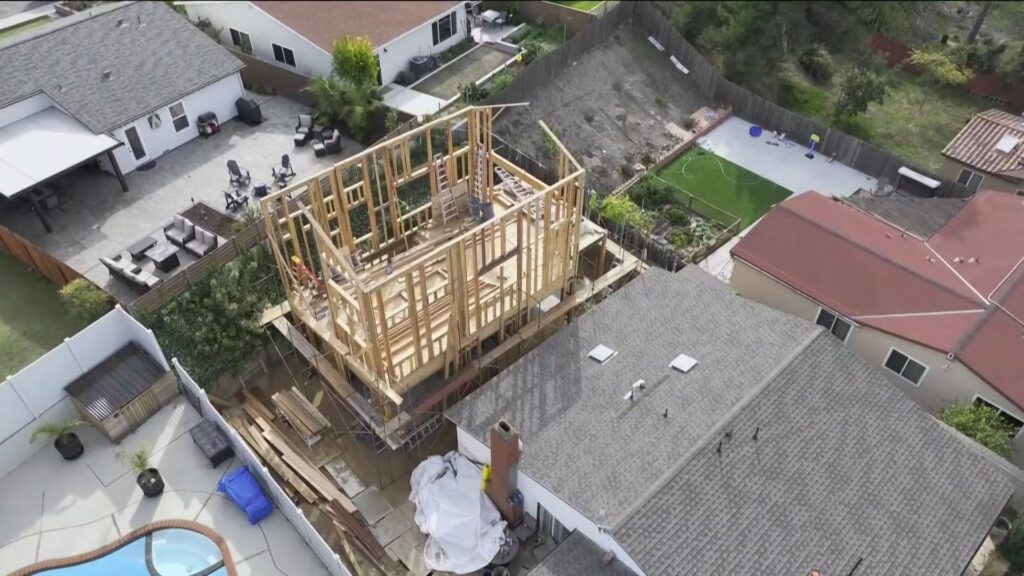
A lot can look perfectly clear on a satellite map and still be unbuildable in a specific location. Utility easements — for power lines, sewer mains, water pathways, and drainage — are recorded against your title and invisible on visual surveys. Municipalities will reject ADU plans if any portion of the foundation or roof overhang encroaches on a recorded easement.
The floor area ratio override for accessory dwelling units doesn’t protect you from easement conflicts — these are title restrictions, not zoning rules, and they operate independently of state ADU law. In San Diego, the city requires a six-foot buffer from sewer easements beyond the easement boundary itself.
Run a preliminary title report ($300–$500) before your designer draws a single line. It surfaces every recorded easement and restriction on your property. Finding an easement after plans are complete means a redesign bill on top of the title report cost.
Historic Districts and Flood Zones
Historic preservation overlay zones (HPOZs) are one of the few places state ADU preemption has limited reach. Cities can still reject exterior materials, window profiles, or rooflines that don’t match the historic character of the neighborhood — even when the unit is otherwise code-compliant. Timeline adds 4–8 weeks for design review; material costs are higher for historically compatible specifications. The benefit: parking is typically waived in California’s historic districts.
FEMA flood zones affect foundation design and cost, not eligibility. Zone AE properties must elevate the ADU’s lowest floor at least one foot above Base Flood Elevation — requiring a raised foundation that adds $15,000–$35,000 above a standard slab. Check your designation at msc.fema.gov before finalizing any design.
Detached ADUs vs. JADUs: Choosing the Right Strategy for Small Parcels
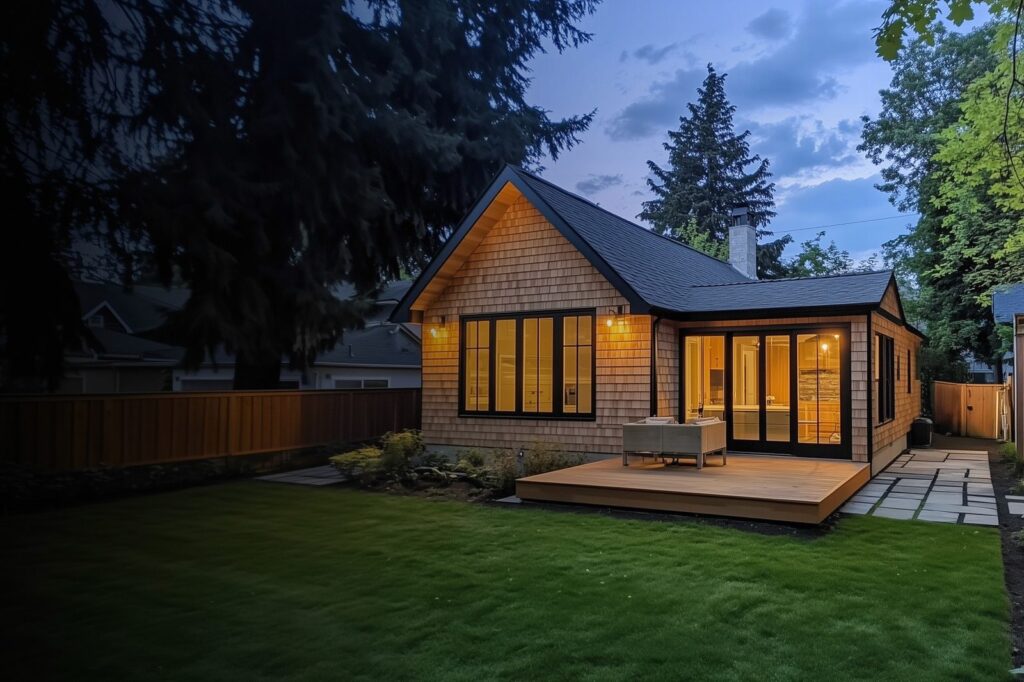
When backyard space is genuinely constrained — narrow lots, deep easements, hillside conditions — the choice between a detached ADU and a JADU changes the entire feasibility equation.
A JADU (Junior ADU) must be built entirely within the walls of the existing or proposed primary residence. It is capped strictly at 500 square feet, requires an efficiency kitchen (sink, cooking appliance, and refrigeration), and needs a separate exterior entrance. Critically, it requires no setbacks — the existing structure’s legal position on the lot is preserved entirely. For properties where a detached footprint simply doesn’t fit within setback and easement constraints, a JADU is often the only viable path to adding a rentable unit.
The trade-off: a JADU shares the primary home’s structure, which limits acoustic separation and typically constrains the unit’s ceiling height to whatever the existing floor-to-ceiling dimension allows. For properties where a detached ADU is feasible, the privacy and rental premium of a separate structure typically justify the additional cost and complexity.
The Master Property Zoning & Feasibility Audit
Before hiring a draftsperson or buying a pre-approved plan set, run your parcel through these checks:
- The 4-Foot Exemption Test: Measure your rear and side yard perimeters. Can you fit your desired ADU layout while maintaining a clear 4-foot buffer from all property lines — and ideally 5 feet to avoid fire-rated wall requirements?
- Main Electrical Panel Amperage: Is your main panel rated for 200 amps, or an older 100-amp system requiring a $3,500–$6,000 upgrade to backfeed the ADU subpanel?
- Sewer/Septic Capacity: If your property uses a septic tank, zoning will require proof that the existing tank can handle the additional daily load — or an independent expansion system
- Easement and Title Check: Run a preliminary title report ($300–$500) to surface all recorded easements before finalizing your ADU’s location
- Tree Canopy Interference: Check local ordinances for protected tree species. Building within the critical root zone or drip-line of a heritage or protected oak can freeze permit approvals entirely
The Bottom Line
The answer to Can I build an ADU on my property is almost always yes — if your lot is residentially zoned and has an existing or proposed primary home, you have a legal baseline right to build in most states. What varies is where you can place it, what the fire separation requirements cost, and what the infrastructure constraints add to your budget.
The 800 sq ft statewide exemption overrides FAR and coverage limits. The four-foot setback is the state floor. The five-foot fire separation threshold is the cost line. Easements are the invisible variable that title reports surface. The JADU pathway exists specifically for lots where detached construction doesn’t fit.
The homeowners who move efficiently through this process confirm all of these variables at the lot level before a designer draws anything.
For local ADU professionals who understand your specific jurisdiction’s requirements, visit FindADUPros.