Raleigh was allowing backyard cottages before it was cool. While most North Carolina cities scrambled to rewrite their ordinances after the state’s 2023 ADU mandate, Raleigh had already opened the door back in 2020, well ahead of the curve, and its current rules reflect years of practice rather than a rushed catch-up job. That head start matters if you’re comparing where to build in the Triangle versus other growing NC metros, and it’s the reason this Raleigh ADU guide reads a little differently from most city ADU pages: the process here has had time to get genuinely smooth.
If you’re new to the term, an accessory dwelling unit is a smaller, independent home on the same lot as your existing house, a garage apartment, a converted basement, or a standalone backyard unit with its own kitchen and bathroom. Raleigh’s tech-driven rental market, fueled by Research Triangle Park and a steady stream of relocating workers, has made these units genuinely profitable to build here, not just legally possible. This guide covers what the city actually allows, what it costs, how long permitting takes, and how the numbers stack up against Charlotte if you’re weighing both markets.
Raleigh’s Head Start on ADU Policy
Most of the ADU coverage circulating right now leads with North Carolina’s statewide mandate, Session Law 2023-87, which forced every mid-size and larger city in the state to allow at least one ADU by right on single-family lots. That law matters, and it removed owner-occupancy requirements and blocked cities from demanding more than one parking space per unit. But Raleigh’s own ADU text change was adopted by city council back on July 7, 2020, taking effect that July 22, which means the city has been refining its process for several years longer than most of its NC peers.
That history shows up in the details. Raleigh’s ADU provisions are baked into Section 3.6.2 of the city’s Unified Development Ordinance, and the city allows ADUs by right across a genuinely wide set of zoning districts: R-1, R-2, R-4, R-6, R-10, RX, OX, NX, DX, and CX. That’s a broader footprint than a lot of newly compliant cities can claim, and it means far fewer Raleigh homeowners need to check whether their zoning even permits an ADU in the first place. Before assuming your address qualifies, though, it’s still worth confirming your specific district and any overlay restrictions through our zoning information lookup tool, since historic overlay districts and Residential Infill Compatibility standards can still add extra review steps even in an allowed zone.
How Big Can a Raleigh ADU Be?
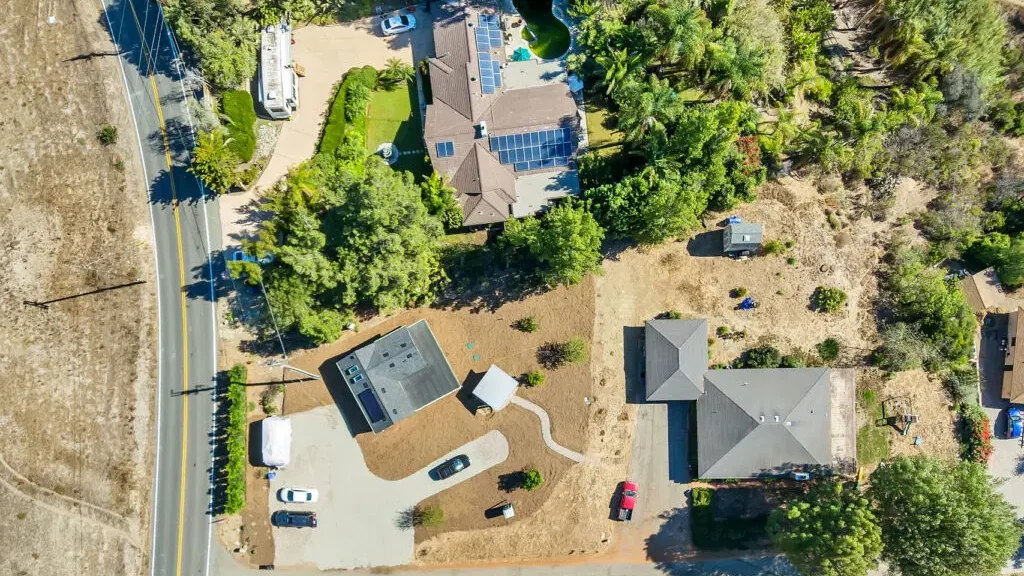
This is where a lot of competing guides oversimplify. Raleigh’s own ADU FAQ page states that ADUs typically run between 450 and 800 square feet, but adds that units up to 1,000 square feet are allowed on specific sites, generally larger lots where the additional square footage doesn’t crowd the property. The UDO’s precise rule caps a detached or attached ADU at 1,000 square feet or 50 percent of the primary dwelling’s gross floor area, whichever is smaller.
That distinction actually matters for planning. A homeowner with an 1,800-square-foot primary house doesn’t automatically get the full 1,000-square-foot allowance; the 50 percent rule kicks in at 900 square feet first. Only larger primary homes, generally 2,000 square feet or more, actually reach the full 1,000-square-foot ceiling. Setbacks for detached ADUs typically run around 15 feet, and only one ADU is permitted per lot regardless of size.
One rule that surprises people: Raleigh prohibits short-term rental use of ADUs. These units are meant for long-term occupancy only, which shuts down the Airbnb strategy some homeowners consider elsewhere. If steady rental income is the goal, that’s not a dealbreaker; it just means planning around a standard lease rather than nightly bookings.
The Raleigh ADU Permit Process
Raleigh’s permitting runs through a single city department rather than the two-agency system some NC cities require, which is one of the genuine advantages of building here. You’ll submit construction drawings along with a Residential Review Checklist, and depending on your structure’s size, you’ll receive either a zoning permit (for anything under 12 feet in any dimension) or a full building permit for anything larger, which covers the overwhelming majority of actual ADUs.
A meaningful cost-saving option worth knowing about: Raleigh maintains a gallery of pre-reviewed Fast Track ADU designs. Choosing one of these plans lets you reference an already-approved design in your permit application instead of going through full custom plan review, which can meaningfully shorten both your timeline and your design fees.
Expect the full plan review process to run somewhere in the range of 4 to 10 weeks depending on project complexity and whether corrections are needed along the way, with straightforward, pre-reviewed designs typically landing on the faster end. One detail that trips up first-time applicants: if your project’s total valuation exceeds a set threshold, currently around $40,000, North Carolina law requires a licensed general contractor rather than allowing an owner-builder exemption. Below that threshold, homeowners can self-build under the state’s owner-builder provisions, though most detached ADUs end up costing enough to require a licensed contractor anyway. Verifying your builder’s license status before signing a contract is a simple step; our contractor license lookup tool confirms this in a few seconds.
If your lot has a private well or septic system, add a step: Wake County Environmental Services approval is required before the city will process your application. And if your home sits in a Historic District or carries Raleigh Historic Landmark status, a Certificate of Appropriateness from the Raleigh Historic Development Commission comes before permitting, not after.
What a Raleigh ADU Actually Costs
Costs vary with finish level and whether you’re building new or converting existing space, but current Raleigh-area numbers land in a fairly consistent range across sources:
A ground-up detached ADU in Raleigh typically runs $90,000 to $220,000, with fully custom designs and higher-end finishes pushing toward the top of that range. Garage conversions come in considerably cheaper, generally $55,000 to $130,000, since the shell and often the foundation already exist. Prefab ADU options, increasingly available in the Triangle market, run roughly $80,000 to $180,000 installed.
Permit and plan review fees typically fall between $1,500 and $5,000, depending on project scope and whether you’re using a custom design or a Fast Track plan. Design and architecture costs add another $3,000 to $15,000 on top of construction for custom plans, though choosing a pre-approved Fast Track design cuts this significantly. Because fees scale with declared construction value and square footage, running your specific numbers through our ADU cost calculator gives a far more useful estimate than a citywide average, and the ADU loan calculator helps map out what a construction loan or HELOC payment looks like against different budget scenarios.
Rental Income: The Research Triangle Advantage
This is the section most Raleigh ADU content skips, and it’s arguably the number that actually decides whether a project makes sense.
Average ADU rents in Raleigh currently run $1,200 to $1,650 a month for a one-bedroom unit and $1,550 to $2,150 for a two-bedroom, driven largely by steady demand from Research Triangle Park’s tech and biotech workforce, along with North Carolina State University and the broader university-adjacent rental market. A one-bedroom ADU renting near the middle of that range, say $1,400 a month, brings in roughly $16,800 a year before expenses. Against a mid-range construction cost of $150,000, that’s a gross yield in the neighborhood of 11 percent, competitive with or better than most traditional rental property purchases in the current Raleigh market.
The Triangle’s rental demand has stayed unusually resilient compared to other Southeastern metros, partly because RTP employers continue drawing relocating workers who need housing quickly and are often willing to pay a premium for something close to employment centers without committing to a full lease on a standalone rental house. An ADU near Cary, Morrisville, or inner-city Raleigh neighborhoods close to downtown tends to capture this demand most effectively.
Remember that short-term rental use isn’t an option here, so any income projection should be built around standard 12-month lease terms rather than nightly rates.
Raleigh vs. Charlotte: A Quick Comparison
Since both cities operate under the same state mandate but implement it differently, here’s how the two markets stack up for anyone weighing a build in either metro.
| Category | Raleigh ADU | Charlotte ADU |
|---|---|---|
| Max detached ADU size | Up to 1,000 sq ft (or 50% of primary home) | Up to 1,000 sq ft (or 50% of primary home) |
| Permitting agencies | Single city department | City land development review plus separate county building permit |
| Zoning districts allowed | 10 districts including R-1 through R-10, RX, OX, NX, DX, CX | N1 and N2 districts citywide |
| Typical permit fees | $1,500–$5,000 | $2,200–$3,800 |
| Construction cost range | $90,000–$220,000 | $115,000–$230,000 |
| Short-term rental | Prohibited | Requires city registration |
| Local ADU policy since | 2020 | 2023 |
Raleigh’s single-agency process and broader zoning coverage give it a modest edge on speed and simplicity, while Charlotte’s two-permit system requires more coordination but isn’t dramatically more expensive once fees are compared side by side. For homeowners already anchored to one city, though, these differences matter less than simply understanding your own market’s specific requirements before you design anything.
Frequently Asked Questions
Do I need a special use permit to build an ADU in Raleigh? No. ADUs are allowed by right across Raleigh’s ten eligible zoning districts, meaning a compliant project moves through administrative review rather than a public hearing.
Can I rent my Raleigh ADU on Airbnb? No. Raleigh restricts ADUs to long-term occupancy only; short-term rental use is prohibited.
How long does ADU permitting take in Raleigh? Most projects clear review in roughly 4 to 10 weeks, with pre-approved Fast Track designs typically landing on the faster end of that range.
Do I need a licensed contractor to build a Raleigh ADU? Below a project valuation threshold currently around $40,000, North Carolina’s owner-builder exemption allows self-building. Most detached ADUs exceed that threshold, which means a licensed general contractor is required.
Planning Your Raleigh ADU
Raleigh’s combination of broad zoning coverage, a single-agency permit process, and strong Research Triangle rental demand makes it one of the more straightforward North Carolina markets to build in right now. The main planning traps are the 50 percent size rule catching people who assumed they’d automatically get the full 1,000 square feet, and the short-term rental restriction for anyone building with Airbnb income in mind.
If you’re still shaping your design, our AI ADU design advisor can help sketch a layout that fits Raleigh’s size limits before you invest in formal plans or commit to a Fast Track template.