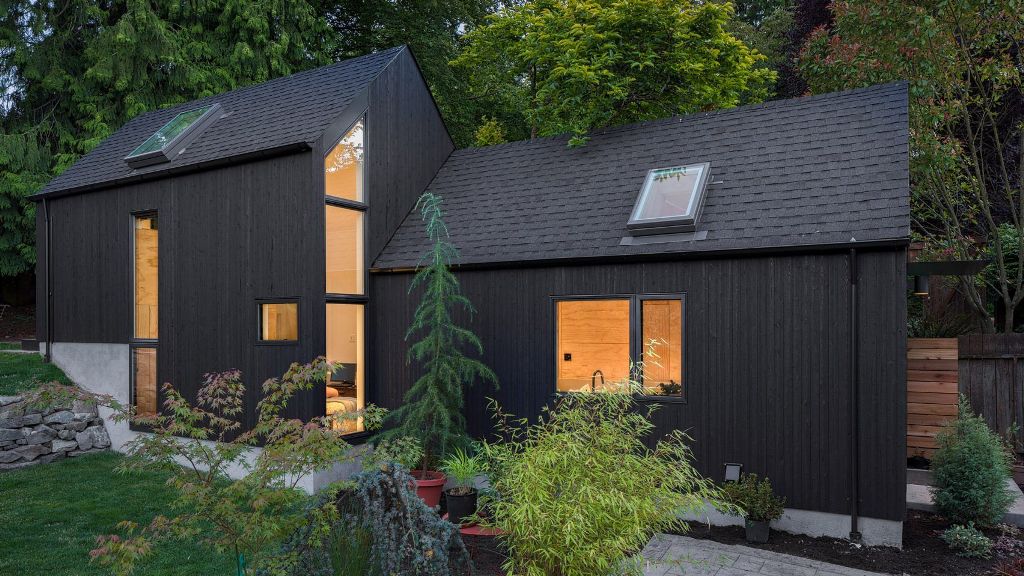
Seattle lets most homeowners add up to two accessory dwelling units (ADUs) to a lot that already has a house. The units can be attached, detached, or one of each, and two detached units can share a single structure. Each can be up to 1,000 square feet, or 1,200 square feet with three or more bedrooms, and Seattle requires neither parking nor an owner living on the property.
This Seattle ADU guide covers what those rules mean for a real lot, what a backyard cottage costs, how long permits take, and when a different housing type makes more sense. The rules are recent. Seattle consolidated its ADU standards in 2025 to meet Washington’s HB 1337, then adopted permanent zoning rules in December 2025 (Ordinance 127376) that took effect January 21, 2026. Guides that still cite SMC 23.44.041, or describe the limit as one attached plus one detached unit, are describing older code.
Whether you can build is a question about your lot. Whether you should is a question about money: local builders publish all-in prices of roughly $350,000 to $600,000 for a new detached cottage, and the city’s own dashboard shows its review alone taking about two months.
Seattle ADU rules in 2026: what the city allows
These are the standards for an ADU in a Neighborhood Residential (NR) zone, which covers most of the city’s house lots. Overlays, steep slopes and shoreline areas can change them.
| Item | Current standard |
|---|---|
| ADUs per lot | Two, in any mix of attached and detached; two detached units may share one structure |
| Size | 1,000 sq ft, or 1,200 sq ft with 3+ bedrooms. Underground floor area, up to 250 sq ft of attached garage and 35 sq ft of bike parking are not counted |
| Height | Same limit as a house in the zone: 32 ft, or 42 ft if the site meets tree-canopy or tree-retention standards, plus pitched-roof allowances |
| Rear setback | 5 ft, or 0 ft where the lot meets an alley |
| Side setback | 3 ft minimum, 5 ft average |
| Space between buildings | 5 ft |
| Lot coverage | 50% of lot area, all buildings combined |
| Parking | None required |
| Owner occupancy | None required |
| Street improvements and Mandatory Housing Affordability contributions | Do not apply to ADUs |
The size and count rules come from SMC 23.42.022 as amended by Ordinance 127376. The dimensional standards come from SDCI’s Neighborhood Residential summary, and the permit basics from SDCI’s ADU page. Under all of it sits a state floor, which Washington’s Department of Commerce summarizes: two ADUs per lot, at least 1,000 square feet, impact fees capped at half of the principal unit’s, sale as an independent unit, and no owner-occupancy requirement except for short-term rentals.
Does your lot work for a Seattle ADU?
Floor area and coverage
SDCI counts ADUs toward a lot’s density, floor area ratio (FAR) and lot coverage. FAR rises with the number of units, so the math changes when you add a second ADU. Take a 5,000-square-foot lot with a house and one Seattle backyard cottage as an illustration. Two units on 5,000 square feet is one unit per 2,500, which SDCI’s table pairs with a 0.8 FAR. That means 4,000 square feet of total floor area, with all buildings together covering no more than 2,500 square feet of the lot. A 2,800-square-foot house plus a 900-square-foot cottage fits under that floor-area cap. It is a sketch, not a feasibility ruling, because the code defines which floor area is chargeable. Check your address in our Zoning Information Lookup and the city’s ADUniverse property search before paying for drawings.
Slopes and critical areas
Environmentally critical areas (ECAs) include steep slopes, landslide-prone ground, wetlands, creeks and shorelines. On a lot that contains one, SDCI reduces allowed density and lot coverage in proportion to the share of the lot the ECA occupies. Sloped lots also tend to need soils reports, retaining walls and drainage design, and builders consistently name slope and site work as the biggest swing in a cottage budget.
Trees
Seattle’s tree code sorts trees by size. Heritage trees (Tier 1) generally cannot be removed. Trees 24 inches in diameter or larger, and tree groves (Tier 2), can come out on a development site only when you cannot otherwise reach the allowed development capacity. Trees 12 to 24 inches (Tier 3) can be removed as part of a permit but must be replaced, and trees 6 to 12 inches (Tier 4) can be removed without replacement. Trees you keep need protection areas on the site plan, so place the cottage around the big ones. SDCI’s tree pages explain the tiers.
Existing garages and basements
A garage or shed that existed before July 23, 2023 can be converted into a detached ADU even if it breaks today’s setback and lot-coverage limits, provided it meets the city’s minimum housing standards. An attached ADU can exceed 1,000 square feet if it sits in part of a house that existed on that date. On a tight lot, conversion can be the way around setback problems, and our garage conversion cost guide covers the numbers.
What a Seattle ADU costs
The city’s annual ADU report covers permits, timelines and how units are used, not construction cost, so the usable figures come from builders’ own price pages. Treat them as marketing ranges for 2025 and 2026, not quotes. They are meant to be all-in: design, permits, site work, utility connections and construction.
| New detached cottage | Typical all-in range (one Ballard builder) |
|---|---|
| 450 to 600 sq ft | $325,000 to $400,000 |
| 800 sq ft | $350,000 to $450,000 |
| 1,000 sq ft | $375,000 to $550,000 |
Other Seattle builders publish higher bands, generally $400,000 to $600,000 for a 600 to 800 square foot cottage, and per-square-foot figures from about $350 to $650 or more. Small Seattle ADUs cost more per square foot because the kitchen, bathroom, utility hookups and design fees barely shrink with the floor area. One builder prices basement conversions at $200,000 to $300,000 for 2025.
Before comparing bids, check what each one leaves out:
- Sewer capacity charge. King County bills an ADU at 0.59 of a residential customer equivalent. At the 2026 rate of $77.99, that is about $46 a month for 15 years, or roughly $8,300 in total, for connections made in 2026. King County sets the rate each year and discounts a lump-sum payoff.
- Side sewer work. Seattle Public Utilities has issued side sewer permits since October 1, 2025, and a new or extended connection needs one.
- Electrical service. Seattle City Light handles new or changed service, and an older panel may need replacing. Our ADU electrical panel upgrade cost article explains when.
- Soils, retaining walls and drainage on sloped lots, and tree replacement under the tree code.
- Design and permit fees. Drawings from a designer or architect, plus SDCI’s permit and plan-review fees. Our piece on whether you need an architect for an ADU covers who can draw what.
Simple payback shows why the inputs matter. If your all-in cost is $450,000 and you net $2,500 a month after vacancy, taxes, insurance and upkeep, payback is 15 years ($450,000 divided by $30,000 a year). Both numbers are hypothetical, so replace them with real bids and local rents in the ADU Cost Calculator and ADU Loan Calculator. If you are weighing factory-built units, our prefab vs stick-built comparison covers cost and timeline.
Washington also offers a three-year property tax exemption for qualifying home improvements that include building an ADU. Commerce says to apply before the work is finished, and eligibility ties to the home’s assessed value, so confirm the details with the King County Assessor.
The Seattle ADU permit process and timeline
SDCI publishes how long a Seattle ADU permit takes, and the numbers are slower than the city’s “two to six weeks” line for pre-approved plans suggests.
| SDCI category | SDCI goal (days in city control) | Current, 75th percentile |
|---|---|---|
| Pre-approved DADU plan | 30 | 60 |
| Single-family addition or alteration | 30 | 64 |
| Middle housing (includes a new house with ADUs) | 60 | 117 |
These figures, from SDCI’s permit performance dashboard in November 2026, count only days the city holds your application. SDCI says the time you experience is roughly twice that, because corrections go back to you. SDCI’s ADU page says most pre-approved plans get permits in two to six weeks, while the city’s 2024 ADU report found pre-approved permits averaging 61 days from intake to issuance, and cites a median near 160 days for DADU permits generally. Builders typically publish six to eight months of construction. That is their estimate, not a city figure.
- Check the lot. Use ADUniverse’s property search and your zoning check. If the answer is unclear, SDCI sells land use opinion letters for specific lots.
- Choose a route. ADUniverse hosts pre-approved DADU designs already reviewed for structural and energy compliance, though you still pay the designer and need a site plan. Tight or sloped sites often need a custom design.
- Assemble the documents. SDCI expects a scaled site plan and drawings, tree protection areas for retained trees, and a King County capacity charge form acknowledging the sewer fee.
- Apply. Adding a unit inside a house or building a detached one takes a construction addition or alteration permit. Legalizing an existing unit takes a construction permit to establish use. Seattle City Light and SPU permits run separately.
- Answer corrections quickly. Pre-approved DADU permits in 2024 averaged 2.8 correction cycles, and each one adds days on your side of the clock.
- Build and pass inspections. An ADU must meet current building, mechanical, electrical, energy, land use, critical-area and shoreline standards.
Seattle ADU rules that catch owners off guard
- Owner occupancy. None is required. State law allows a local owner-occupancy requirement only when the ADU property is a short-term rental. If a recorded owner-occupancy covenant from older rules sits on your title, SDCI has a release form.
- Short-term rentals. Seattle limits an individual to one short-term rental unit, or two if one is their primary residence. With two ADUs and the owner in the main house, both ADUs cannot be short-term rentals. Any rented ADU must also register under the Rental Registration and Inspection Ordinance, and state landlord-tenant law applies.
- Selling an ADU. SDCI’s zoning summary says an ADU cannot be separated from the main house through subdivision, but SMC 23.42.022 allows condominium sales. The city found that 57 to 58 percent of ADUs permitted in 2022 and 2023 sat on parcels with a recorded condominium.
- Two attached ADUs in one house. That makes a three-unit building under the Seattle Building Code, with sprinkler and fire-separation requirements. The city’s report says this is why homes with two attached ADUs are rare.
- Unpermitted units. SDCI treats a unit as illegal unless a permit established it. The fix is a construction permit to establish use.
- Impact fees. State law caps them at half of those on the principal unit. Ask SDCI which fees apply to your project.
ADU or four homes? Seattle’s new middle housing rules
Most NR lots can now hold four units, and six within a quarter-mile of a major transit stop or when at least two units are affordable. Those units can be principal homes rather than ADUs, which changes the trade-offs. ADUs are capped at 1,000 to 1,200 square feet and cannot be split off by subdivision. Principal homes carry no ADU size limit and can be sold fee simple. The city’s report still sees reasons to choose ADUs: a simpler permit path, easier financing, and a project small enough to stay under thresholds that trigger costly utility and street improvements. It also expects some builders to shift from house-plus-two-ADU condo projects to four principal homes, so ADU permits may decline.
If you are keeping your house and adding rental or family space, an ADU tends to be the simpler route. If selling separate homes is the goal, get a four-unit scheme priced before you commit.
Hiring and verifying a Seattle ADU builder
Washington registers contractors through the Department of Labor & Industries (L&I). The L&I Verify tool shows registration status, bond, insurance and infractions, and our Contractor License Lookup points you to the same official records. Beyond registration, ask how many Seattle DADUs the firm has permitted in the last two years, whether it has used pre-approved plans, and how it prices site work separately from the building. Our list of license verification red flags covers warning signs, and you can compare Seattle-area builders in the ADU contractor directory.
Seattle ADU questions that still come up
Is there a minimum lot size for a Seattle backyard cottage?
SDCI’s current ADU page lists none, and the adopted standards in SMC 23.42.022 do not set one. Older guidance cited 3,200 square feet. Lot size still matters indirectly, because coverage, FAR, setbacks and the five-foot separation between buildings decide what fits.
Can I put a tiny house on wheels in my backyard?
No, not to live in. Seattle treats a tiny house on wheels like a camper trailer, and you cannot live in one, or in an RV or boat, on a lot inside city limits. A tiny house on a foundation counts as a DADU and follows the ADU rules.
I already have a Seattle ADU. Can I add another?
Yes, up to two per lot. The city recorded 18 ADU permits in NR zones in 2024 on lots that already had one.
Where to start
A Seattle ADU project goes in three steps: the lot, the budget, then the bids. If you are not sure whether a detached, attached or converted unit fits your property, the AI ADU Design Advisor compares options by zip code. When you have a rough design, get two or three written bids from L&I-verified builders, and ask each to list site work, utilities and fees separately so the totals compare.