Most ADU content online is written for a homeowner with a single-family backyard and one extra unit in mind. That’s not where the real opportunity sits in 2026. Owners of duplexes, triplexes, and full apartment buildings now have access to multifamily ADU rules 2026 that most single-family articles never mention — and the density unlock is substantial enough to reshape how serious real estate investors approach infill development on properties they already own.
The law driving this shift is SB 1211, effective January 1, 2025, arguably the most consequential ADU statute for multifamily property owners in the last decade. Before it, most multifamily-zoned lots were capped at two detached ADUs regardless of the building’s actual size. That cap didn’t make sense for an owner of a 20-unit apartment complex sitting on an acre of land, and the legislature agreed.
Use the FindADUPros Zoning Information Lookup to confirm your specific property’s zoning designation and existing unit count before modeling a multifamily ADU project.
How Many ADUs Can You Build on an Apartment Lot?
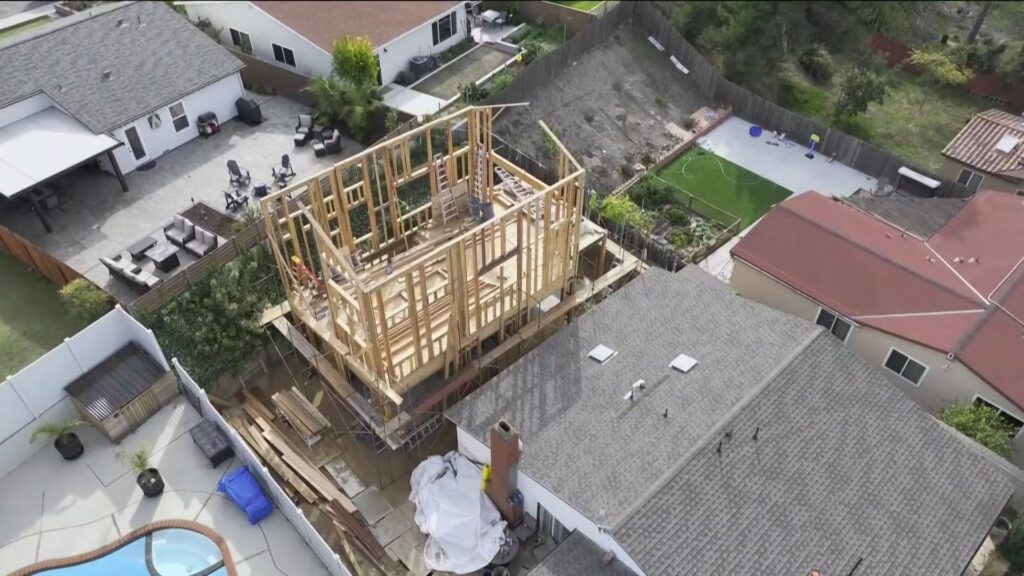
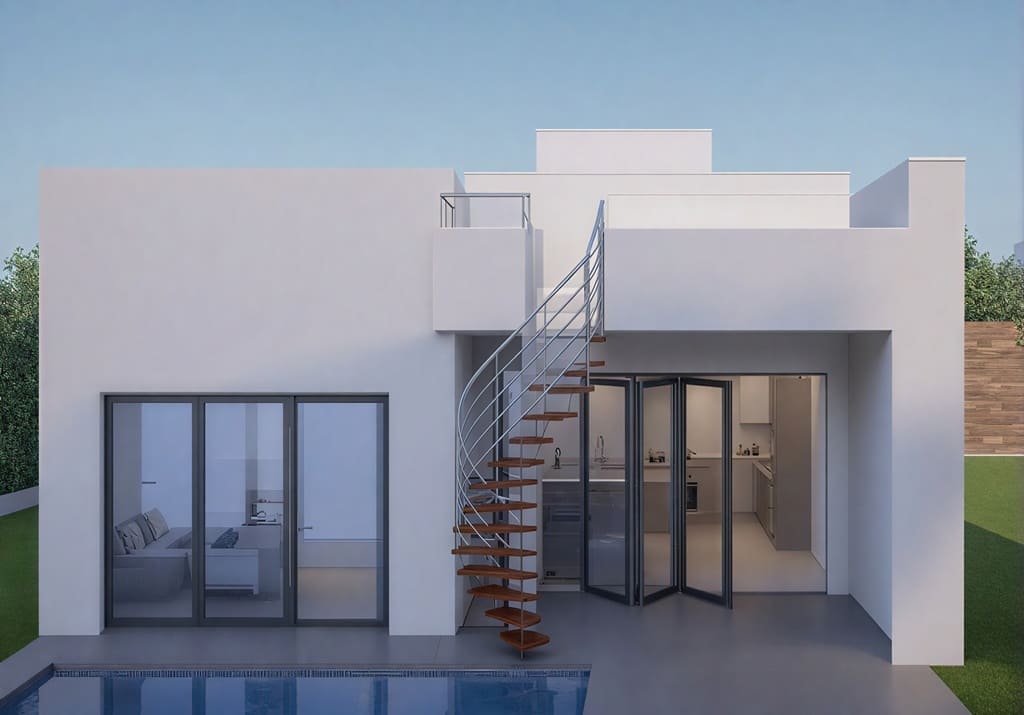
Detached ADUs: up to 8, capped at your existing unit count. Under amended Government Code Section 66323, a multifamily property is entitled to build detached ADUs up to a maximum of eight — but the number cannot exceed the number of existing primary units already on the property. A 4-unit building can add up to 4. A 6-unit building can add up to 6. A 12-unit building, or anything larger, caps out at the full 8-unit allowance. This is a by-right, ministerial entitlement — no conditional use permit, no discretionary hearing, no rezoning required.
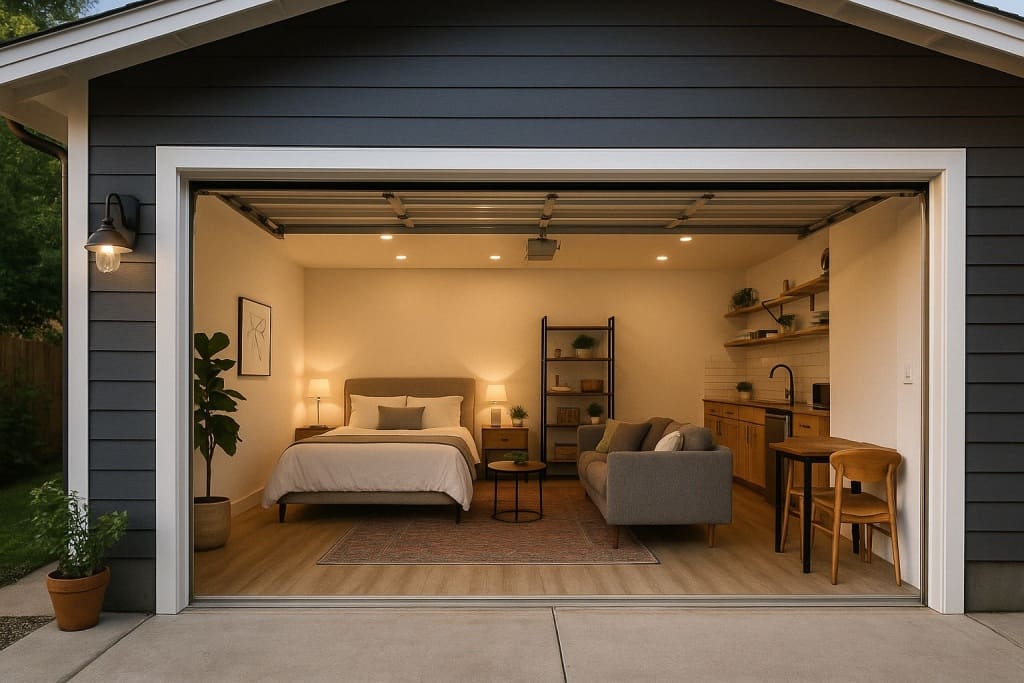
Conversion ADUs: up to 25% of existing units, independently of the detached allowance. On top of the detached count, multifamily properties can convert non-livable interior space — storage rooms, boiler rooms, basements, attics, unused laundry facilities, enclosed garage stalls — into fully independent units. This is the 25% conversion rule, and it stacks separately rather than counting against the detached allowance. A minimum of one conversion ADU is always allowed regardless of the percentage math, and fractional results round down.
What this looks like in practice: an 8-unit building could add up to 8 detached ADUs plus 2 conversion ADUs (25% of 8), for 10 new units on a property that started with 8. A 20-unit complex could add up to 8 detached ADUs (capped by the state ceiling, not the unit count) plus 5 conversion ADUs — 13 new units without a single rezoning application. For properties larger than 32 units, the 25% conversion formula remains applicable on the interior side while the detached count stays capped at 8 regardless of size — a 100-unit complex can add 8 detached ADUs and up to 17 conversion units.
Adding an ADU to a Duplex or Triplex
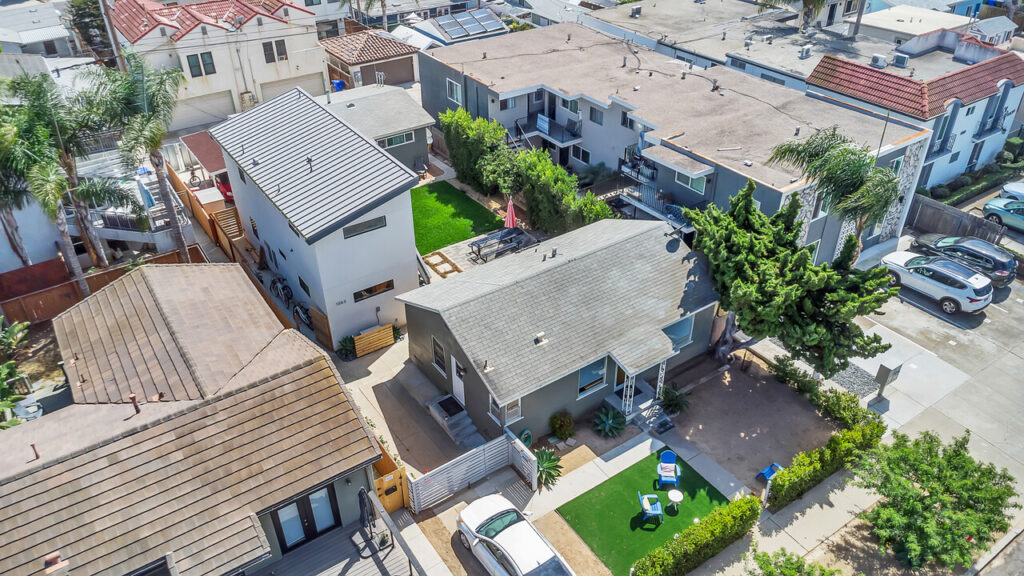
Owners of duplexes and triplexes got specific attention from SB 1211’s drafters, since prior law had done relatively little for this segment compared to larger complexes. Adding an ADU to a duplex works within the same framework, just at smaller absolute numbers — a duplex (2 units) can add up to 2 detached ADUs, a triplex up to 3. The 25% conversion allowance typically rounds down to a single unit for these smaller properties, since the minimum-one-unit floor applies.
This matters because duplex and triplex owners represent a meaningfully different investor profile than large apartment operators — often individual owners or small partnerships — and the ability to add even one or two additional units on a property previously capped at two detached ADUs regardless of size represents genuine, achievable density growth for a segment that had been comparatively underserved by earlier legislation.
Junior ADUs are not permitted on multifamily properties under California law — this framework applies to full-sized ADUs only, whether detached or converted from existing non-livable space.
Multifamily Property Conversion ADU Laws: What Qualifies as Convertible Space
Not every square foot inside a multifamily property qualifies, and understanding the distinction matters for accurately modeling your unit count.
Qualifying non-livable space generally includes storage rooms, boiler and mechanical rooms, basements, attics, laundry facilities being relocated, and enclosed garage or carport stalls. The defining characteristic is that the space isn’t currently classified as habitable living area — bedrooms, living rooms, kitchens, and bathrooms in existing units don’t qualify since they’re already part of the residential unit count.
Ground-floor parking presents a specific opportunity. SB 1211 removed the requirement to replace surface parking spaces when converting parking into ADUs for properties within a half-mile of a public transit stop — a significant unlock for urban multifamily properties where parking often occupies substantial ground-floor square footage. This has made converting enclosed parking structures, or building two-story detached ADUs with parking retained on the ground floor, a genuinely popular strategy in transit-adjacent development.
Underused outdoor amenities are also fair game. Unused tennis courts, oversized landscaped areas, and similar low-utilization outdoor space are increasingly evaluated as sites for detached ADU clusters, since this land is already owned and doesn’t require the acquisition costs of ground-up multifamily development elsewhere.
Detached ADU Requirements for MultiFamily Properties: Fire Code, Setbacks, Sub-Meters
This is where multifamily ADU construction diverges meaningfully from a single-family backyard project — and it’s where investors modeling costs based on single-family benchmarks get caught off guard.
Fire code compliance scales with density. Adding multiple detached units triggers fire code review calibrated to the property’s overall occupant load, not just the individual ADU. Fire truck access lanes, hydrant spacing, and fire-rated wall assemblies between closely spaced structures all become more stringent as unit count increases. A property adding six or seven detached ADUs will face meaningfully more rigorous fire marshal review than a single-family homeowner adding one — budget for professional fire code consultation early rather than discovering requirements at plan check.
Setback and separation requirements govern how densely units can be clustered. SB 1211 limits how restrictive local jurisdictions can be, but minimum building separation for fire safety and basic property-line setbacks still apply. Site planning for 4–8 detached units on a single parcel requires careful spatial layout to satisfy both density goals and code-mandated separation — meaningfully more complex than siting one backyard ADU.
Utility sub-metering becomes essential at scale. Adding multiple new units requires a coherent sub-metering strategy so individual electrical and water usage can be billed appropriately, whether units are market-rate rentals or part of an affordable set-aside. Retrofitting sub-meters into an older multifamily property electrical system is a genuine engineering exercise, and the cost across 6–8 new units should be modeled explicitly rather than treated as an afterthought.
Maximizing Cash-on-Cash Return for an Existing MultiFamily Property
This is where SB 1211 becomes a genuine commercial real estate strategy rather than a zoning footnote. Adding detached and conversion ADUs to an existing property is fundamentally different from ground-up development in one critical respect: there’s no land acquisition cost. The property is already owned, already zoned for multifamily use, and already generating income. Every dollar spent on new construction goes directly toward rentable square footage on land whose acquisition cost is already sunk — producing a materially different return profile than building a new complex from scratch.
For a rough sense of the math: adding 5 detached ADUs at $180,000–$250,000 per unit in construction cost, each renting for $1,800–$2,800/month, can generate $108,000–$168,000 in incremental annual rental income — against a construction investment requiring zero additional land acquisition. Use the FindADUPros ADU Cost Calculator to model unit-by-unit costs against projected rents for your specific property.
A note on separate condo sales: California’s AB 1033 allows ADUs to be sold separately as condominiums, but only in cities that have specifically opted in — most California cities have not. As of 2026, adopting jurisdictions remain a short list. Confirm your city’s AB 1033 status before underwriting a project around eventual condo conversion rather than a hold-and-rent approach.
Before committing to a contractor for a multiunit build, verify licensing and bonding status through the FindADUPros Contractor License Lookup — a project of this scale warrants verified multifamily construction experience, not just single-family ADU work.
The Bottom Line
SB 1211 transformed the economics of infill development on properties multifamily property owners already control. The framework is straightforward at a high level — up to 8 detached ADUs capped at existing unit count, plus 25% conversion allowance from non-livable interior space — but executing it correctly requires navigating fire code review, utility sub-metering, and site planning complexity a single-family ADU project simply doesn’t encounter.
For investors and property managers sitting on an existing duplex, triplex, or apartment complex, this is one of the highest-leverage real estate opportunities available in California right now: meaningful unit growth, no land acquisition cost, and a by-right entitlement requiring no rezoning.
For vetted contractors and design-build teams with verified multifamily ADU experience, visit FindADUPros.
Frequently Asked Questions
How many ADUs can you build on an apartment lot in 2026?
Under SB 1211, up to 8 detached ADUs, capped at the number of existing primary units — a 4-unit building can add up to 4, while anything with 8 or more existing units reaches the full 8-unit cap. Separately, up to 25% of existing units can be converted from non-livable interior space, stacking on top of the detached allowance.
Can I add an ADU to a duplex?
Yes. A duplex can add up to 2 detached ADUs under the per-existing-unit cap, plus at least one conversion ADU from qualifying non-livable space, subject to setback, fire code, and local development standards.
What is the 25% conversion rule for multifamily ADUs?
It allows converting non-livable interior space — storage rooms, basements, boiler rooms, unused garages — into full ADUs, up to 25% of the building’s existing unit count, with a minimum of one conversion unit always permitted. This is separate from and additional to the detached ADU cap.
Do multifamily ADUs face different fire code and setback requirements than single-family ADUs?
Yes. Adding multiple detached units triggers fire code review calibrated to overall occupant load, including access lane and hydrant spacing, plus building separation requirements that grow more complex as density increases. Budget for professional fire code consultation early in the design process.
Can I sell a multifamily ADU separately as a condo?
Only in cities that have specifically opted into California’s AB 1033 program — most California cities have not adopted it as of 2026. Confirm your city’s adoption status before underwriting a project around an eventual condo conversion exit strategy.