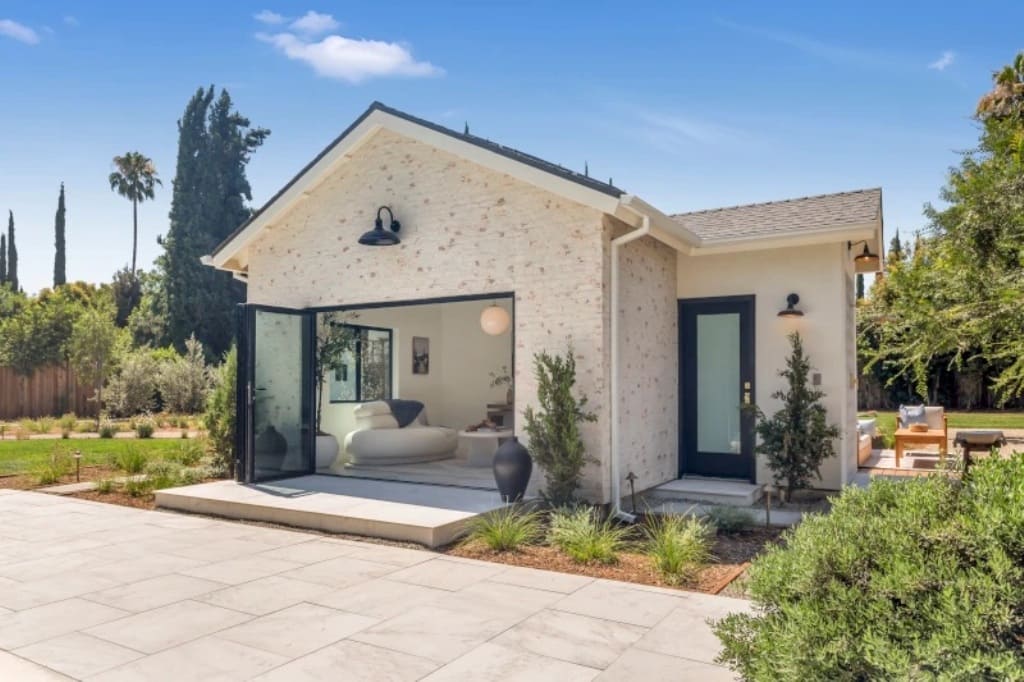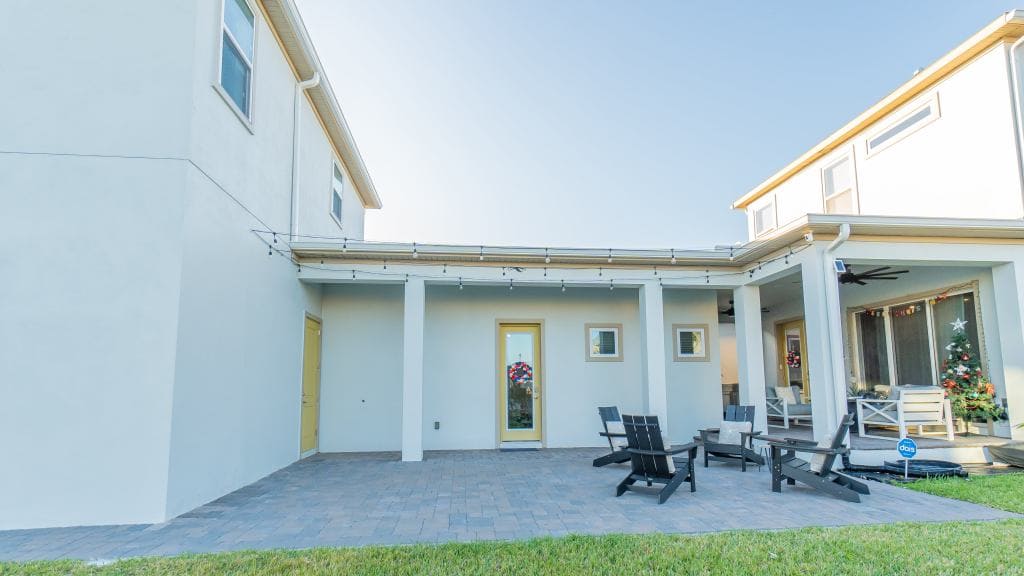

Once a homeowner has enough equity to fund an ADU build, the conversation shifts almost immediately to one question: HELOC vs home equity loan? Both borrow against your home’s equity, but they behave completely differently once construction starts — and picking the wrong one can mean paying interest on money you haven’t spent yet, or getting locked into a fixed amount before you know your final costs.
This comparison breaks down how each option performs against the realities of an ADU project specifically — phased draws, an unpredictable timeline, and a budget that tends to move as the project develops.
Use the FindADUPros ADU Loan Calculator to model both financing structures against your specific project budget before applying for either one.
The Core Structural Difference
A home equity loan — sometimes called a second mortgage — gives you the entire approved amount as a lump sum at closing. You start repaying it immediately at a fixed rate, with a predictable payment for the life of the loan, typically 5 to 30 years.
A HELOC works more like a credit card secured by your home. You’re approved for a maximum credit limit but only draw what you need, when you need it, during a draw period — typically 10 years — with interest-only minimum payments on whatever balance you’ve drawn. Once the draw period ends, you enter a repayment period — usually another 10 to 20 years — during which you can no longer borrow and must repay the balance through fully amortizing payments.
That difference is the entire ballgame for HELOC for ADU financing specifically, because ADU construction almost never happens in one lump-sum expenditure — it happens in phases, each with its own timing and dollar amount that isn’t always known precisely at the outset.

Current Rates: What You’re Actually Paying in 2026
As of mid-2026, average HELOC rates hover around 8% to 8.5% for most borrowers, though well-qualified applicants can find rates as low as 5.75% to 5.95% APR. HELOC rates are variable, tied to the prime rate plus a lender margin — similar to variable-rate credit cards, though HELOC APRs run meaningfully lower.
Home equity loans in 2026 typically run 7.5% to 11.5% depending on credit score and loan-to-value ratio, with the rate locked in permanently at closing — a modest premium over a HELOC’s starting rate in exchange for payment certainty.
The comparison that matters for construction financing: a home equity loan calculates interest on the full amount from day one, even on money sitting unspent while waiting for framing to start. A HELOC only charges interest on funds actually drawn — during the early planning and permitting phase, when you might have approval for $200,000 but have spent only $15,000, a HELOC’s interest cost is a fraction of what a home equity loan would already be accruing.
HELOC Vs Home Equity Loan for ADU: Which Fits a Phased Construction Budget?
ADU construction disburses in draws tied to completed phases — foundation, framing, rough MEP, drywall, finishes — typically releasing 15–20% of total cost at each milestone over a 6-to-10-month build.
A HELOC matches this pattern almost perfectly. You draw exactly what’s needed for each phase, paying interest only on the outstanding drawn balance rather than the full project budget sitting unused. If your ADU ultimately costs $220,000 spread across eight months, a HELOC lets your interest expense track your actual spending curve instead of front-loading interest on the entire amount from day one.
A home equity loan works better when your total cost is locked in upfront — for example, with a genuinely fixed-price turnkey contract where you know the exact total before construction begins. The lump sum sits in an account until needed, and the fixed rate protects you from any rate increases during the build. The trade-off: you’re paying interest on the full amount regardless of your actual draw schedule, and if the project comes in under budget, you’re still holding — and paying interest on — money you didn’t need.
The practical rule: custom scope, uncertain final cost, or milestone-based contractor billing → a HELOC’s flexibility saves real money. Fixed, contractually guaranteed cost before breaking ground → a home equity loan’s rate certainty may be worth the premium.
Borrowing Equity to Build a Guest House: How Much Can You Access?
Both loan types are secured against the same equity, and lenders generally apply similar loan-to-value limits regardless of structure. Most allow borrowing up to 80% of home equity, with some extending to 85–90% for well-qualified borrowers. Equity is your property’s current appraised value minus any outstanding mortgage balance.
A sufficient equity cushion matters for approval on both products. Lenders typically want 15–20% equity remaining after the new loan — meaning a recently purchased property with limited built-up equity may not get you to your full ADU budget with either product. In that case, a renovation loan like Fannie Mae HomeStyle or FHA 203(k), which lends against the property’s future value after the ADU is complete, may be the more appropriate tool.
Income verification applies to both. Even though collateralized by your home, lenders still verify your income supports the new payment on top of your existing mortgage. Use the FindADUPros ADU Cost Calculator to establish a realistic total project cost before applying.
The Tax Deduction Factor Most Homeowners Miss
Interest on either loan type can be tax-deductible under current federal law, but only when proceeds are used to buy, build, or substantially improve the home securing the loan. Building an ADU clearly qualifies under the “build” language — one of the more favorable tax positions available for a major home project.
The impact is real: if your HELOC rate is 8.25% and you’re in the 24% federal bracket, qualifying home-improvement use can reduce your effective after-tax cost to roughly 6.27%. That deduction isn’t available if the same loan funds something unrelated to the home, like debt consolidation.
Keep clean documentation tying your draws directly to ADU construction costs — contractor invoices, permit fees, material receipts — connecting borrowed funds to the qualifying expense in case of an audit.
The Payment Shock Risk With HELOCs
This risk deserves a direct warning: when a HELOC’s draw period ends and repayment begins, monthly payments typically increase 50% to 200%, shifting from interest-only minimums to fully amortizing principal-and-interest payments on the remaining balance.
For an ADU-specific HELOC, this is manageable if planned for — most construction completes well within a standard 10-year draw period, giving years of interest-only payments before the shift, and many homeowners use rental income from the completed ADU to absorb the higher payment. The risk shows up when homeowners treat the low interest-only payment as permanent and don’t budget for the transition.
If concerned, ask your lender about a fixed-rate conversion option — many HELOCs now allow locking a portion of the drawn balance into a fixed rate partway through the draw period, combining some of a home equity loan’s predictability with a HELOC’s flexible disbursement.

Which Option Actually Wins for Your ADU?
Choose a HELOC if: your project has a phased draw schedule tied to construction milestones, your total cost isn’t fully locked in, you want to minimize interest during early design and permitting, and you’re comfortable planning for the eventual shift to full repayment.
Choose a home equity loan if: you have a genuinely fixed-price contract with a known total before breaking ground, you want payment certainty with zero rate exposure, and you’re not concerned about paying interest on the full amount before it’s spent.
For many homeowners, the best way to fund an ADU build isn’t strictly either-or — some use a HELOC for the construction draw period, then refinance the outstanding balance into a fixed-rate home equity loan once the project is complete and the final cost is known, capturing flexibility during construction and predictability afterward.
For vetted ADU contractors who work with milestone-based draw schedules that align well with HELOC financing, visit FindADUPros.
Frequently Asked Questions
Is a HELOC or home equity loan better for financing an ADU?
For most ADU projects, a HELOC fits better because construction disburses in phases, and a HELOC only charges interest on funds actually drawn. A home equity loan makes more sense when your total cost is fixed and known upfront, such as with a genuinely fixed-price turnkey contract, offering a locked rate and predictable payments from day one.
What are current HELOC rates for ADU financing in 2026?
Average rates run roughly 8% to 8.5% for typical borrowers, with well-qualified applicants securing rates as low as 5.75% to 5.95% APR. Rates are variable, tied to the prime rate plus a lender margin, meaning payments can change over the life of the loan.
How much equity do I need to borrow against for an ADU build?
Most lenders allow borrowing up to 80% of your home’s equity, with some extending to 85–90% for well-qualified borrowers, while requiring 15–20% equity to remain after the loan. If you don’t have enough existing equity, a renovation loan based on the property’s after-construction value — like Fannie Mae HomeStyle or FHA 203(k) — may be a better fit.
Is HELOC interest for building an ADU tax-deductible?
Yes, under current federal law, interest on a HELOC or home equity loan is deductible when proceeds are used to buy, build, or substantially improve the home securing the loan — constructing an ADU qualifies. Keep documentation connecting your draws to construction costs to support the deduction.
What happens when my HELOC’s draw period ends during an ADU project?
Once the draw period ends — typically after 10 years — you enter a repayment period where you can no longer borrow, and monthly payments typically increase 50–200% as you shift to full principal-and-interest payments. Most ADU construction completes well within the draw period, but confirm your loan’s specific timeline and ask about fixed-rate conversion options if payment predictability matters to you.