The building part of an ADU project gets all the attention- floor plans, permits, contractor bids- while the yard around it gets treated as an afterthought. That’s a missed opportunity. The outdoor space around a backyard unit is often small, heavily used, and in a lot of jurisdictions, tied directly to permit compliance through stormwater rules.
Choosing eco-friendly landscaping materials for ADU outdoor spaces isn’t just a sustainability checkbox. It touches stormwater rules, long-term upkeep, and how much you’ll spend replacing things down the road. This guide covers the materials that make sense for a small, hardworking ADU yard, plus rainwater harvesting, native plant pairings, real rebate numbers, and the common mistakes most guides on this topic skip entirely.
Why It Matters More for ADU Yards Specifically
Many jurisdictions cap the amount of impervious surface, hard, non-absorbent material like poured concrete, allowed on a lot, especially once a new structure and driveway are already accounted for. Choosing permeable materials for patios and paths isn’t just a preference here; it can determine whether your design clears stormwater review, which is exactly why the right eco-friendly landscaping materials for ADU projects double as a code-compliance strategy, not just an aesthetic one.
There’s a maintenance case too. Whether your ADU is a long-term rental, a short-term rental, or space for family, nobody wants to manage a thirsty lawn or a patio that needs resealing yearly for a structure they don’t live in daily. Because ADU yards tend to be small, often a few hundred square feet, the cost gap between a premium sustainable material and a cheap conventional one is usually smaller in absolute dollars, making the upgrade easier to justify.
Top Materials for ADU Outdoor Spaces
- Permeable pavers (concrete, brick, or interlocking plastic grids) let water filter through rather than run off, and in many jurisdictions don’t count toward impervious surface limits. Expect $10–$25 per square foot installed, with minimal upkeep beyond occasional joint refilling.
- Decomposed granite (DG) is a compacted, permeable aggregate that costs a fraction of pavers, typically $6–$12 per square foot. It’s a favorite for ADU patios and paths, though loose DG isn’t ideal for full wheelchair accessibility without a binding stabilizer.
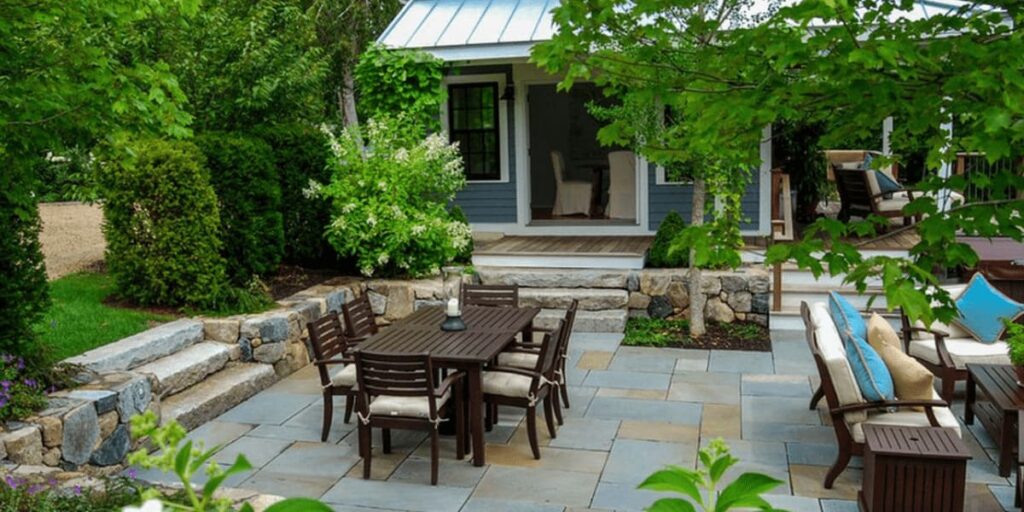
- Recycled brick and reclaimed stone bring texture without the cost of quarrying new material, generally $8–$18 per square foot, and pair well with older or historic-style ADUs.
- Recycled rubber pavers, made from repurposed tires, offer a soft, non-slip surface for decks and entryways at $8–$15 per square foot, lightweight and simple to install.
- Composite decking, made from recycled plastics and wood fibers, skips the staining and sealing real wood demands. It runs $25–$40 per square foot upfront but usually wins on lifetime cost over a 15-to-20-year span.
- Natural stone is durable and long-lasting, particularly when sourced regionally to cut transportation footprint. Pricing runs $15–$35 per square foot, a premium choice that can last decades.
- Artificial turf eliminates irrigation water entirely, useful in drought-prone regions, but it’s a plastic product with its own manufacturing footprint and can retain more heat than groundcover. Generally $10–$20 per square foot.
- Urbanite, broken-up chunks of old concrete salvaged from a demolished driveway or patio, is a material most guides skip. It’s essentially free if you’re already removing concrete during ADU site work, or $3–$10 per square foot from a salvage yard. The rustic look won’t suit every design, but reusing concrete you’re already demolishing is about as genuinely sustainable as it gets.
Rainwater Harvesting and Native Plants
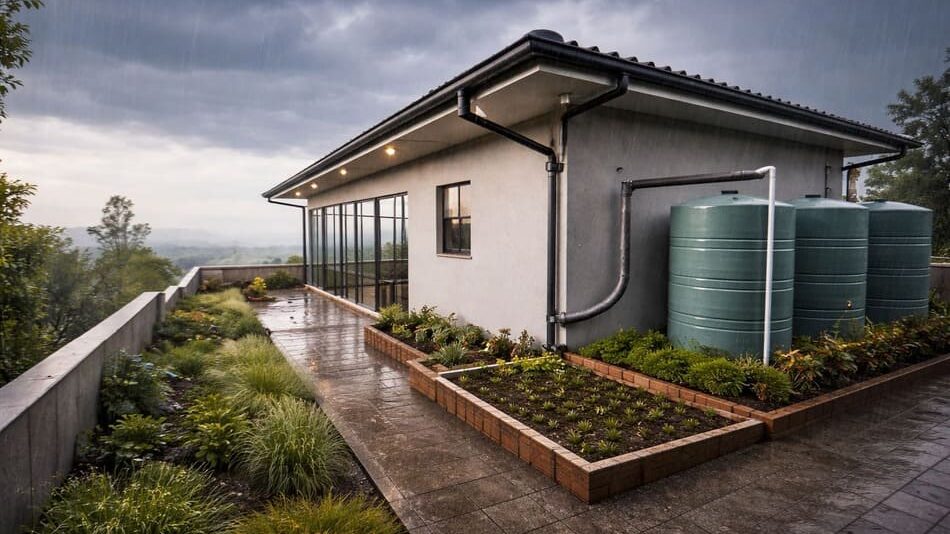
A new ADU means a new roof, which means new runoff, and that’s a piece most landscaping guides leave out. Directing downspouts into a rain barrel or small cistern, rather than letting water sheet onto a patio, gives you free irrigation water and reduces the load on your permeable surfaces during storms. A basic rain barrel setup runs $150–$400 per downspout installed, and some municipalities offer rebates for downspout disconnection specifically.
Plant choices matter just as much as hardscape in a small lot; one or two water-hungry shrubs can dominate a tiny yard’s irrigation needs in a way they never would in a full-sized backyard. Regionally native and drought-tolerant species need little to no supplemental watering once established, and a 2-to-3-inch mulch layer around root zones cuts evaporation and suppresses weeds without chemicals. Many local water districts publish native plant lists specific to their service area, worth checking before finalizing your softscape.
Water Rebates Worth Checking
A financial detail most articles on this topic get vague or wrong: many municipalities and water utilities, particularly in drought-prone states, offer cash rebates for replacing lawn with drought-tolerant landscaping. Southern California’s SoCal Water$mart turf replacement program, run through the Metropolitan Water District, pays roughly $2 per square foot of lawn removed and replaced with drought-tolerant landscaping, with some local water agencies layering on additional funding on top.
The catch that trips people up: synthetic turf doesn’t qualify under this program. The rebate is specifically for replacing lawn with living, low-water landscaping, not for swapping one type of turf for another, and there’s usually a minimum project size (often 250 square feet) and a plant-density requirement, typically at least three plants per 100 square feet of converted area.
That distinction matters directly for the material choices above: if you’re counting on a rebate to offset costs, artificial turf and hardscape-only designs generally won’t qualify, while decomposed granite paired with native plantings, or a permeable paver patio bordered by drought-tolerant beds, usually will. Programs like this exist in most drought-prone states in some form, so it’s worth a direct call to your water provider to confirm current rebate amounts, eligible materials, and minimum square footage before finalizing your plan.
Common Mistakes to Avoid
A few missteps show up repeatedly on ADU landscaping projects, and avoiding them is as important as picking the right eco-friendly landscaping materials for ADU spaces in the first place. Homeowners sometimes cover the entire yard in hardscape to minimize upkeep, only to exceed their jurisdiction’s impervious surface cap or disqualify themselves from a rebate that requires a minimum planted area. Others pick materials on looks alone without checking HOA rules, which can restrict turf type or fence height. And it’s easy to underbudget site prep, grading, drainage, and old landscaping removal, which can add 15 to 25 percent to a materials-only estimate before installation even begins.
Design Ideas for Small Spaces
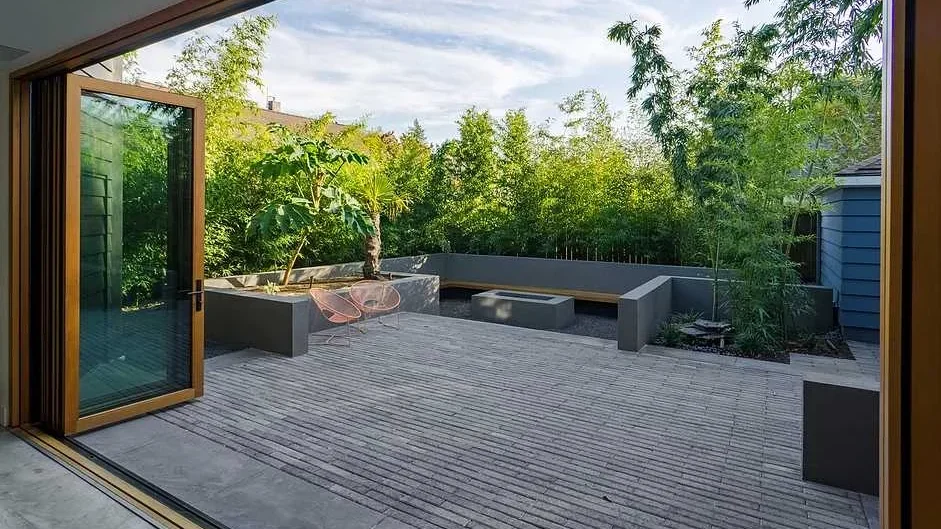
Combining materials, a DG patio, a permeable paver walkway, and a small rain garden at the low point of the lot, creates functional zones without overwhelming a tight footprint. Vertical planters and trellises add greenery where floor space is scarce, and a low retaining wall of reclaimed stone paired with dense plantings reads as more intentional than a tall fence while still screening the ADU from neighboring properties.
Cost and Maintenance Comparison
Seeing all eight materials side by side makes the tradeoffs easier to weigh than reading through them one at a time. The table below lines up installed cost per square foot, how well each material lets water pass through into the ground, and how much upkeep it demands once it’s in, so you can quickly narrow down which options fit your budget and your yard’s drainage needs.
A quick way to read it: materials toward the top of the price range, natural stone and composite decking, trade a higher upfront cost for very low ongoing maintenance and a longer lifespan, while budget options like decomposed granite and urbanite cost less to install but may need more attention over time, occasional replenishing or releveling, to stay looking good. Permeability matters most if your jurisdiction caps impervious surface or if you’re hoping to qualify for a water rebate that requires a certain amount of permeable or planted area.
| Material | Approx. Cost per Sq. Ft. | Permeability | Maintenance | Best For |
| Permeable pavers | $10–$25 | High | Low | Patios, walkways, parking pads |
| Decomposed granite | $6–$12 | High | Low–Medium | Budget patios, informal paths |
| Recycled brick/stone | $8–$18 | Medium | Low | Character paths, historic-style ADUs |
| Recycled rubber pavers | $8–$15 | Medium | Very Low | Decks, play areas, entryways |
| Composite decking | $25–$40 | N/A | Very Low | Raised decks, entry platforms |
| Natural stone | $15–$35 | Low–Medium | Very Low | Premium patios, retaining walls |
| Artificial turf | $10–$20 | Low | Low | Small lawns, drought-prone areas |
| Urbanite (recycled concrete) | $3–$10 | Low–Medium | Low | Budget patios, retaining walls, reused demo material |
How to Choose the Right Materials
Start with climate and rainfall. High-rainfall regions benefit more from permeable materials that actively manage stormwater, while drought-prone areas may prioritize water savings. From there, check your local code directly, since impervious surface limits and stormwater rules vary by city and can determine which materials are even viable. FindADUPros’ zoning information lookup tool is a good starting point for confirming what applies to your address.
Budget versus longevity is the other tradeoff. Decomposed granite gets you a functional patio sooner; natural stone or composite decking spreads cost over a much longer lifespan. FindADUPros’ ADU cost calculator can help you see how outdoor finishes fit your overall budget, and FindADUPros’ AI ADU design advisor can help you visualize hardscape combinations against your actual lot before you commit.
The Bottom Line
Small yards attached to backyard units deserve the same design intention as the unit itself. Choosing eco-friendly landscaping materials for ADU patios, paths, and decks pays off in easier code compliance, lower long-term maintenance, and real water savings. Whether you lean toward budget-friendly decomposed granite or invest in natural stone built to outlast the mortgage, matching the material and the plants around it, to your climate and code requirements is what separates a yard that works from one that becomes another chore.