Most ADU budgets get built around the parts people can picture: framing, siding, cabinets, a bathroom that actually looks nice. The sewer connection rarely makes that mental list, right up until a contractor mentions trenching, and suddenly a five-figure line item shows up in a budget that had no room for it. For a typical detached unit, ADU sewer line connection cost generally falls somewhere between $1,500 and $25,000, and the honest answer for where you’ll land within that enormous range depends almost entirely on distance, site conditions, and which system your property needs.
That’s a wide enough spread that “it depends” isn’t a satisfying answer on its own, so this guide breaks the number down into its actual components: labor, trenching distance, pipe material, permits, and system type, so you can walk into a contractor conversation with real expectations instead of getting blindsided partway through the project.
Average ADU Sewer Line Connection Costs (The Quick Breakdown)
| Connection Type | Typical ADU Sewer Line Cost Range | Best For |
| Gravity tie-in to existing lateral | $1,500 – $6,000 | ADU sits above the main sewer line’s elevation, short run |
| Sewage ejector pump system | $6,000 – $12,000 | ADU sits below sewer line elevation or on a slab requiring lift |
| Separate connection to city main | $10,000 – $25,000+ | Existing lateral is undersized, damaged, or lacks capacity |
These figures reflect labor and materials for the connection itself. Trenching distance, soil conditions, and local permit fees can push any of these ranges higher, sometimes considerably, which is exactly why the line items below matter more than the table alone.
Key Cost Factors That Impact Your Total
Distance to the Main Line
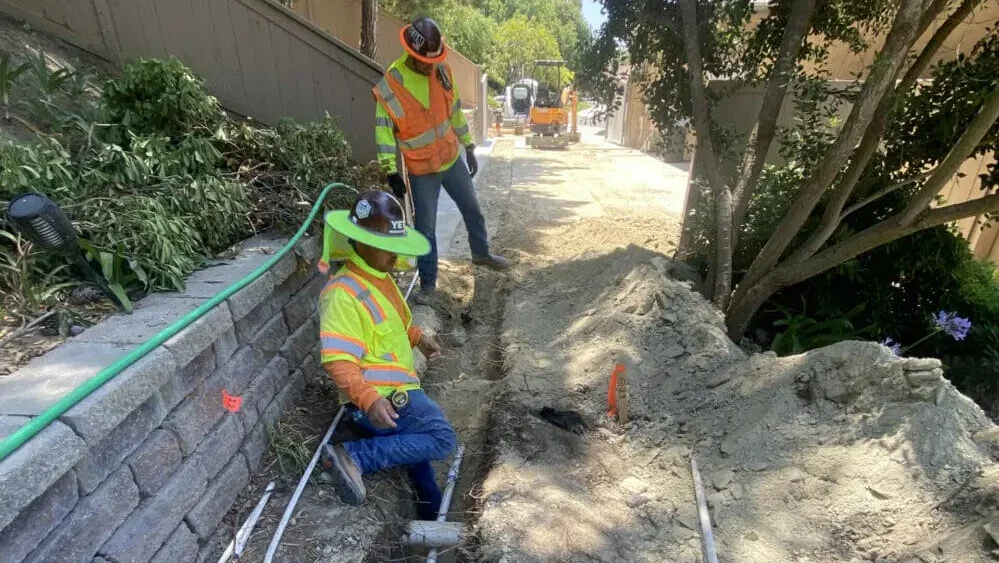
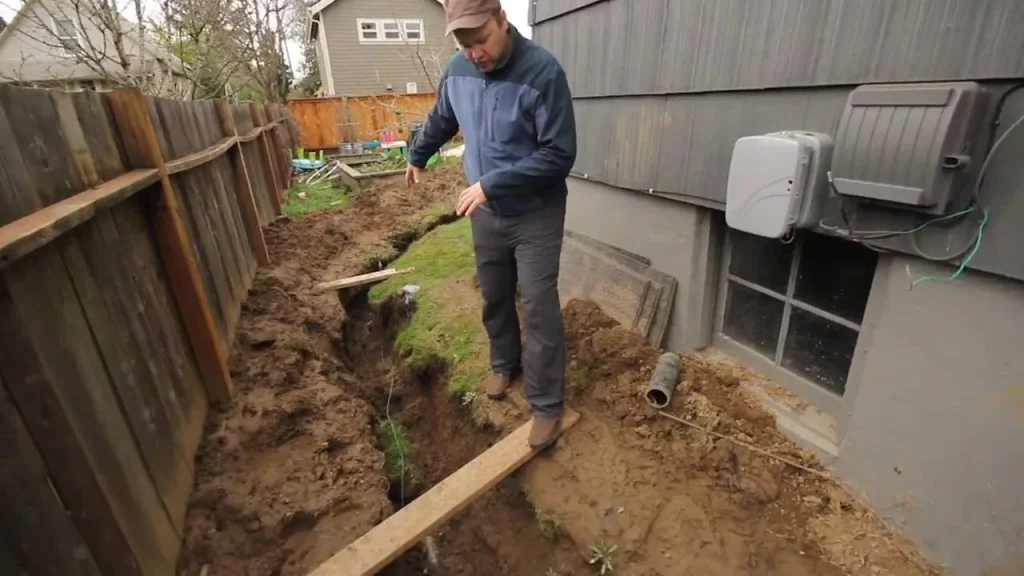
Trenching is usually the single biggest driver of ADU sewer line connection cost, and it’s priced per linear foot, typically running $50 to $250 per foot depending on your region, soil type, and whether the trench crosses hardscape. A backyard ADU sitting 20 feet from the existing lateral might add $1,000 to $5,000 in trenching alone, while a unit positioned 80 or 100 feet away, common on deep lots, can push trenching costs into the $8,000 to $20,000 range by itself, before any pipe, labor, or permits are factored in.
Trenching Method
Open-cut trenching, digging a continuous open trench along the pipe route, is the cheaper and faster method where nothing is in the way, generally running toward the lower end of that per-foot range. Trenchless installation, using directional drilling to bore a path underground without opening a continuous trench, costs more per foot, often 1.5 to 2 times as much, but becomes worth it when the route crosses a driveway, mature landscaping, or a finished patio you don’t want to tear up and repair. For many homeowners, the trenchless premium ends up cheaper overall once you account for the cost of restoring concrete, pavers, or irrigation that open trenching would destroy.
System Type: Gravity Tie-In vs. Ejector Pump
Whenever possible, a gravity-fed tie-in is the cheaper and simpler option, since wastewater flows downhill by gravity into the existing lateral with no mechanical assistance required. This only works when the ADU’s plumbing sits at a higher elevation than the connection point. When the ADU is built on a slab below the existing lateral’s elevation, common with converted garages or units built into a sloped backyard, a sewage ejector pump system becomes necessary to lift wastewater up into the gravity line. Ejector pump systems add the cost of the pump itself, a dedicated electrical circuit, a basin, and additional labor, which is why that category runs meaningfully higher in the table above.
Site Conditions
Beyond distance and system type, site-specific factors can swing your ADU sewer line connection cost significantly. Concrete cutting and removal, if the trench route crosses a driveway or existing slab, typically adds $8 to $15 per square foot of concrete removed and replaced. Steep slopes increase labor time and may require additional shoring or erosion control. Soil composition matters too, rocky or clay-heavy soil takes longer to excavate than sandy soil and can require specialized equipment. Finally, landscaping repair, replacing sod, irrigation lines, or mature plantings disturbed by trenching, is a cost that’s easy to underestimate until the invoice arrives.
Municipal Permits and City Utility Impact Fees
Construction costs are only part of the picture. Most cities charge separate connection fees, tap fees, and inspection permits on top of whatever your plumber or contractor charges for labor and materials, and these municipal charges can range from a few hundred dollars in smaller jurisdictions to $5,000 or more in larger metro areas with capacity-based sewer fee structures.
Some states have moved to limit how aggressively cities can charge these fees for ADUs specifically. California, for example, restricts local agencies from imposing a sewer connection fee or capacity charge on an ADU that doesn’t require a new or separate connection, though this protection generally doesn’t extend to units that do require a new lateral or that meaningfully increase wastewater flow.
Other states leave these fees almost entirely up to the local sanitation district, meaning the exact rules that apply to your ADU sewer line connection cost depend heavily on both your state’s ADU statute and your specific city or utility district’s own fee schedule. Before finalizing your budget, it’s worth confirming your local requirements directly through FindADUPros’ zoning information lookup tool, since sewer connection rules are sometimes bundled with broader utility and zoning information at the local level.
Main Line Tie-In vs. Separate City Connection
For most detached ADU projects, tying into the existing sewer lateral, the pipe that already runs from your main house to the city sewer main, is the default and cheapest approach. This method uses existing infrastructure, requires less trenching if your ADU is reasonably close to the existing line, and typically avoids the higher tap fees associated with a brand-new connection to the municipal main.
A separate connection directly to the city main becomes necessary when the existing lateral is undersized for the added wastewater flow, is already at or near capacity, is damaged or aging beyond what a shared connection can reasonably support, or when local code simply requires a new detached unit to have its own independent connection regardless of the existing lateral’s condition.
This route is considerably more expensive, often reflected in the top end of the range in the table above, since it usually involves trenching all the way to the street, a formal tap into the municipal main, and a higher permit and inspection fee structure. The tradeoff is a more robust, independent system that won’t be affected by any future issues with the main house’s plumbing.
Because this decision has such a large impact on your total ADU sewer line connection cost, it’s worth having a licensed plumber or civil engineer assess your existing lateral’s condition and capacity early in the design process, rather than discovering mid-construction that a gravity tie-in isn’t actually viable.
How to Save Money on ADU Plumbing and Sewer Line Hookups
A few practical strategies can meaningfully reduce your total cost without cutting corners on code compliance:
- Position the ADU strategically. If your design isn’t finalized, placing the unit closer to the existing lateral’s path, rather than at the far end of the backyard, can cut trenching costs substantially. Every foot of avoided trenching is real money saved.
- Combine utility trenching. If you’re also running new electrical or water lines to the ADU, coordinate all utility trenching into a single dig rather than three separate excavation jobs. Contractors can often combine this work into one mobilization, saving on both labor and site restoration costs.
- Choose gravity-fed whenever the site allows it. If there’s any flexibility in your foundation height or floor plan, designing around a gravity connection instead of an ejector pump system avoids thousands of dollars in equipment and ongoing electrical costs.
- Get multiple bids specifically for the utility work. General contractors sometimes mark up subcontracted plumbing and excavation work; getting an independent bid directly from a licensed plumber or excavation contractor can reveal meaningful savings.
- Ask about trenchless options even if they sound pricier upfront. In situations involving driveways, patios, or mature landscaping, the trenchless premium is often smaller than the cost of tearing up and repairing hardscape with open trenching.
- Confirm ADU-specific fee waivers or caps in your state. Since several states now limit connection fees for ADUs that don’t require a new connection, confirming your eligibility before assuming the worst-case fee scenario can meaningfully change your budget.
Before locking in a final number, run your project through FindADUPros’ ADU cost calculator to see how sewer connection costs fit into your overall project budget, and if you’ll be financing the build, FindADUPros’ ADU loan calculator can help you understand how a larger utility line item affects your monthly payment. If you’re still working through design decisions that affect plumbing placement, FindADUPros’ AI ADU design advisor can help you visualize layout options before you commit to a foundation plan.
The Bottom Line
ADU sewer line connection cost is one of the widest-ranging line items in an entire ADU budget, precisely because it depends on so many site-specific variables: how far your unit sits from the existing lateral, whether gravity or a pump system is required, what’s in the way of the trench route, and what your local utility charges in connection and tap fees. A modest gravity tie-in a short distance from the house might cost a few thousand dollars, while a separate connection to the city main on a challenging lot can run well into five figures.
The best way to avoid an unpleasant surprise mid-project is to get a firm, itemized quote for the sewer connection specifically, separate from your general construction bid, before you finalize your design. Confirming your contractor’s licensing and plumbing experience through FindADUPros’ contractor license lookup tool is a smart last step before signing, since utility work is exactly the kind of trade-specific job where experience meaningfully affects both cost and long-term reliability.