Most homeowners plan an ADU budget around framing, permits, and finishes, then get to the final walkthrough and realize the yard around the new unit looks like a construction site because it basically is one. That’s the part nobody warns you about: ADU backyard landscaping cost in California typically runs anywhere from $1,000 for basic repair work up to $50,000 or more for a fully designed outdoor living space, and where you land in that range depends almost entirely on whether you’re patching what construction damaged or building an entirely new yard from scratch.
That’s a wide spread, wide enough that “it depends” isn’t much of an answer on its own. This guide breaks down what actually drives the cost to landscape an ADU backyard in California, what a realistic budget looks like at each tier, and where the state’s water rules and rebate programs can work in your favor instead of against it.
Average Cost to Landscape an ADU Yard in California (Quick Breakdown)
Before getting into what moves the needle, here’s a quick reference table to ground your budget conversation with a contractor:
| Landscaping Scope | Typical Cost Range | Best For |
|---|---|---|
| Post-construction restoration only | $1,000 – $5,000 | Re-seeding, patching irrigation, and repairing turf damaged by trenching |
| Basic softscape refresh (planting beds, sod, mulch) | $4,500 – $15,000 | Small ADU yards that need a clean, low-maintenance finish |
| Full backyard landscape (softscape + hardscape, drought-tolerant design) | $15,000 – $50,000+ | Homeowners treating the ADU yard as a separate, finished outdoor living space |
| Premium design-build (patios, lighting, irrigation, mature plantings) | $50,000 – $100,000+ | Larger lots or rental-ready ADUs where curb appeal drives income |
These figures reflect labor, materials, and design for the landscaping itself. Utility trenching, slope, and soil conditions can push any of these ranges higher, which is exactly why the cost factors below matter more than the table alone.
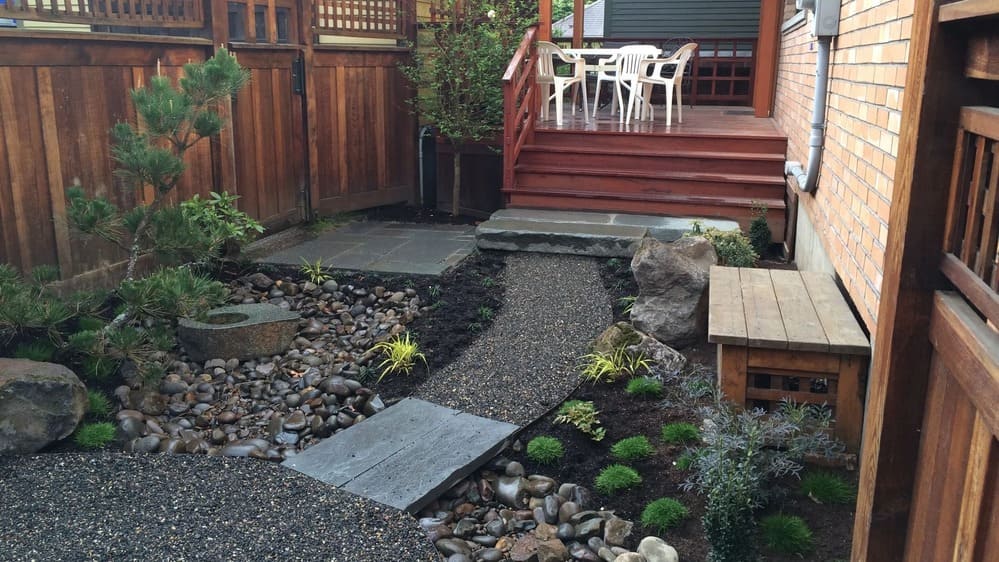
Key Factors That Drive ADU Backyard Landscaping Costs
How Much Construction Damage in the First Place
The single biggest swing factor in your ADU backyard landscaping cost isn’t design; it’s repair. Running water, sewer, and electrical lines to a detached unit means trenching through what used to be lawn or planting beds, and restoring turf, irrigation, and hardscape after trenching commonly adds $1,000 to $15,000 on its own, even before you touch design. If your ADU sits far from the main house or your lot has a slope, expect that number to land toward the higher end, since longer trenching runs disturb more ground and take crews longer to repair correctly.
Heavy equipment access is the other quiet cost driver here. Concrete mixers, cranes, and delivery trucks often need to cross the yard to reach the build site, and compacted soil, crushed irrigation lines, and flattened planting beds are a routine byproduct of that access, not a sign anything went wrong. Building that repair into your budget from day one, rather than treating it as a surprise, is what separates homeowners who stay on budget from ones who don’t.
Softscape vs. Hardscape
Softscape (sod, planting beds, mulch, drought-tolerant groundcover) is the cheaper half of the equation, typically running $4 to $8 per square foot installed. Hardscape (patios, walkways, retaining walls, fencing) is where budgets climb fast, often running $15 to $60 per square foot depending on materials. An ADU backyard that leans heavily on a paver patio and a privacy fence for the new tenant will cost meaningfully more than one finished with turf and low beds.
Fencing deserves its own mention, since most ADU backyards need at least a partial new fence line to separate the unit from the main house for privacy, and that’s rarely factored into early estimates. A basic wood fence runs roughly $15 to $30 per linear foot installed, while vinyl or a more durable material can push that higher. If your ADU will be rented out, a clear physical boundary between the two households is worth budgeting for even if it wasn’t part of your original landscaping plan.
Yard Size and How Much of It You’re Touching
You don’t have to landscape the entire property, only the portion disturbed by construction or the section you want redesigned around the ADU. A homeowner reworking a 400-square-foot side yard around a detached unit will land far below someone landscaping a full quarter-acre lot. Statewide averages put professional landscaping at roughly $5 to $25 per square foot, so measuring the actual disturbed area first keeps your estimate realistic instead of inflated. It also helps to walk the site with your contractor before construction starts and mark, physically, which zones are expected to be touched, since that conversation upfront tends to prevent disputes over what counts as “construction damage” versus a new design request once the invoice arrives.
Region Within California
ADU backyard landscaping costs in California aren’t uniform. Coastal and Bay Area markets tend to run higher on both labor and material costs, while Central Valley and inland projects often come in below the statewide average. Expect a similar cost premium to what you’d see on the ADU construction side, where Southern California projects run about 10 to 20 percent above the state average due to labor rates and permitting complexity, a pattern that carries over into landscaping bids as well. Getting two or three local quotes rather than relying on a single statewide estimate is the most reliable way to know where your specific city or county actually falls.
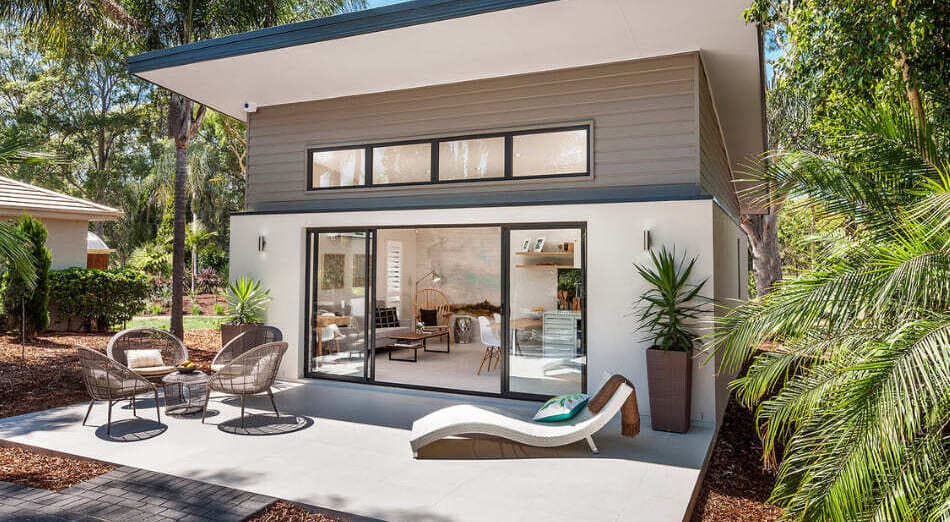
What’s Usually Included in an ADU Landscaping Quote
Landscaping bids can vary widely in what they actually cover, which is a common source of confusion when comparing quotes side by side. A thorough quote for ADU backyard work generally itemizes:
- Site grading and drainage. Correcting the slope around the new foundation so water drains away from both structures instead of pooling against the ADU’s walls.
- Irrigation repair or installation. Patching lines cut during trenching, or installing new drip irrigation zones for the redesigned areas.
- Soil amendment. Compacted construction soil often needs to be aerated or amended before anything will grow well in it.
- Plant material and installation. Sod, groundcover, shrubs, or trees, priced per plant or per flat depending on scale.
- Hardscape elements. Any patios, pathways, or retaining walls, usually the largest single line item when included.
If a quote is missing several of these categories, it’s worth asking directly whether they’re excluded or simply bundled into a lump sum, since a low bid that quietly skips soil prep or drainage work tends to cost more later in the form of dead plants or standing water.
DIY vs. Hiring a Professional Landscaper
Not every part of an ADU backyard needs a licensed crew. Planting beds, mulching, and basic sod installation are reasonable weekend projects for a homeowner comfortable with manual labor, and tackling that portion yourself can shave a few thousand dollars off the total. Materials alone for a modest softscape refresh often run $1,500 to $4,000, well below the installed price once labor is added.
Grading, drainage, and irrigation are a different story. Getting the slope wrong around a new foundation can send water toward the ADU instead of away from it, which risks far more expensive problems than the landscaping ever would have cost on its own. The same goes for any hardscape tied into a permit, since some cities require inspection of patios, retaining walls, or fencing above a certain height. As a rule of thumb, DIY the softscape and hire out anything that involves drainage, grading, or a permit.
How Long Does ADU Backyard Landscaping Take?
Timeline expectations matter almost as much as cost, since landscaping typically happens after the ADU itself passes final inspection. A basic restoration and softscape refresh generally takes one to two weeks from design approval to finished planting. A full redesign with hardscape, irrigation, and larger plant material usually runs four to eight weeks, longer if custom masonry or a permitted structure like a pergola is involved. Building this timeline into your overall project schedule helps set realistic expectations for tenants or family members waiting to move in, since a finished ADU with a torn-up yard doesn’t always make the best first impression.
Does Landscaping Actually Add Value to an ADU?
For homeowners renting the unit out, a finished yard isn’t just cosmetic. Listings with usable, private outdoor space tend to rent faster and command a modest premium over units surrounded by bare dirt or leftover construction debris, since prospective tenants are effectively touring both the ADU and the yard together during a showing. Even a simple, low-maintenance design, turf, a defined patio area, and a fence line for privacy, tends to pay for itself over a year or two of stronger rental interest.
For owner-occupied ADUs housing family members, the calculation is less about rent and more about daily livability. A yard that still looks like a job site months after move-in tends to get fixed eventually anyway, so budgeting for it as part of the original project, rather than as a delayed afterthought, usually ends up being the cheaper path overall.
California’s Water Rules Actually Help Your Budget
California’s Model Water Efficient Landscape Ordinance (MWELO) requires water-efficient design on most new landscaping projects above a certain size, which sounds like a restriction until you realize it pushes homeowners toward the cheaper materials anyway. Drought-tolerant plants, mulch, and drip irrigation cost less to install and far less to maintain than a traditional lawn, and many utilities pay you to make the switch.
For example, LADWP offers a turf replacement rebate of $5 per square foot, up to $25,000, for homeowners swapping grass for drought-tolerant landscaping, and similar programs exist through water districts across the state. Before finalizing a design, it’s worth checking whether your local utility offers a comparable rebate, since it can meaningfully offset your ADU backyard landscaping cost.
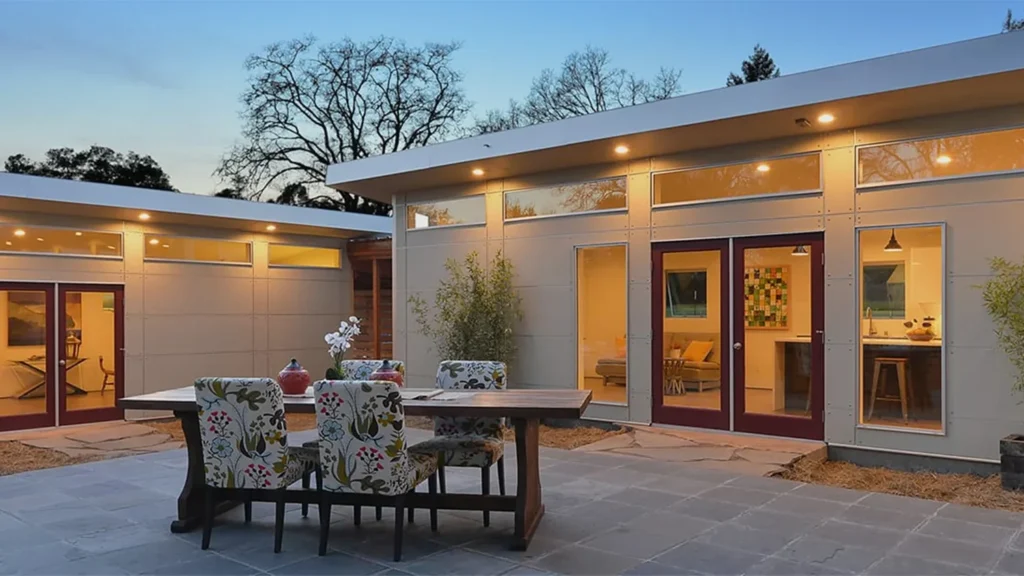
How to Budget Smart for Your ADU Backyard
A few practical strategies keep the landscaping line item from ballooning past the rest of your ADU budget:
- Separate repair from redesign. Get a distinct quote for post-construction restoration versus new design work, so you’re not paying design markup on simple turf patching.
- Phase the project. Landscape the area immediately around the ADU first for a finished look, then expand to the rest of the yard as budget allows.
- Lean on drought-tolerant design. Native and low-water plantings cost less upfront, qualify for rebates in many areas, and cut long-term water bills for you or a future tenant.
- Coordinate trenching early. If utility lines and irrigation both need trenching, ask your contractor to combine the digs into one mobilization instead of tearing up the yard twice.
- Get landscaping bids independently. General contractors sometimes mark up subcontracted landscaping work, so a direct bid from a licensed landscaper can reveal real savings.
If you’re still finalizing where the unit sits on the lot, that decision affects your landscaping budget too, since ADU placement determines how much yard gets disturbed and how much is left to design around. FindADUPros’ AI ADU Design Advisor can help you visualize layout options and get a personalized sense of design and cost tradeoffs before you commit to a foundation plan. Once your overall project numbers are firmer, running everything, construction and landscaping included, through FindADUPros’ ADU cost calculator gives you a single, realistic total instead of budgeting each piece in isolation.
The Bottom Line
ADU backyard landscaping cost in California swings from a modest $1,000 repair bill to a $50,000-plus full redesign, and the honest answer for where your project lands depends on how much of the yard construction disturbed, how much hardscape you want, and which part of the state you’re building in. Budgeting it as its own line item, rather than an afterthought squeezed out of what’s left of the construction budget, is what keeps homeowners from being surprised by the final invoice.
For homeowners still comparing contractors for the build itself, checking credentials through FindADUPros‘ directory of vetted ADU professionals is a solid next step before signing off on either the construction or the landscaping portion of the project.