Many homeowners underestimate the real ADU cost in California. What looks like a $150K project can quickly rise once permits, utilities, solar mandates, and design costs are added. In 2026, ADUs are more popular than ever — but while California legislation has made building easier, construction costs remain high and the line items that bite hardest are the ones most guides skip entirely.
This breakdown covers what it actually costs to build an ADU in California — not just the construction contract, but the regulatory surcharges, the regional premiums, the soft costs, and the financing tools that can help you bridge the gap. Use the FindADUPros ADU Cost Calculator to model your specific project before committing to any contractor.
ADU Cost in California 2026: Real Prices, Hidden Fees & Budget Breakdown
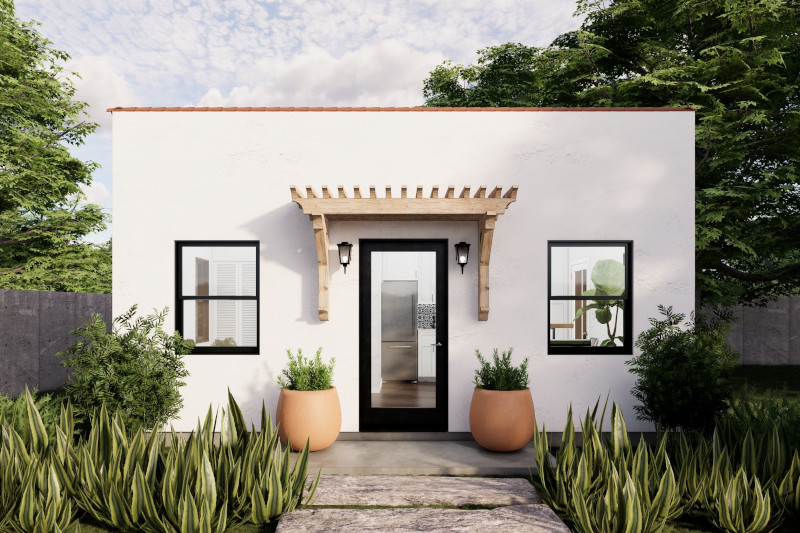
Average All-In Costs by ADU Type
The average cost of an ADU in California depends largely on type, size, and location. In 2026, most projects fall within these ranges:
- Garage conversion: $100,000–$180,000
- Attached ADU: $150,000–$250,000
- Detached ADU: $200,000–$400,000+
Detached units cost the most because they require new foundations, utility connections, full construction from scratch — and in California, mandatory solar panels. Conversions are more affordable because they reuse existing structures and are generally exempt from the solar mandate. For a detailed breakdown of garage conversion-specific costs, read our companion guide on Garage Conversion ADU Cost in 2026.
Cost Per Square Foot in California: Breaking Down Regional Price Tags
Why Smaller ADUs Cost More Per Square Foot Than Large Backyard Cottages
Looking at cost per square foot gives a more precise picture — especially when comparing design options. In 2026, most California ADUs fall between $250 and $600+ per square foot, depending on location and unit type.
The counterintuitive reality: smaller ADUs cost more per square foot than larger ones. Fixed expenses — permits, utility connections, architectural drawings, and engineering stamps — are the same whether the unit is 400 sq ft or 900 sq ft. Spread across fewer square feet, those fixed costs inflate the per-square-foot number dramatically.
Example:
- A 400 sq ft ADU at $400/sq ft = $160,000
- An 800 sq ft ADU at $300/sq ft = $240,000
The 800 sq ft unit costs more overall but is significantly more cost-efficient per square foot.
California Regional ADU Price Variance Matrix
| California Metro | Avg Cost/Sq Ft (Detached) | Local Permit & Impact Fee Baseline | Common Site Challenges | Pre-Approved Plans Available |
|---|---|---|---|---|
| Bay Area (SF / San Jose) | $450–$650+ | High ($8,000–$15,000+) | Seismic retrofit, steep slopes, tight setbacks | Yes — San Jose ADU Master Plan program |
| Greater Los Angeles | $350–$500 | Medium ($5,000–$10,000) | Methane zones, soil liquefaction, hillside retaining walls | Yes — LA DBS Standard Plan Program |
| San Diego County | $325–$475 | Low-Medium (waived water/sewer fees in select zones) | Coastal Commission overrides, rocky terrain | Yes — County of San Diego pre-approved designs |
| Central Valley / Sacramento | $250–$375 | Low ($3,000–$6,000) | Flat grading, easy equipment access | Limited by individual county |
Hard Costs vs. Soft Costs: The Realistic Construction Line Items
Understanding the difference between hard and soft costs is the single most important step in building a budget that doesn’t blow up mid-project.
Hard costs are direct construction expenses — the physical labor and materials that make up the structure:
- Foundation, framing, roofing: $40,000–$80,000
- Interior finishes (flooring, kitchen, bathroom): $25,000–$50,000
- Windows, doors, insulation: $12,000–$25,000
- Mechanical, electrical, plumbing (MEP): $20,000–$45,000
Hard costs typically represent 60–70% of the total project budget.
Soft costs are everything else — and they’re where most budgets get surprised:
Architectural Drawings, Structural Engineering, and Title 24 Compliance
- Architectural drawings: $8,000–$20,000 depending on complexity and whether you use a pre-approved city plan set
- Structural engineering calculations and stamps: $3,000–$8,000 — required for all detached ADUs, mandatory in Bay Area seismic zones
- Title 24 energy compliance report: $1,500–$3,500 — required for all new California ADU construction; this is a separate document from your architectural plans
- Soil report / geotechnical engineering: $2,000–$5,000 — required on most projects before foundation design is finalized
- School impact fees: Apply to ADUs over 500 sq ft in most California jurisdictions; typically $3–$4 per square foot — staying under that threshold or understanding when the ADU school impact fee waiver California applies can save $2,000–$4,000
Navigating California ADU Regulations: When Are Impact Fees Waived?
Under California state law, ADUs under 750 square feet are completely exempt from local development impact fees — the park, school, and transit charges that cities assess on new construction. ADUs at or above 750 sq ft face proportional fees that add $4,000–$12,000 depending on your jurisdiction. This is one of the most financially consequential design decisions you’ll make: staying at 749 sq ft is a legitimate budget optimization, not an arbitrary constraint.
Legislation driving this:
- SB 1211 (effective January 1, 2025) expanded the number of detached ADUs allowed on multifamily lots and reinforced prohibitions on local minimum lot size requirements
- Current state law prohibits cities from requiring homeowners to replace parking spaces lost during ADU garage conversions — a common burden that has been eliminated
- Both laws represent the most significant expansion of ADU rights in California since the 2020 reforms
Use the FindADUPros Zoning Information Lookup to confirm which fee exemptions and regulatory protections apply in your specific jurisdiction.
The Hidden Costs Most Homeowners Miss Until Construction Begins
Electrical Panel Upgrades: Overcoming the 100-Amp Main Panel Limit
Most California homes built before 1990 run on 100-amp or 125-amp electrical panels. An all-electric ADU — with heat pump HVAC, a mini-split, an induction range, an electric water heater, and a solar inverter — will exceed that capacity immediately. A 200-amp panel upgrade is required before the ADU subpanel can be installed. Budget $4,000–$7,500 for the upgrade, and in PG&E or SCE service areas, build in 8–12 weeks for utility scheduling on top of that.
The cost to upgrade an electrical panel for an ADU is one of the most consistently underestimated line items in contractor base quotes — because it depends on your existing panel’s condition, which the contractor can’t assess without inspecting it.
The Title 24 Mandate: Budgeting for Compulsory Solar Panel Systems
This is the single largest omission in most California ADU cost guides — and the one that surprises homeowners most during permit review.
Under California’s Title 24 Building Energy Efficiency Standards, all newly constructed, detached ADUs must include solar panels. This is not optional and cannot be waived by the local jurisdiction. The requirement applies to:
- New detached ADU construction of any size
- Grid-tied photovoltaic (PV) systems or solar-plus-battery storage setups
It generally does not apply to:
- Garage conversions (converting an existing structure)
- Attached ADUs (unless the primary home’s electrical system undergoes a major overhaul)
- ADUs in shaded locations that cannot meet minimum solar production thresholds (rare exemption requiring engineering documentation)
A compliant solar system for a 600–800 sq ft detached ADU typically costs $8,000–$15,000 including panels, inverter, and installation. This is a hard permit requirement — your plans will not be approved without it documented. Budget for it from day one.
California ADU Cost Comparison: Garage Conversions vs. Detached Units
The type of ADU you build is the single biggest variable in your budget. Here’s the structured comparison:
| ADU Type | Cost Range | Solar Mandate | Impact Fee Exemption | Best For |
|---|---|---|---|---|
| Garage Conversion | $100K–$180K | Exempt | Eligible if ≤750 sq ft | Budget-focused, faster approval |
| Attached ADU | $150K–$250K | Generally exempt | Eligible if ≤750 sq ft | Mid-range cost, utility access |
| Detached ADU | $200K–$400K+ | Required | Eligible if ≤750 sq ft | Maximum rental income, privacy |
For a granular breakdown of garage conversion-specific costs including slab leveling, egress window requirements, and structural header installation, read our deep-dive on Hidden Costs of Building an ADU in 2026.
How to Reduce ADU Costs: Using Pre-Approved Plans and Modular Designs
Pre-Approved Municipal Plans: The Fastest Cost-Cutting Tool Available
California cities have developed free or low-cost pre-approved ADU plan sets that have already passed architectural and structural review. Using one eliminates $8,000–$20,000 in custom design fees and can cut plan-check timelines from 60 days to as few as 30 days under AB 1332.
Cities with active pre-approved plan libraries in 2026:
- Los Angeles: LA Department of Building and Safety (DBS) Standard Plan Program — free architectural sets for standard ADU footprints
- San Jose: ADU Master Plan program — stamped structural plans available for a nominal licensing fee
- Sacramento: Community Development Department pre-approved sets — free, range from studios to two-bedrooms
- San Diego County: Pre-approved design library available through the county planning portal
The caveat: pre-approved plans still require site-specific engineering — foundation mapping for your soil conditions and utility routing layouts. These add $2,000–$5,000 but are modest compared to the full custom architecture cost they replace.
Other cost reduction strategies:
- Keep the footprint under 749 sq ft to eliminate impact fees
- Build all-electric to avoid PG&E gas line extension costs ($2,000–$5,000)
- Use prefab or modular construction where site conditions allow — modular can reduce construction timelines by 2–4 weeks and cut framing costs by 15–25%
- Compare contractor quotes using the FindADUPros Contractor License Lookup to verify license status, bond, and past ADU experience before signing anything
California ADU Financing: HCD Grants and 2026 Equity Options
How the California HCD ADU Grant Program Works
The California Housing Finance Agency (CalHFA) has historically offered one of the most impactful soft cost programs for ADU homeowners: the ADU Grant Program, which provided up to $40,000 for pre-development costs — architectural drawings, structural engineering stamps, Title 24 compliance reports, soil reports, and permit fees.
Current 2026 status: The CalHFA ADU Grant Program’s initial $100 million funding allocation was fully depleted as of early 2026. No confirmed relaunch date has been set. Monitor the CalHFA website for program updates.
2026 Financing Options for California ADU Homeowners
While the CalHFA grant is paused, several financing pathways remain available:
HELOC (Home Equity Line of Credit): The most widely used ADU financing tool. Borrow against your home’s equity as construction progresses — you draw only what you need, reducing interest costs. As of mid-2026, HELOC rates at California credit unions start around 6.50%.
Cash-out refinancing: Replaces your existing mortgage with a larger one; takes the difference in cash. Most useful if your current mortgage rate is already near today’s rates.
Construction loans: Fund the build in draws as work is completed, then convert to permanent financing at project completion. Best for larger, complex projects where you want milestone-based disbursement.
ADU-specific loan programs: Several California lenders now offer ADU-specific products that allow projected rental income to count toward loan qualification — similar to FHA Mortgagee Letter 2023-17 provisions. Ask your lender explicitly whether they treat ADU rental income as qualifying income.
Property tax deferral under SB 1164: California’s SB 1164 allows eligible homeowners to defer the ADU’s property tax assessment for up to 10 years. This isn’t financing — but deferring $3,000–$5,000/year in new tax liability for a decade provides meaningful carrying cost relief while the ADU generates income.
Use the FindADUPros ADU Loan Calculator to model different financing scenarios and understand your monthly carrying costs before you commit to a loan structure.
Is an ADU Worth the Cost? Calculating 2026 California Rental ROI and Resale Value
Rental Income Potential
In most California markets, a well-designed ADU generates strong long-term rental income:
- Bay Area: $2,500–$4,000/month for a one-bedroom detached unit
- Los Angeles: $2,000–$3,500/month
- San Diego: $1,800–$3,000/month
- Sacramento / Central Valley: $1,200–$2,200/month
A $300,000 detached ADU in Los Angeles generating $2,500/month recovers its construction cost in approximately 10 years through rental income alone — before any property value appreciation is counted.
Capitalizing on AB 1033: Selling Your Backyard Unit as a Separate Condo
For homeowners building to sell rather than rent, AB 1033 creates a new exit strategy. California’s AB 1033 allows property owners to sell their ADU separately from the primary home as a condominium — provided the local municipality has opted into the program. Cities that have adopted AB 1033 programs include Los Angeles, Berkeley, and San Jose.
The financial picture for AB 1033 sales:
- Additional design and legal costs: $15,000–$30,000 for condominium subdivision documents, HOA formation, title work, and any design modifications required for condo conversion
- Potential return: In high-demand California markets, a separately titled ADU can sell for $400,000–$800,000 depending on size, location, and finish level — a dramatically different ROI profile than annual rental income
If you’re building with an AB 1033 sale in mind, confirm that your municipality has adopted the program before finalizing your design, and budget the additional legal and subdivision costs from day one.
The 2026 California ADU Pre-Construction Feasibility Checklist
Before signing with any contractor or ordering a prefab unit, verify these financial and legal triggers:
- 750 sq ft impact fee threshold: ADUs under 750 sq ft avoid development impact fees entirely — ADUs at 751+ sq ft face proportional fees of $4,000–$12,000
- Main electrical panel capacity: 100-amp or 125-amp panels require a $4,000–$7,500 upgrade to support a 200-amp ADU subpanel with solar inverter
- Title 24 solar requirement: Detached new construction requires solar panels ($8,000–$15,000) — this is a permit requirement, not an option
- Sewer lateral distance: Trenching beyond 100 feet from the primary home’s sewer line costs $50–$120 per linear foot
- The 4-foot setback rule: State law mandates 4-foot rear and side clearance for detached ADUs — confirm your footprint clears this before design is finalized
- AB 1033 municipal adoption: If building to sell separately, confirm your city has adopted the AB 1033 condo sale program before committing to your design
The Bottom Line
The real ADU cost in California in 2026 is significantly higher than the base construction contract suggests — and the gap between the quoted price and the all-in number is where most homeowners get into trouble. Title 24 solar mandates, panel upgrades, geotechnical engineering, impact fees, and soft costs consistently add 20–35% above what contractors quote upfront.
The homeowners who stay on budget are the ones who understand these line items before they sign anything — and who use the right financing tools to cover soft costs without depleting construction capital.
Use the FindADUPros AI ADU Design Advisor to explore layout options and get cost estimates tailored to your property before engaging any architect or contractor. For financing guidance, start with the ADU Loan Calculator to understand what your carrying costs look like across different loan structures.
For vetted California ADU contractors with verified permit histories in your market, visit FindADUPros.