Somewhere between finalizing your floor plan and submitting for permits, a question tends to sneak up on almost every ADU homeowner: does this thing need its own utility meter, or can it just piggyback off the main house? It sounds like a minor technical detail until you realize it can swing your budget by five figures, depending on how your city and your utility company answer it, and those two answers aren’t always the same.
This is exactly the kind of hidden infrastructure cost that catches people off guard right before submission, when the design is locked in and the last thing anyone wants is a surprise line item for trenching a new water lateral or upgrading an electrical service. Understanding ADU utility hookup laws before you finalize plans, rather than after a plan checker flags it, is one of the more valuable things you can do to protect your budget.
Why ADU Utility Hookup Laws Are So Confusing in the First Place
Part of the confusion comes from the fact that two separate authorities are involved, and they don’t always agree. Your city or county building department enforces zoning and building code, including whatever your state’s ADU statute says about utility connections. Your utility company, the water district, the electric utility, and sometimes a separate sewer authority, has its own tariff rules, service rules, and fee schedules that operate independently of local planning departments.
A city planning department might tell you a separate meter isn’t required. Your water utility might still want one anyway, or vice versa. Because ADU utility hookup laws sit at the intersection of state housing policy and utility-specific service rules, the requirements genuinely vary block by block in some jurisdictions, not just city by city. That’s part of why this topic generates such a decentralized set of search queries: there’s no single national answer, and often no single statewide answer either.
When a Municipality Legally Cannot Require a Separate Meter
Here’s the piece of information most homeowners don’t know until they’ve already budgeted for a new meter: in a growing number of states, local governments are legally barred from mandating a separate utility meter for an ADU under most circumstances.
California is the clearest example. State law prohibits local agencies from requiring a water or sewer connection fee or capacity charge for an ADU that doesn’t require new or separate utility connections, and separately restricts when a jurisdiction can compel a new, dedicated meter at all. If your ADU is sharing an existing service and isn’t projected to significantly increase demand, many California municipalities cannot legally force a separate meter as a blanket policy, though larger units or units that materially increase water or sewer demand may still trigger new connection requirements.
Other states with active ADU legislation, including Washington, Oregon, and increasingly Texas at the municipal level, have moved in a similar direction, though the specifics differ meaningfully. Some states leave utility metering decisions almost entirely to the local water district’s own rules, which means the state ADU law might protect you from a city planning requirement while the water utility’s own tariff still applies separately. This is precisely why reading ADU utility hookup laws at both the state and the local utility level matters; one without the other gives you an incomplete picture.
Before assuming either way, it’s worth checking your specific municipality’s requirements directly. FindADUPros’ zoning information lookup tool is a useful starting point for confirming what your local jurisdiction requires before you get further into design.
JADU Internal Hookups vs. Detached Unit Line Separations
The rules shift considerably depending on what kind of unit you’re building, and this is where a lot of homeowners get tripped up comparing notes with a neighbor who built a different type of ADU.
A Junior ADU, generally a unit of 500 square feet or less carved out of the existing home’s footprint, is treated very differently than a detached ADU under most state frameworks. Because a JADU shares walls, and often shares a kitchen or bathroom plumbing stack, with the primary residence, most state laws don’t require any separate utility connection at all. The JADU is simply understood to use the main house’s existing electrical service, water line, and sewer connection: no new meter, no new lateral, no separate service drop.
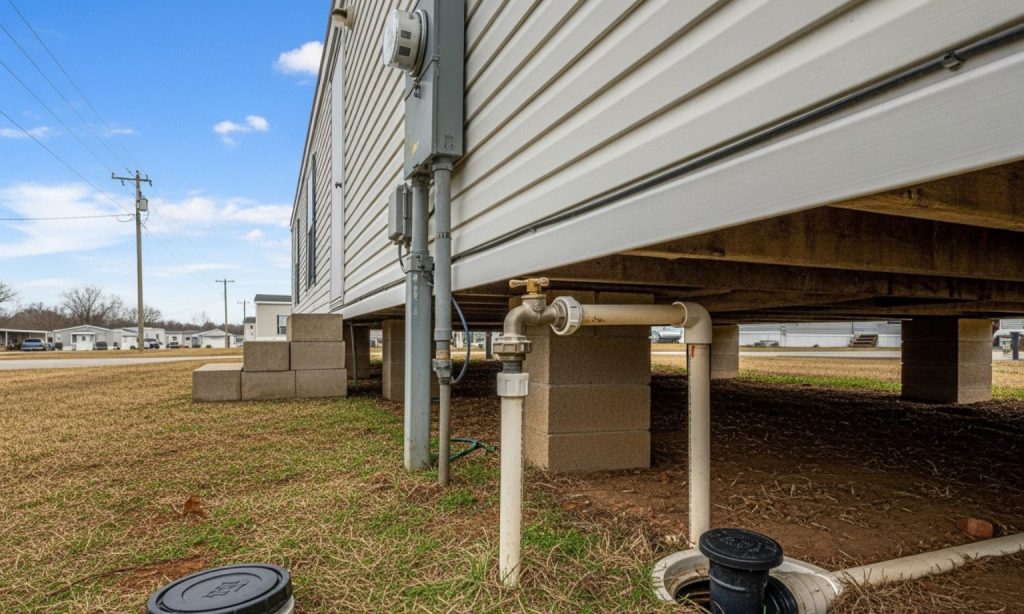
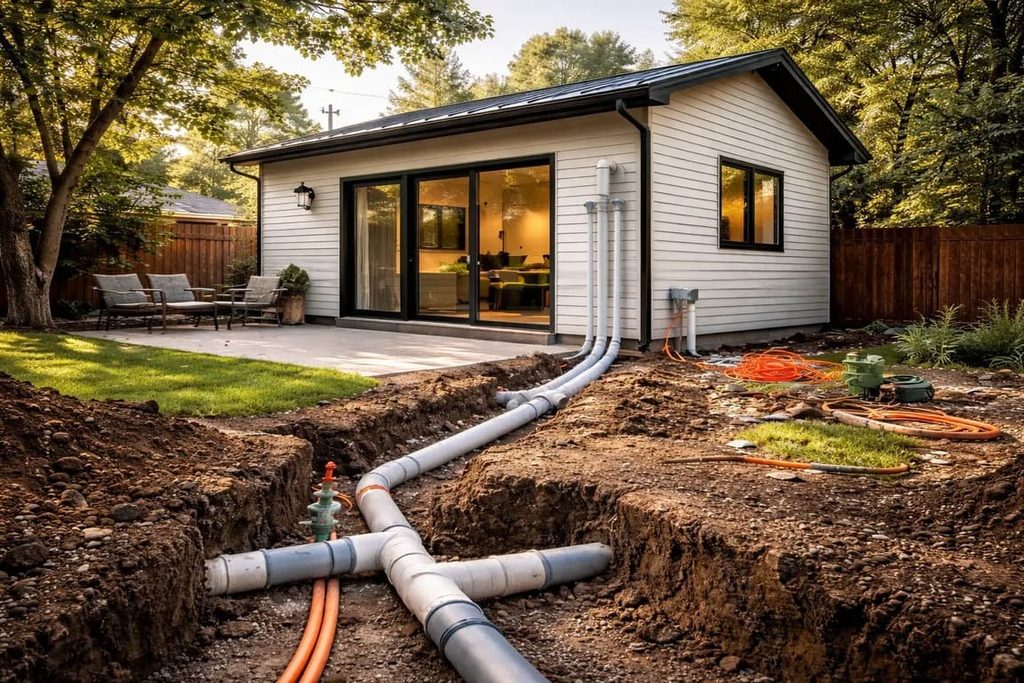
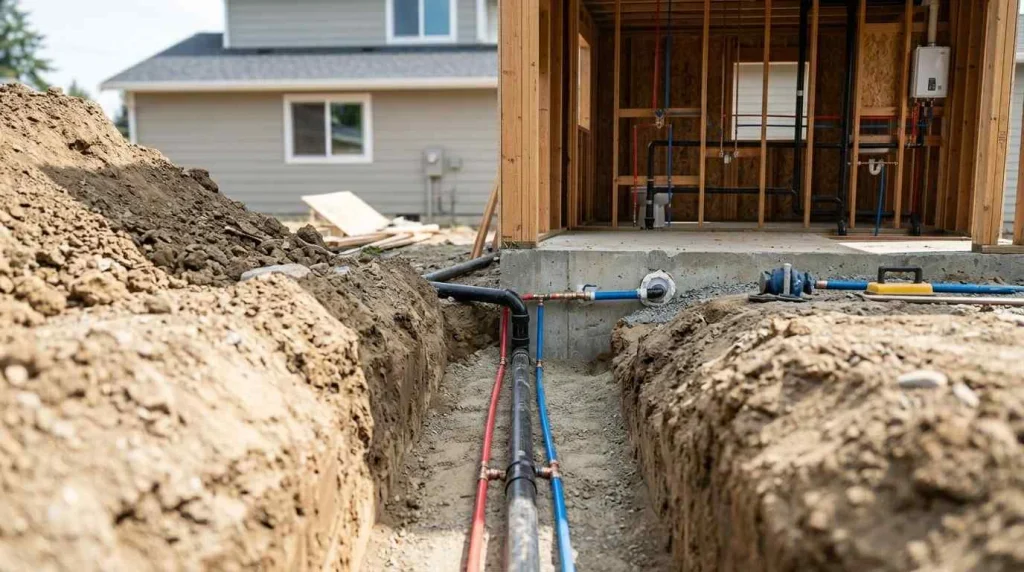
A detached ADU is a different situation entirely. Because it’s a physically separate structure, sometimes yards away from the main house, it often needs its own dedicated electrical circuit run underground, and depending on your sewer and water infrastructure, potentially its own lateral connections as well.
Even when a jurisdiction doesn’t require a separate meter, it may still require a separate sub-panel, a dedicated shutoff valve, or a cleanout for the sewer line, none of which shows up on a permit checklist quite as clearly as “meter required” or “meter not required.” This nuance in ADU utility hookup laws, treating attached and internal conversions more leniently than fully detached structures, is one of the most consistent patterns across states, even where the specific thresholds differ.
If you’re still deciding between a JADU conversion and a detached backyard unit, running both scenarios through FindADUPros’ AI ADU design advisor can help you see how the utility implications differ before you commit to a layout.
Calculating Whether Your Existing Panel Can Handle an All-Electric ADU
Electrical capacity is where a lot of ADU budgets quietly blow up. Most older homes were built with 100-amp electrical service, which was perfectly adequate for a single-family home decades ago but often leaves very little headroom once you add an all-electric ADU with an induction range, heat pump water heater, mini-split HVAC system, and an EV charger down the line.
Here’s a rough way to think through it before an electrician gives you the official load calculation. Add up the approximate amperage draw of your existing home’s major loads, central AC, electric range or furnace if applicable, water heater, dryer, and typical household circuits, and compare that against your panel’s rated capacity. If you’re already running close to 80 amps of continuous and cyclical load on a 100-amp panel, adding a fully electrified ADU, even a modest one, will likely push you over the legally required safety margin, and your electrician or the permitting jurisdiction will require an upgrade.
A 200-amp panel upgrade is the standard fix, and it typically runs several thousand dollars depending on your utility’s service drop, whether the meter needs to be relocated, and local labor rates. Some jurisdictions allow a load management device instead of a full panel upgrade, essentially smart hardware that prevents the home and the ADU from drawing peak power simultaneously, which can be considerably cheaper. Whether that option is available under your local ADU utility hookup laws depends entirely on your jurisdiction’s electrical code adoption, since not every city recognizes load management systems as compliant.
Before finalizing your ADU design, it’s worth running the numbers through FindADUPros’ ADU cost calculator, since a panel upgrade can add a meaningful chunk to your total budget that’s easy to overlook if you’re only pricing the structure itself.
Sanitation Connection Fees: Where Budgets Actually Go Wrong
If separate meters are the most misunderstood part of ADU utility hookup laws, sanitation connection fees are probably the most expensive surprise. Even in jurisdictions where a new sewer meter isn’t legally required, many sanitation districts still charge a capacity fee or connection fee based on estimated wastewater flow from the new unit, and these fees are set by the sanitation district, not the city, which means they aren’t always listed in your building permit fee schedule.
These fees vary enormously. In some smaller municipal systems, a modest flat fee applies regardless of unit size. In larger metro sanitation districts, fees are often calculated per fixture unit or per bedroom, meaning a two-bedroom detached ADU with two bathrooms can trigger a substantially higher fee than a studio JADU with a single bathroom sharing the main line. A handful of states cap or waive these fees for ADUs specifically to encourage development, but plenty of sanitation districts still charge close to full new-construction rates.
The only reliable way to avoid a mid-project budgeting error here is to contact your local sanitation or public works department directly and ask for their current ADU-specific fee schedule before you finalize your unit size or bedroom count. If a fee structure charges by bedroom or fixture count, a design change as small as adding a second bathroom can meaningfully change your total cost. This is worth factoring in early using FindADUPros’ ADU loan calculator so your financing accounts for connection fees, not just construction costs.
Putting It Together Before You Submit
Given how decentralized these rules are, city by city and sometimes utility district by utility district, the safest approach is treating utility research as its own step in the pre-permit process, separate from design and separate from general zoning research. A few things worth confirming before submission:
- Whether your state restricts local agencies from requiring a separate meter for your specific unit type and size.
- Whether your unit qualifies as a JADU under your state’s definition, which usually simplifies utility requirements considerably compared to a detached structure.
- Whether your existing electrical panel has sufficient headroom, or whether a load management device is accepted locally in place of a full upgrade.
- What your sanitation district’s ADU-specific connection fee schedule actually charges, in writing, rather than relying on a verbal estimate.
- Whether your general contractor’s licensing covers the utility trade work involved, which you can verify through FindADUPros’ contractor license lookup tool before signing a contract.
The Bottom Line
ADU utility hookup laws are genuinely one of the trickiest parts of the ADU permitting process precisely because two different authorities, your city and your utility provider, don’t always tell the same story, and the rules shift meaningfully depending on whether you’re building a JADU or a detached unit. State law increasingly limits when a municipality can force a separate meter, but that protection doesn’t automatically extend to sanitation connection fees or electrical capacity requirements, both of which can add real cost regardless of what the meter rules say.
The homeowners who avoid last-minute budget surprises are the ones who treat utility research as a distinct step, confirming panel capacity, sanitation fees, and meter requirements in writing before their design is finalized, rather than discovering the answer from a plan checker’s redline. A little homework here, before submission rather than after, is usually the difference between a smooth permit approval and a project that stalls waiting on an unplanned utility upgrade.