Building an ADU is one of the smartest financial moves a homeowner can make in 2026. It adds long-term value, generates rental income, and creates flexible housing for family members — all on land you already own. But the price tag? That part can feel anything but smart.
The average ADU costs between $150 and $300 per square foot nationwide — and in high-cost states like California, that figure can climb to $400–$500 per square foot for a new detached unit. For many homeowners, the difference between a project that pencils out and one that doesn’t comes down to a handful of early decisions made before a single permit is filed.
This isn’t a guide to cutting corners. It’s a guide to cutting costs intelligently — making structural, design, and financial choices that keep your budget lean without compromising livability, legality, or long-term value.
Why Smart Budgeting Matters More Than Ever in 2026
Material and labor costs have not meaningfully declined in recent years. Historical data show little meaningful price reduction over time, and waiting typically leads to similar or higher costs due to labor availability and permit fee increases. The homeowners who build ADUs for less aren’t finding cheaper contractors — they’re making smarter decisions from day one.
Start With the Right ADU Type: Your Biggest Lever
Conversion First, New Construction Second
The single most powerful cost decision you’ll make is whether to convert an existing structure or build something new.
Garage conversions consistently offer the best value, typically running $80,000–$150,000 for a functional, code-compliant unit. A 2-car garage conversion in the Bay Area, for example, typically comes in at $100,000–$150,000 all-in — substantially less than new detached construction in the same market. The primary structure already exists; you’re updating a shell, not building from scratch.
Attached ADUs share walls, a roof, and utility connections with your primary home — making utility hookups dramatically cheaper than running new lines to a detached structure. Attached units typically run $125–$225 per square foot compared to $150–$250 for detached.
The Cost Hierarchy at a Glance
Before spending a dollar on plans, understand where each ADU type falls on the budget spectrum:
- Junior ADU (JADU): Often the least expensive option — fully contained within the existing home footprint, no new foundation required
- Garage or basement conversion: $80,000–$150,000; existing structure dramatically reduces costs
- Attached ADU (home addition): $75,000–$135,000 for 600 sq ft; shares utilities with primary home
- Prefab/modular detached ADU: $90,000–$160,000 base, but all-in costs rise significantly once site work, craning, and permits are added
- Custom stick-built detached ADU: $90,000–$250,000+ depending on size, location, and finishes
The further down that list you go, the more budget discipline the project requires.
Smaller Footprint, Bigger Savings
Every square foot you add increases material costs, labor, permit fees, and utility hookup requirements. A 400 sq ft unit might cost $300 per square foot, while a 1,000 sq ft unit drops to $150 per square foot — because fixed costs like foundation engineering and utility hookups are spread across more living area. There’s a real sweet spot around 600–750 sq ft, especially in California where ADUs under 750 sq ft qualify for development impact fee waivers under SB 13 — saving approximately $20,000 in many jurisdictions.
Design for Efficiency, Not Just Smallness
The goal isn’t just a small ADU — it’s one where every square foot works hard. Smart low-cost design choices include:
- Single wet wall plumbing — locating the kitchen and bathroom back-to-back so all plumbing runs to one wall, reducing pipe runs and labor
- Open floor plans that eliminate hallways and partition walls that consume square footage without adding function
- Rectangular or simple L-shaped footprints — every corner, offset, and recess adds framing labor and materials
- 9-foot ceilings instead of vaulted — vaulted ceilings require more complex framing and wall height, adding cost without adding usable floor area
- Murphy beds or convertible furniture — making a smaller layout function as a larger one without increasing the build
A well-designed 600 sq ft ADU will feel more livable than a poorly planned 900 sq ft one — and cost meaningfully less to build.
Foundation Choice: Slab vs. Raised
Your foundation choice is one of the most consequential early decisions in the project — and one of the easiest places to save without sacrificing anything.
A slab-on-grade foundation costs $7,000–$12,000 for a typical ADU and is the most budget-friendly starting point. It involves a single concrete pour, builds in 2–3 weeks, and serves as both the structure and the floor. No crawl space to insulate, no elevated perimeter to frame.
A crawl space (raised) foundation runs $12,000–$25,000 — roughly double — due to the additional pours, perimeter walls, and labor. Basement foundations reach $30,000–$75,000. On flat or gently sloped lots in warmer climates, a slab is almost always the right choice for budget-focused ADU construction.
A raised foundation makes sense when your lot is steeply sloped, sits in a flood zone, has expansive clay soils, or when future plumbing access is a known priority. Let your site conditions drive the decision — not convention.
Prefab and Pre-Approved Plans: Two Underused Budget Tools
Does Prefab Actually Save Money?
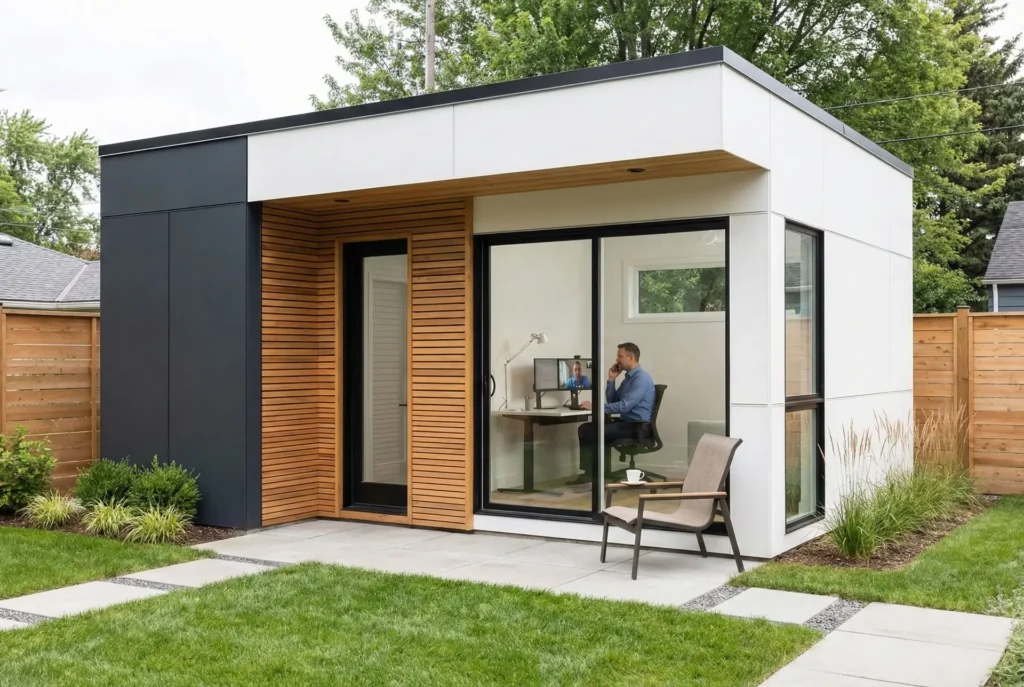
Prefab (modular or panelized) ADUs are factory-built and assembled on-site, which eliminates weather delays and can reduce construction costs. Modular prefab can trim 10–25% off build costs compared to traditional stick-built construction. But the unit price is only part of the story.
Factory units starting at $90,000–$150,000 can climb once you add craning fees, foundation work, utility trenching, permits, and finishes. In difficult-access situations, crane fees alone can exceed $20,000. Always request a full all-in quote before assuming prefab is the budget option for your lot.
Pre-Approved Plans: The Fastest Path to Permit
One of the most underused cost tools available in 2026 is the pre-approved ADU plan. Many cities now offer pre-designed ADU plans that have already passed architectural and structural review — meaning you skip the plan check queue, reduce architectural fees by up to 50%, and move directly to the building permit stage. New 2026 laws in progressive states require all cities to offer pre-approved ADU plans, making this option more widely available than ever. Cities like Los Angeles, Portland, and San Jose already have robust plan libraries worth exploring before commissioning custom drawings.
DIY-Friendly Elements: Where Sweat Equity Pays Off
You don’t need to be a contractor to make a meaningful dent in your ADU budget. These tasks don’t require a license, won’t jeopardize your permit, and are well within most homeowners’ reach:
- Interior and exterior painting — one of the highest labor-markup items a contractor bills for
- Site clearing and prep work — removing vegetation, fencing, or debris before the contractor mobilizes
- Landscaping and yard restoration after construction is complete
- Finish details — cabinet hardware, towel bars, light switch covers, and similar trim items
- Basic appliance hookups — refrigerators, washers, and dishwashers in most jurisdictions
Handling painting and landscaping alone can save $5,000–$10,000 off your final invoice. The rule: only take on tasks you can do cleanly the first time. Rework always costs more than hiring out.
Financing Strategies That Stretch Your Budget
HELOC: The Go-To Tool
For homeowners with meaningful equity, a Home Equity Line of Credit (HELOC) is the most widely used ADU financing option. It lets you borrow against your home’s equity without refinancing your existing mortgage, draw funds as construction progresses, and minimize interest by borrowing only what you need. As of 2026, HELOC rates at California credit unions start as low as 6.50%. Construction loans and cash-out refinancing are also viable depending on your equity position and existing mortgage rate.
Grants and Fee Savings: Know the Real Picture
The CalHFA ADU Grant Program — which previously provided up to $40,000 for pre-development costs — is currently paused as of 2026 with its $100 million in funding fully allocated and no confirmed relaunch date. Monitor the CalHFA website for updates, but don’t build your budget around a grant that may not return.
Even without the grant, meaningful savings are available through legislation:
- California SB 13 waives development impact fees for ADUs 750 sq ft or smaller — approximately $20,000 in savings in many jurisdictions
- JADUs under 500 sq ft are exempt from school fees in California
- Section 45L federal tax credit offers $2,500–$5,000 for ENERGY STAR-certified ADUs — verify current program status with a tax professional
- Local programs — cities and counties often offer additional fee reductions or density bonus incentives; check with your planning department early
Mistakes That Inflate ADU Costs
Knowing where to save is half the equation. Understanding what causes cost overruns is the other half. These are the most common budget killers on ADU projects:
- Skipping the site assessment. A soil report costs $2,000–$5,000; discovering poor conditions after breaking ground costs far more. A topographical survey ($1,500–$3,000) can reveal drainage or slope issues that change your foundation choice entirely.
- Over-sizing the unit. Crossing the 750 sq ft threshold in California forfeits your impact fee waiver. Smaller units typically produce comparable rental income while costing meaningfully less to build.
- Custom design when standard plans exist. Custom architectural work can add $15,000–$40,000 in fees and months of plan check time. Pre-approved city plans eliminate most of that.
- Scope creep mid-construction. Small mid-project upgrades can inflate your budget by 20–30%. Lock in specifications before breaking ground and treat your contract price as a ceiling.
- No contingency buffer. Budget 10–20% above your contract price for surprises — rocky soil, an aging electrical panel, unexpected utility depth. This isn’t pessimism; it’s the difference between a project that finishes and one that stalls.
- Hiring a generalist contractor. ADU specialists save money in the long run even when their rates look higher upfront. They know local codes, work with efficient subs, and navigate permitting faster. A generalist unfamiliar with ADU requirements can trigger correction orders and redesigns that cost far more than the rate difference.
The Bottom Line: Budget Smart, Build Well
Building an affordable ADU in 2026 isn’t about finding the cheapest labor or stripping out features. It’s about making a handful of early decisions — on ADU type, footprint, foundation, and financing — that cascade into real savings across the entire project.
Start with a conversion if your site allows. Keep the footprint efficient. Choose a slab on flat lots. Use pre-approved plans. Lock in your specifications before construction starts. Build in a contingency from day one.
Done with discipline, a budget-conscious ADU isn’t a compromise — it’s a well-built asset that generates income, adds property value, and holds up for decades.
For state-specific guidance, design resources, and vetted contractor referrals, visit FindADUPros.
Frequently Asked Questions
What is the cheapest way to build an ADU in 2026?
A garage or basement conversion is consistently the most affordable option, typically running $80,000–$150,000 versus $150,000–$300,000+ for new detached construction. A Junior ADU entirely within the existing home footprint is often even less expensive. Both options leverage existing structure and reduce utility hookup costs dramatically.
What’s the average cost of a small ADU in 2026?
A small ADU of 400–600 sq ft costs approximately $100–$300 per square foot on average nationwide, putting total project costs in the $60,000–$180,000 range. Garage conversions land at the lower end; small prefab or detached units typically land in the middle. California and other high-cost states trend toward the top of these ranges.
Is prefab always cheaper than stick-built?
Not always. While modular prefab can reduce build costs by 10–25%, all-in costs rise once you add craning, site prep, foundation work, utility connections, and permits. On difficult lots, prefab can end up comparable to a garage conversion. Always get a full all-in quote before assuming prefab is the budget path.
Are there grants available for ADU construction in 2026?
The CalHFA ADU Grant (up to $40,000) is currently paused with funding fully allocated and no confirmed relaunch date. HELOCs are the most widely used financing tool. California’s SB 13 still waives impact fees for ADUs under 750 sq ft — worth up to $20,000. Monitor the CalHFA website for program updates.
What most often causes ADU budgets to go over?
The most common culprits are scope creep, skipping the pre-construction site assessment, over-sizing the unit, and no contingency buffer. Unplanned utility upgrades — electrical panels, water lines, sewer connections — are consistently the biggest surprise costs and can add $15,000–$45,000 if not identified before construction begins.