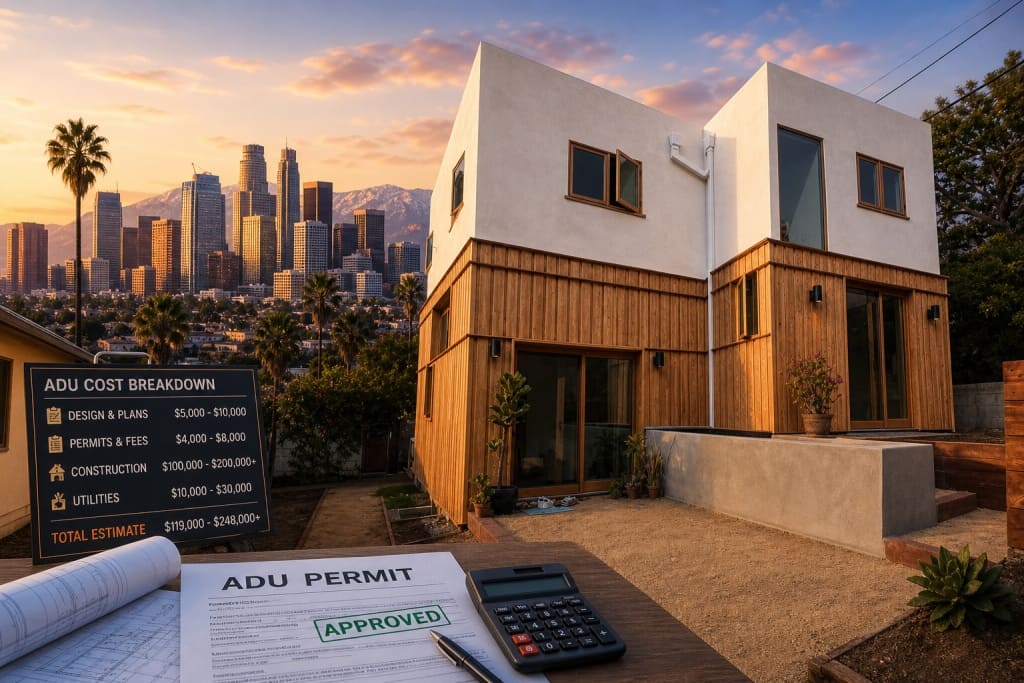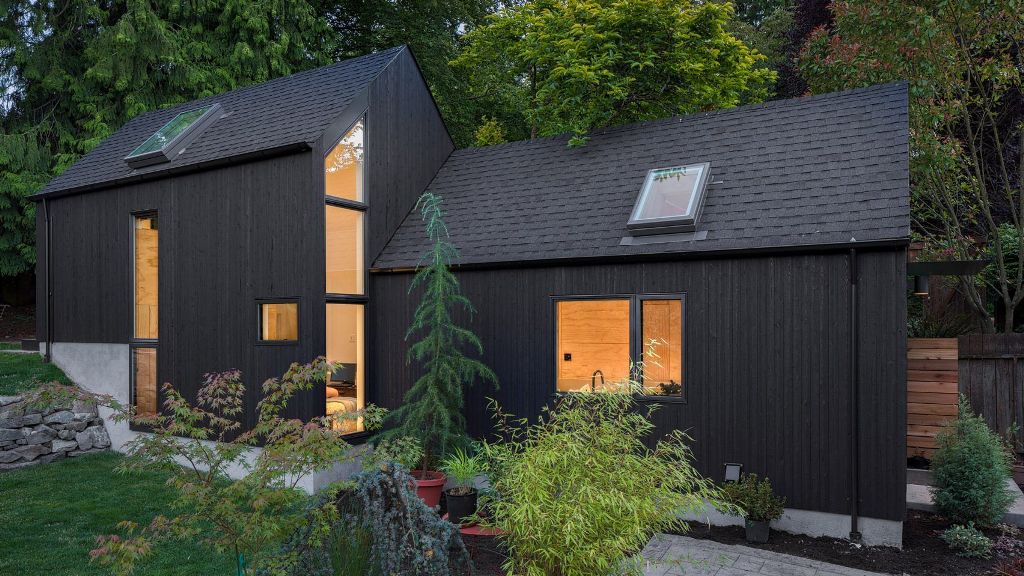
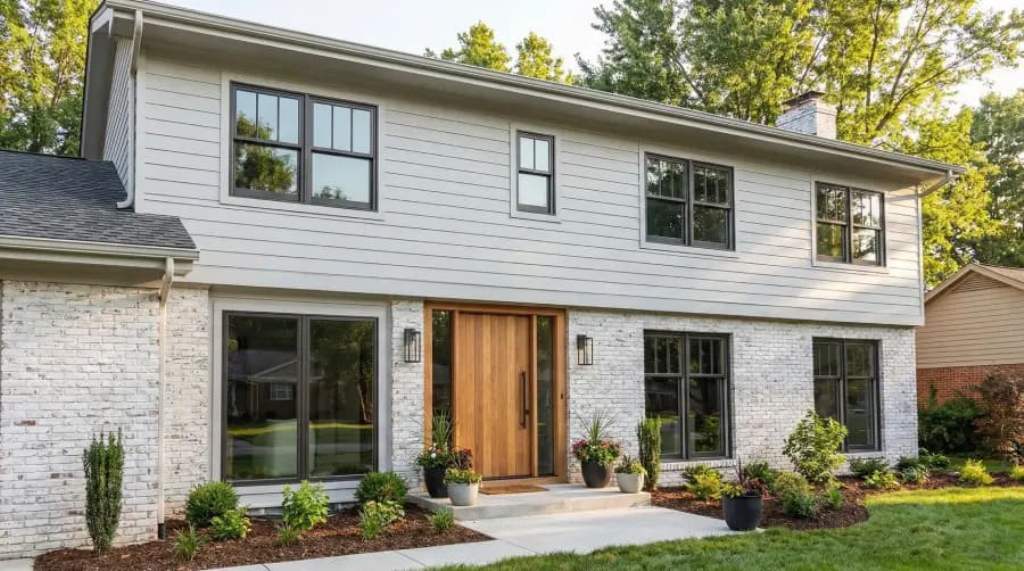
Fort Worth’s rapid growth and strong housing demand are encouraging more homeowners to build ADUs—such as garage apartments, backyard cottages, and detached guest houses—to generate rental income.
The opportunity is significant, but so are the regulations. Fort Worth has detailed ADU rules that have been updated in 2025 and 2026, including restrictions that often surprise homeowners. Understanding the Fort Worth ADU guide before you spend anything on design or permitting is what separates a smooth project from an expensive mistake.
Use the FindADUPros Zoning Information Lookup to confirm your specific zoning designation and current ADU eligibility before doing anything else.
The Fort Worth Difference: Zoning vs. Houston’s Deed-Restriction Model
Fort Worth is frequently lumped in with Houston in conversations about Texas real estate and ADU rules, and that’s a mistake that leads homeowners straight into avoidable errors. The two cities operate under fundamentally different frameworks.
Unlike neighboring Houston, Fort Worth has a comprehensive zoning framework. The city uses a lettered designation system — “A” zones are single-family residential, with A-5, A-7.5, and A-10 being the most common in established neighborhoods. Higher-density residential uses carry “B,” “C,” and “D” designations, and mixed-use and commercial zones follow from there.
Fort Worth allows accessory dwelling units on residential lots under the Unified Development Code Chapter 5. Detached ADUs are limited to 50% of the primary dwelling’s floor area with a 900 sq ft maximum. No owner-occupancy requirement in most zones.
That’s the good news. The restriction that catches most homeowners off guard comes next.
The “Separate Residence” Rule: Fort Worth’s Most Important ADU Restriction
This is the most important Fort Worth ADU rule to understand before starting your project.
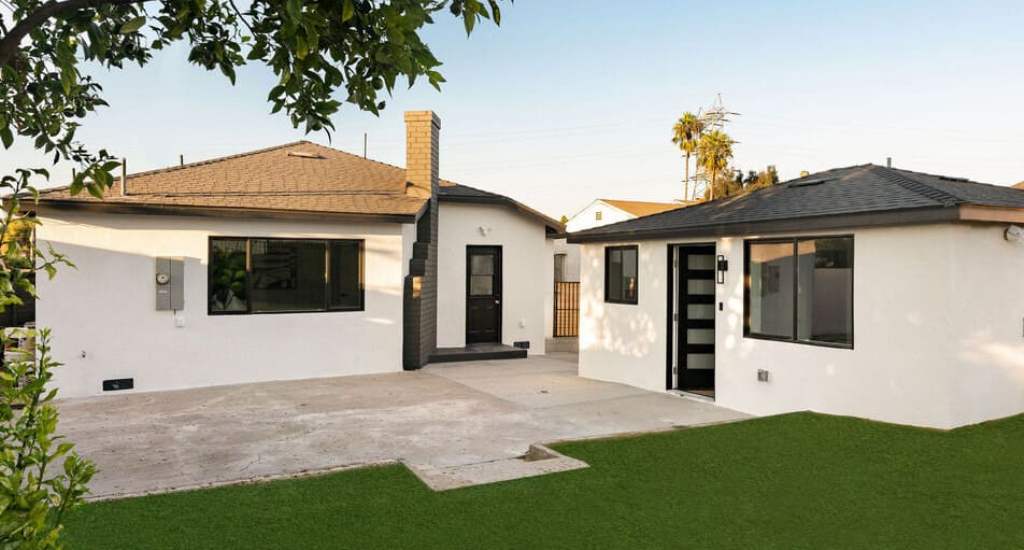
In one-family (“A” through “AR”) zoning districts, ADUs are allowed but cannot operate as separate, independent residences. They must remain accessory to the primary home on the same lot, as required by Fort Worth Zoning Ordinance §5.301.
In practice, the ADU shares the property’s legal address and cannot be sold separately from the main home. This rule can also affect financing and future resale.
Because Texas has no statewide ADU law, Fort Worth’s local regulations remain in effect after the proposed SB 673 failed in 2025.
In reality, many homeowners rent ADUs as long-term units. The “separate residence” rule is primarily intended to prevent ADUs from being subdivided and sold independently rather than to prohibit long-term rentals.
Fort Worth Zoning Rules: What the UDC Actually Requires
Fort Worth allows accessory dwelling units on residential lots under the Unified Development Code Chapter 5. Here are the specific parameters as of 2026:
- Maximum size (detached): 900 sq ft or 50% of the primary dwelling’s floor area, whichever is smaller
- Maximum size (attached): 40% of the primary dwelling’s floor area
- Height limit: Cannot exceed the height of the primary residence
- Setbacks: Must observe the side and rear setbacks of the underlying zoning district — these vary by zone
- Lot coverage (FAR): 40% maximum for combined primary home and ADU footprint in most residential zones
- Owner-occupancy: Not required in most zones
- Parking: One off-street space required for the ADU
- Quantity: One ADU per single-family lot is the standard allowance
Use the Fort Worth MapIt GIS at mapit.fortworthtexas.gov to look up your property’s zoning designation. You can also contact Development Services directly at (817) 392-2222.
The Deed Restriction Trap: More Dangerous Than Zoning
One of the biggest ADU obstacles in Fort Worth isn’t city zoning—it’s private deed restrictions. Even if the city approves your ADU, your HOA or neighborhood covenants may prohibit it.
Texas law limits how restrictive cities can be, but it does not override private deed restrictions. Review your HOA rules and architectural guidelines before paying for surveys or design work.
This is particularly important in newer communities such as Alliance, Chisholm Trail, and Walsh Ranch. Before investing in plans, check your property’s recorded covenants for restrictions on accessory structures, guest houses, or secondary dwellings.
Garage Apartments in Fort Worth: The Most Accessible ADU Path
Garage apartments are the most popular ADU type in Fort Worth because they are often the quickest, most affordable, and easiest to permit.
Under Fort Worth’s zoning ordinance, a garage conversion is treated as an ADU. It must meet the property’s setback requirements, cannot exceed the height of the primary home, and in one-family districts cannot be used as a separate, independent residence.
A Fort Worth garage apartment typically refers to either a detached garage with living space above or a single-story garage conversion. A two-story design preserves covered parking while adding usable living space above.
What the conversion process requires that surprises most Fort Worth homeowners:
- Egress windows in sleeping areas: Original garage windows rarely meet minimum dimensions for emergency egress in habitable space — framing new openings is standard
- Insulation to current energy code: Uninsulated garage walls and roof planes require significant insulation upgrades
- HVAC: A dedicated mini-split system is typically the most cost-effective solution for a detached garage conversion
- Structural header verification: The original garage door opening may need a reinforced header before the door is replaced with a wall assembly
- Slab leveling: Garage floors slope toward the door for drainage — that slope must be corrected before the space is classified as habitable
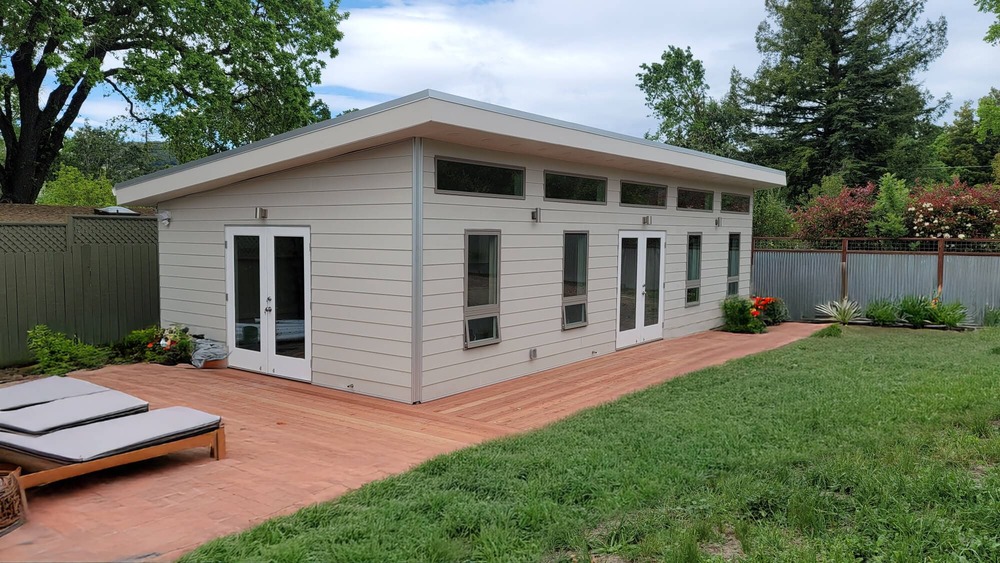
How Much Does It Cost to Build a Guest House in Fort Worth?
How much to build a guest house in Fort Worth is the question behind most of the ADU searches in this market, and the answer is more accessible than homeowners typically expect, compared to California or Pacific Northwest pricing.
ADU construction in Fort Worth typically costs $120,000–$240,000. Garage conversions run $55,000–$135,000, and prefab ADUs cost $85,000–$195,000.
Here’s the all-in cost breakdown by ADU type:
| ADU Type | Typical All-In Cost | Timeline | Best For |
|---|---|---|---|
| Garage conversion (single-story) | $55,000–$135,000 | 3–5 months | Budget-focused, faster approval |
| Prefab / modular detached ADU | $85,000–$195,000 | 4–7 months | Speed and cost predictability |
| Custom stick-built detached ADU | $120,000–$240,000 | 6–10 months | Maximum design flexibility |
ADU permit fees in Fort Worth run $2,000–$8,000 including utility connection fees, with an estimated timeline of 3–6 weeks. More complex projects with corrections can take 4–8 weeks. Using the city’s online permitting portal (MyGovHub) allows you to track the status of your application and respond to corrections electronically.
Use the FindADUPros ADU Cost Calculator to build a project-specific budget before your first contractor conversation.
Fort Worth-Specific Site Conditions to Check Before Design
The Trinity River Flood Zone Reality
Fort Worth has extensive floodplain areas along the Trinity River, Village Creek, and other waterways. If your property is located in or near a Special Flood Hazard Area (SFHA) as mapped by FEMA, you will need a floodplain development permit in addition to your standard building permit. Structures in the floodplain must meet FEMA elevation requirements.
Properties in Zone AE along these waterways must elevate the ADU’s finished floor above Base Flood Elevation — typically requiring a raised foundation that adds $15,000–$35,000 above standard slab construction. Check your flood zone status at the FEMA Flood Map Service Center before finalizing your ADU’s design or placement.
The Urban Forestry Ordinance: Protected Trees
Fort Worth’s Urban Forestry regulations require permits to remove protected trees during development. If your ADU affects a protected tree, your site plan may also need to include mitigation measures.
If your proposed ADU is within the critical root zone of a protected tree, obtain an arborist report early in the design process. Spending $500–$1,500 upfront can help avoid costly redesigns later.
Historic Districts: HCLC Review Required
Fort Worth has several locally designated historic districts where exterior changes require approval from the Historic and Cultural Landmarks Commission before permits are issued.
If your property is in a historic district or is a designated landmark, allow an extra 4–8 weeks for design review and ensure your ADU matches the district’s architectural guidelines.
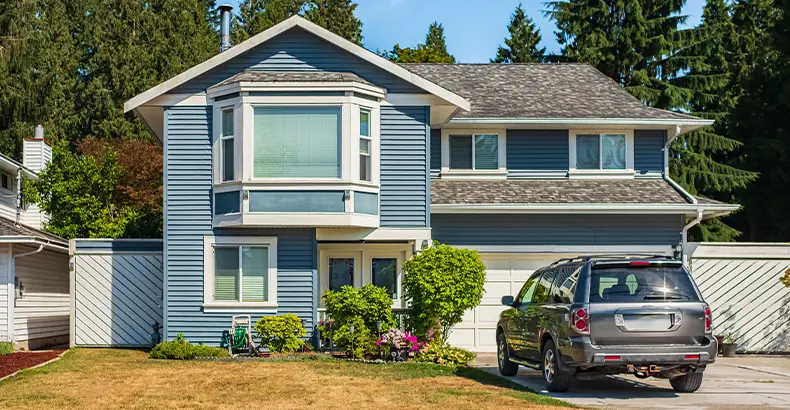
Rental Income Potential: What Fort Worth ADUs Actually Earn
Average ADU rents in Fort Worth are $1,100–$1,650/month for a one-bedroom and $1,400–$2,100/month for a two-bedroom unit.
A garage conversion costing $90,000 generating $1,400/month recovers its construction cost in approximately five years through rental income alone — before any property value appreciation is counted. At the higher end, a custom detached ADU at $180,000 generating $2,000/month breaks even in approximately seven and a half years.
Short-Term Rentals: Fort Worth’s STR Registration Requirement
Fort Worth requires STR registration for all rentals of 30 days or fewer at $150/year. Unlike cities with 30-day minimum stay requirements that effectively prohibit vacation rental use, Fort Worth permits genuine short-term rentals — Airbnb, VRBO, and similar platforms — with registration. In neighborhoods with strong tourism or event demand (Near Southside, Cultural District, Stockyards area), short-term rental income can significantly outperform long-term lease rates.
Verify your neighborhood’s deed restrictions before pursuing STR use — some HOA covenants explicitly prohibit short-term rental activity regardless of city registration.
The 2026 Legislative Update: What SB 840 and SB 15 Changed (and Didn’t)
Two Texas laws that took effect on September 1, 2025 have a limited impact on most Fort Worth ADU projects.
SB 840 eases parking and open-space requirements for certain mixed-use and multifamily developments, while SB 15 limits parking requirements in some new single-family subdivisions. These changes generally do not apply to ADUs on existing residential lots, where Fort Worth’s one-parking-space requirement remains.
A more significant development was the failure of SB 673, which would have created statewide ADU standards. As a result, Fort Worth’s local ADU regulations, including the “separate residence” restriction, remain in effect.
Your Next Steps
Fort Worth offers strong ADU potential with solid rental demand, relatively affordable construction costs, no owner-occupancy requirement, and short-term rentals allowed with registration. While factors such as deed restrictions, flood zones, tree ordinances, historic districts, and local regulations require careful review, they can be managed with proper planning.
Confirm your zoning designation on MapIt before anything else. Pull your deed restrictions from Tarrant County Clerk records. Check your flood zone at FEMA’s portal. Then use the FindADUPros AI ADU Design Advisor to explore design options and cost estimates tailored to your specific property.
For vetted Fort Worth ADU contractors with verified Tarrant County permit experience, visit FindADUPros.
Frequently Asked Questions
Are ADUs legal in Fort Worth in 2026?
Yes. Fort Worth permits ADUs in designated single-family residential zones under its Unified Development Code. Detached ADUs are limited to 900 sq ft or 50% of the primary home’s floor area, whichever is smaller, and most zones do not require owner occupancy. However, ADUs in one-family districts cannot be used as a separate, independent residence.
How much does it cost to build a guest house in Fort Worth?
Garage conversions typically cost $55,000–$135,000. Detached prefab ADUs range from $85,000–$195,000, while custom-built units cost $120,000–$240,000. Permit fees usually add $2,000–$8,000, and homes in FEMA flood zones may require elevated foundations, increasing costs by $15,000–$35,000.
What are the setback rules for Fort Worth garage apartments?
Garage apartments and detached ADUs must meet the setback requirements of the property’s zoning district and cannot be taller than the primary home. Confirm your property’s setback rules using the Fort Worth MapIt GIS before finalizing the ADU location.
Can my HOA block my ADU in Fort Worth?
Yes. Private deed restrictions and HOA covenants can override Fort Worth’s ADU regulations. Before investing in design, review your property’s covenants for any restrictions on accessory structures or secondary dwellings, particularly in planned communities.
Can I use my Fort Worth ADU as an Airbnb?
Yes, with registration. Fort Worth requires short-term rentals of 30 days or less to be registered, with an annual fee of $150. However, deed restrictions or HOA rules may still prohibit short-term rentals, so verify both before planning an ADU for STR income.