San Jose is consistently ranked among the most ADU-friendly cities in California — and that reputation is earned. The city operates an expanded pre-approved plan library, enforces impact fee waivers for units under 750 sq ft, and through its ADU Allied Program, connects homeowners with vetted vendors who can compress plan check review to as few as five business days. For a city where one-bedroom apartments routinely rent for $2,500–$3,500 per month, the financial case for building an ADU is as strong here as anywhere in the country.
But the San Jose ADU guide conversation can’t start and end with good news. Silicon Valley labor rates are the highest in California, running 40–60% above Sacramento contractors for the same scope. Permit fees, while lower than San Francisco or Palo Alto, still add $10,000–$25,000 to project budgets. And the region’s seismic zone requirements add structural engineering costs that don’t exist in most California markets.
This guide gives you an honest, current picture of what it costs to build an ADU in San Jose in 2026 — including the 2026 legislative updates most guides haven’t caught up with yet.
For vetted local contractors with Silicon Valley ADU experience, FindADUPros is worth checking before you commit to anyone.
San Jose ADU Costs: Factual 2026 Silicon Valley Budget Truths
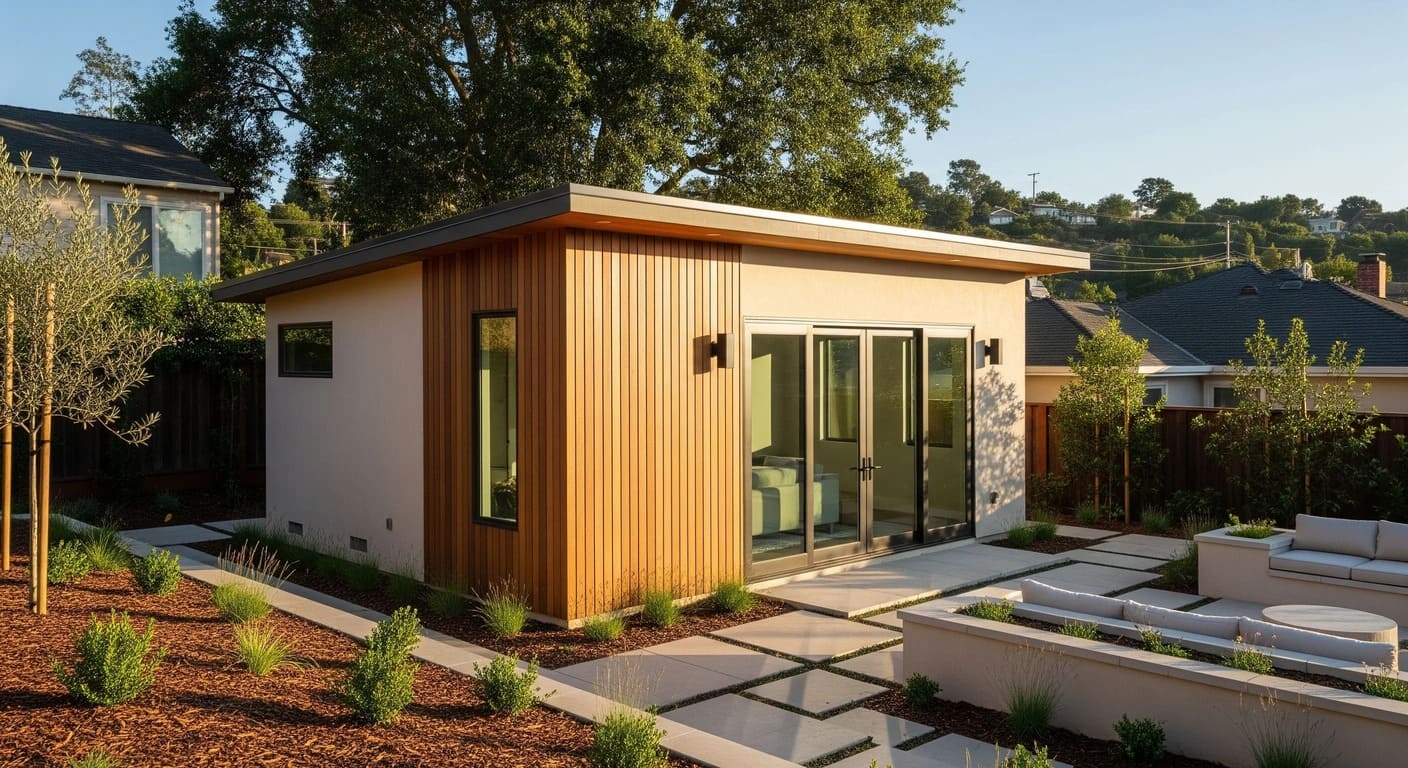
Analyzing Hard Construction Costs: JADUs, Garage Conversions, and Detached Builds
San Jose ADU costs range more widely than most homeowners expect — driven less by design choices than by ADU type and site conditions. Current all-in costs by ADU type:
- JADU (up to 500 sq ft within the primary home): $30,000–$100,000
- Garage conversion (single or two-car): $120,000–$175,000
- Attached ADU addition: $150,000–$300,000
- Detached ADU (600–800 sq ft, standard finishes): $220,000–$380,000
- Detached ADU (900–1,200 sq ft, high-end finishes): $350,000–$500,000+
Cost per square foot: detached new construction runs $350–$500/sq ft, garage conversions run $250–$380/sq ft (the existing foundation and shell reduce cost meaningfully), and attached additions fall at $280–$425/sq ft. Soft costs — architectural drawings, engineering, permits, and inspections — typically add 10–15% on top of hard construction costs.
One critical distinction: California permanently eliminated the owner-occupancy requirement for all standard ADUs. Landlords and investors can now build an ADU and rent both the primary home and the ADU to separate tenants simultaneously — maximizing returns without any residency obligation. Legacy articles advising otherwise are citing overridden law.
Why Silicon Valley ADU Permits Command a Premium: Seismic and Drainage Realities
Silicon Valley ADU permits carry costs that don’t exist in most California markets, for three compounding reasons.
San Jose’s plan check and permit fees are structured around project valuation — and high local construction costs mean high project valuations, which drive permit fees up. Expect $10,000–$25,000 in combined permit, plan check, and inspection fees depending on ADU type and size.
The Bay Area’s seismic zone classification requires licensed structural engineering on virtually every ADU project — a cost of $3,000–$8,000 that most inland California markets don’t incur. Lots with any significant slope require a grading plan and separate drainage review, adding $5,000–$15,000 before a shovel hits the ground in hillside neighborhoods like Almaden Valley, Evergreen, or parts of Willow Glen.
The 750 Square Foot Rule: Trimming City Development Impact Fees
San Jose waives development impact fees — covering parks, schools, and transit — for all ADUs under 750 sq ft. In San Jose, those fees otherwise run $15,000–$25,000. This is not a minor consideration: keeping your footprint at 749 sq ft or less is one of the most financially consequential decisions you’ll make on this project. Crossing into 750 sq ft voids the waiver entirely.
Pre-Approved Plans vs. Custom Design: A Cost Matrix
San Jose’s ADU Allied Program partners the city with vetted prefabricated and modular vendors whose plans have pre-cleared architectural and structural review. Using an Allied vendor drops plan-check review from the standard 60-day statutory window to 5–10 business days — a timeline advantage that has significant dollar value in a high-labor-rate market where carrying costs accumulate fast.
| Project Phase | San Jose Pre-Approved / Allied Plan Set | Custom Architectural Draft |
|---|---|---|
| Architectural & design fees | $0–$2,500 (vendor licensing fee) | $12,000–$28,000+ |
| City plan check review | 5–30 business days | 60–120 days (multiple correction cycles) |
| Structural engineering costs | Included in the stamped set | $3,000–$8,000 (seismic zone requirements) |
| Design flexibility | Fixed footprint; interior layout customizable | 100% custom, suited to odd lot dimensions |
For straightforward garage conversions and standard detached studio or one-bedroom layouts on flat lots, the San Jose pre-approved ADU plans library is the clear choice. Custom architecture earns its cost only on complex sites, odd lot configurations, or projects requiring a specific architectural vision.
The San Jose Garage Conversion: Preserving Grandfathered Zero-Setback Positions
A San Jose garage conversion is the most accessible path to a permitted ADU — and the one most likely to deliver a strong return within a reasonable timeframe.
A fully permitted two-car conversion in 2026 costs $120,000–$175,000 with a full kitchen and bathroom. A single-car conversion with mid-range finishes lands at $85,000–$120,000. The payback math: a two-car conversion generating $2,600/month recovers a $150,000 investment in under five years, then produces roughly $31,200 annually thereafter.
The critical regulatory advantage: converting an existing garage within its current footprint preserves the structure’s grandfathered legal position on the lot — including zero-setback positions where the garage sits at or near the property line. Demolishing the garage and building a new detached ADU from scratch forfeits that position permanently, requiring four-foot minimum side and rear setbacks that can meaningfully shrink the buildable footprint on tighter lots. Converting rather than demolishing is almost always the correct decision.
Slab Leveling, Vapor Barriers, and Habitable Space Compliance
San Jose-specific structural reality: garage floors are typically sloped toward the door for drainage and frequently lack a vapor barrier beneath the slab. Both conditions must be corrected before a conversion can pass the habitable space inspection. Budget $3,000–$6,000 for floor leveling and vapor barrier installation — this cost is common on properties built before 1985 and rarely appears in initial contractor estimates.
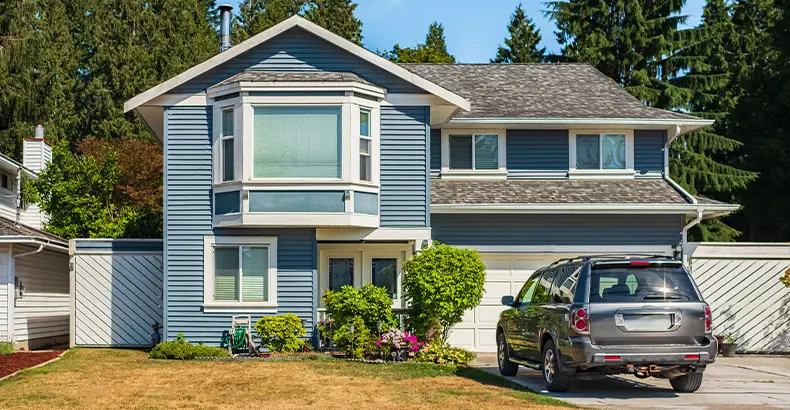
Rental Income Projections: What One and Two-Bedroom ADUs Actually Earn
The rental income picture in San Jose makes an unusually strong case for ADU investment. Current market rents for permitted ADUs:
- Studio/efficiency (300–450 sq ft): $1,800–$2,400/month
- One-bedroom ADU (500–700 sq ft): $2,400–$3,000/month
- Two-bedroom ADU (750–1,000 sq ft): $2,800–$3,500/month
- Premium neighborhoods (Willow Glen, Rose Garden, Almaden): $3,200–$4,000/month
A Silicon Valley real estate valuation shorthand widely used by appraisers in 2026: a permitted ADU adds approximately 100 times its monthly rental income to the home’s appraised value. A unit renting at $2,800/month effectively adds $280,000 to your property’s value — in most cases exceeding the construction cost of the ADU.
Break-even on a $300,000 detached ADU at $2,800/month is approximately nine years. On a $140,000 garage conversion at $2,400/month, it’s closer to five. The garage conversion’s ROI is structurally superior: lower construction cost against nearly comparable rental income makes it the financially optimal choice for most San Jose homeowners.
Navigating the PG&E Infrastructure Bottleneck: Panel Upgrades and Lead Times
Utility connections are where San Jose ADU costs most commonly run over initial estimates — and where Bay Area-specific infrastructure creates delays and costs that national ADU guides consistently miss.
PG&E panel upgrades are the most impactful variable. A 200-amp upgrade runs $4,000–$7,000 in San Jose — higher than Sacramento because PG&E’s service fees and Bay Area electrician rates are both elevated. More importantly, PG&E panel upgrade scheduling lead times in the South Bay have consistently run 8–16 weeks in 2025–2026. This isn’t a construction delay — it’s a utility scheduling reality that must be built into your project timeline from day one. Start the PG&E service upgrade request before your permits are issued, not after.
One infrastructure hazard most homeowners don’t think to check: if a PG&E overhead drop crosses your backyard where you intend to build a detached ADU, PG&E requires a 10-foot radial clearance from high-voltage lines. Moving or undergrounding that drop can add $10,000–$25,000 and months to the project. Look up before you finalize your ADU’s placement on the lot.
Sewer lateral conditions: Clay or Orangeburg pipe laterals common in neighborhoods built between the 1950s and 1970s may require full replacement before an ADU connection is approved. A sewer scope camera inspection costs $150–$300 and surfaces this before design is finalized. This is among the highest-ROI pre-construction steps available.
Water service: Depending on your neighborhood, your provider is either San Jose Water Company or San Jose Municipal Water. While state law prevents water districts from charging separate connection fees for converted ADUs, a new detached build may require a dedicated backflow preventer or an upgraded one-inch master water meter — add $2,000–$5,000 if required.
Budget 15–20% above your construction contract for utility work. What’s underground in San Jose rarely matches what the surface suggests.
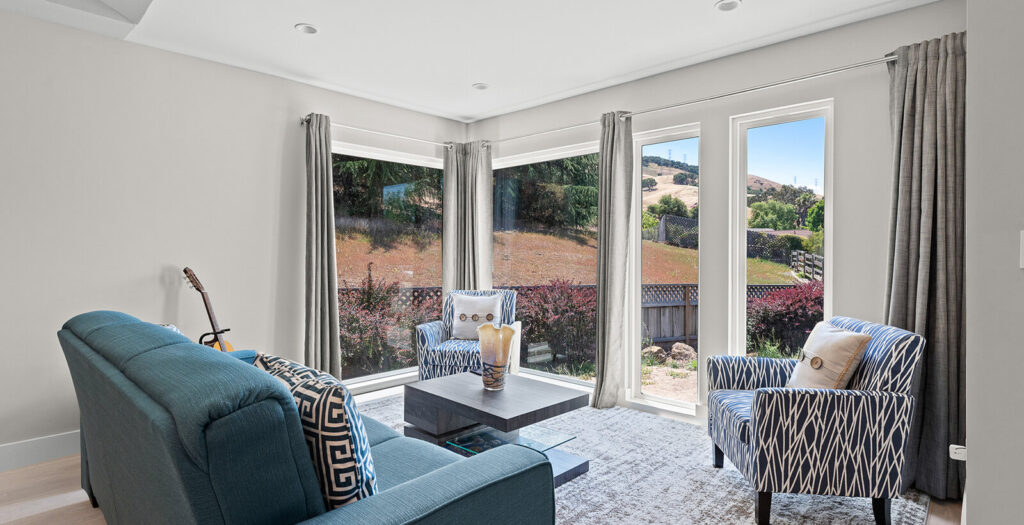
AB 2533 Amnesty Laws: Legalizing Existing Unpermitted San Jose ADUs
This is the 2026 legislative update most San Jose ADU guides haven’t incorporated yet — and it creates a genuine sub-$150K pathway for a significant number of homeowners.
Under AB 2533, local jurisdictions including San Jose cannot deny a permit to legalize an unpermitted ADU constructed before January 1, 2020, solely based on non-compliance with current building codes — unless the structure poses an immediate health and safety risk. Furthermore, local code enforcement must delay penalties for up to five years, giving homeowners time to bring existing structures into compliance without the threat of fines.
The practical implication: if a prior owner converted a garage without permits before 2020, you may be able to bring it up to code under a simplified inspection and remediation pathway — rather than a full demolition and rebuild. Legalization costs under AB 2533 typically run $15,000–$50,000 in code compliance work depending on the structure’s condition. That’s a fraction of new construction costs, and it produces a fully permitted, legal ADU that can be rented immediately.
If you own a San Jose property with an existing unpermitted garage conversion, contact the city’s Building Division to request a California unpermitted ADU amnesty assessment before assuming you need to rebuild.
Maximizing High-Value Lots: SB 9 Parcel Splits vs. SB 1211 Multifamily Expansion
For investors and homeowners with larger lots or multifamily properties, two legislative tools create opportunities beyond a standard single ADU.
SB 9 allows single-family homeowners to split their lot into two parcels and build up to two units on each — enabling up to four units on a formerly single-family lot. For SB 9 lot splits in neighborhoods like Almaden or Evergreen, both newly created parcels must be at least 1,200 sq ft each, and the split must divide the land in a roughly 60-40 proportion or better. A separately titled parcel changes the ADU’s financing options, its sale potential under AB 1033, and its long-term tax treatment. The complexity: SB 9 lot splits require a tentative parcel map — adding $5,000–$12,000 and 3–6 months to the pre-construction timeline.
SB 1211, effective January 1, 2025, expands the opportunity for multifamily property owners dramatically. The law allows up to eight detached ADUs on multifamily lots by right, completely bypassing local density caps that previously blocked these projects. For investors owning duplexes or triplexes in North San Jose, Blossom Valley, or Berryessa, SB 1211 creates a genuine path to multiplying rental income on land already owned — without the density opposition that stalled similar projects under prior law.
Santa Clara County Property Tax Assessments: How Deferrals Protect Your Basis
ADU construction triggers property tax changes — but the mechanism is far more favorable than most homeowners assume.
Under Proposition 13, your existing home’s assessed value is not reassessed when you add an ADU. Santa Clara County assessors typically use approximately $230 per square foot to value ADUs — meaning a 700 sq ft ADU that cost $350,000 to build is assessed at roughly $161,000, adding approximately $1,600–$2,000 annually to your property tax bill.
SB 1164 goes further: it allows eligible California homeowners to defer the ADU’s property tax assessment entirely for up to 10 years, or until a change of ownership. This is an ADU-specific deferral on top of Prop 13’s standard blended assessment protection. Over a 10-year window, that represents $16,000–$20,000 in cumulative tax savings.
A $1,800/year tax increase against $30,000+ in annual rental income is a favorable trade-off by any financial measure. The Santa Clara County property tax assessment for ADU projects is one of the least-understood financial advantages in the San Jose market — and one of the most meaningful.
San Jose ADU Pre-Construction Field Protocol
Before signing a design contract or wiring a deposit to any contractor, check off each of these:
- Check for PG&E overhead drops: Look up. If a power line crosses your backyard where a detached ADU is planned, a 10-foot radial clearance is required. Moving or undergrounding it adds $10,000–$25,000 and significant timeline
- Enforce the 749 sq ft limit: Staying under 750 sq ft preserves San Jose’s impact fee waiver ($15,000–$25,000 savings). Crossing the threshold voids it entirely
- Confirm your water provider: San Jose Water Company vs. San Jose Municipal Water have different connection requirements. A new detached ADU may require a dedicated backflow preventer or upgraded 1-inch meter ($2,000–$5,000)
- Pull a sewer scope: $150–$300 to camera-inspect your lateral before design is finalized. Clay pipe or Orangeburg on pre-1970s properties means a $10,000–$18,000 lateral replacement — far better to know before permits are filed
- Verify SB 9 parcel geometry: For lot splits in Almaden or Evergreen, confirm both resulting parcels will be at least 1,200 sq ft and the split achieves approximately a 60-40 land division
- Check AB 2533 eligibility: If your property has an existing unpermitted garage conversion built before 2020, contact San Jose’s Building Division before assuming you need to demolish and rebuild
The Bottom Line for San Jose Homeowners
San Jose is expensive to build in — the Silicon Valley labor market is what it is. But it’s also one of the strongest rental markets in the country, one of the most streamlined permitting environments in the Bay Area, and a market where ADU-equipped properties command significant premiums at resale.
The garage conversion remains the most financially efficient path for most San Jose homeowners. AB 2533’s amnesty provisions open a lower-cost legalization pathway for existing unpermitted structures. SB 1211 creates genuine multifamily expansion opportunities that didn’t exist two years ago. And Santa Clara County’s blended property tax assessment keeps annual carrying costs well below what most homeowners expect.
Use the ADU Allied Program. Get a sewer scope before your designer draws anything. Start the PG&E service upgrade request early. Hold your footprint under 749 sq ft. These aren’t abstract recommendations — they’re the specific decisions that separate San Jose ADU projects that perform from ones that don’t.
For local ADU contractors and design-build specialists working specifically in the San Jose market, visit FindADUPros.